SAP Business One ERP for Steel Products and Components Industry
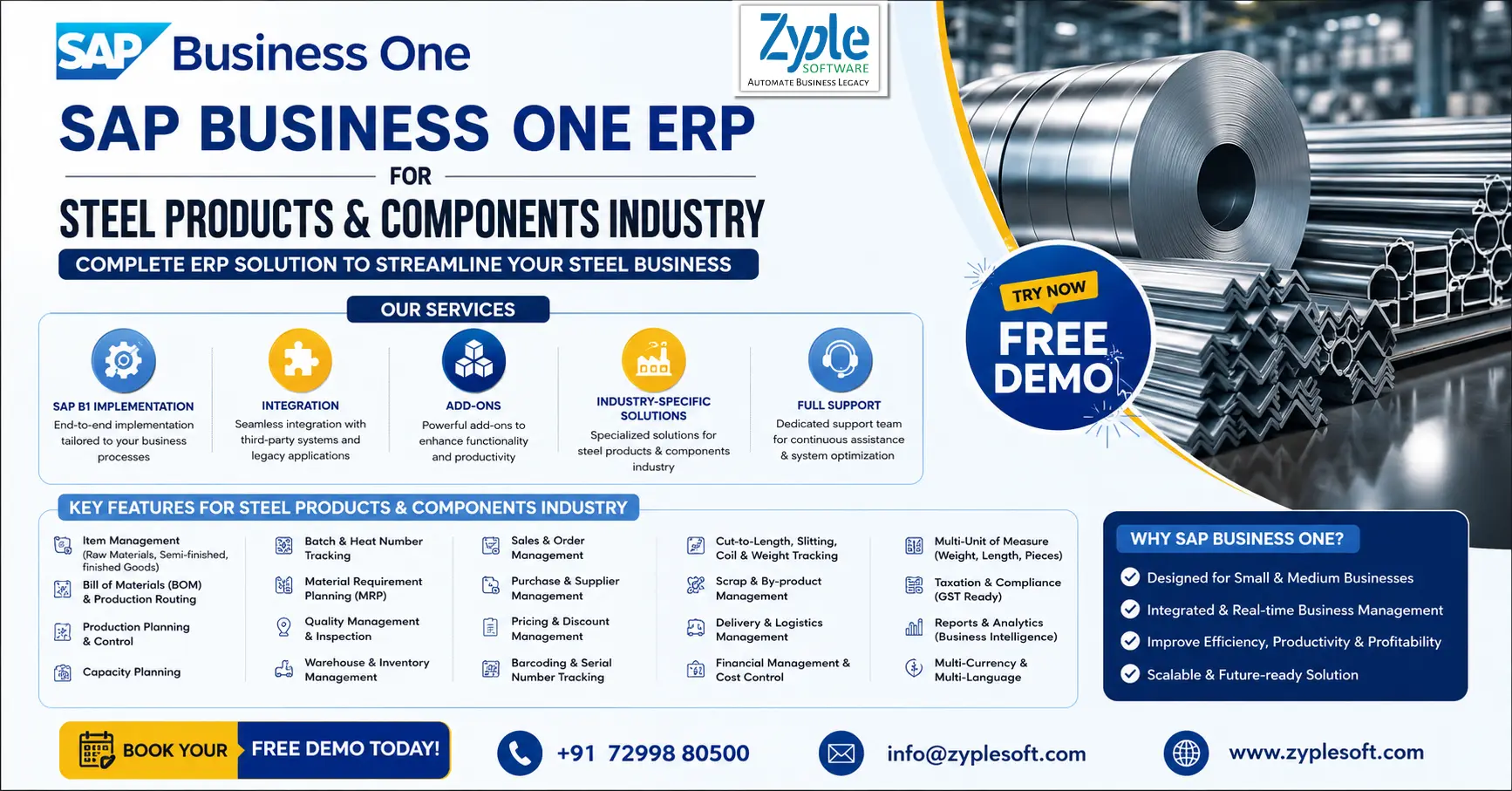
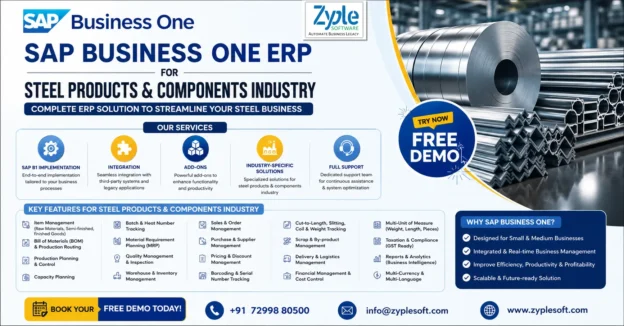
The steel product and component businesses face the challenge of being competitive in this highly capital-intensive and highly regulated industry. Evolving supply chains and many routes towards the market continuously require efficient production processes and real-time analysis. SAP Business One ERP for steel products and components helps the steel product and component businesses to minimize stock issues, automate workflows, and optimize supply chain and financial processes.
Challenges Faced By The Steel Products and Components Industry
The steel products and components industry faces serious challenges, primarily driven by fluctuating raw material costs (like coking coal and iron ore), global competition from cheaper imports, and stringent environmental regulations. These challenges are compounded by supply chain obstacles, rising energy expenses, and a growing shortage of skilled labor.
1. Volatile Raw Material and Energy Costs
The cost of key inputs like iron ore, scrap metal, and coking coal is highly sensitive to global market dynamics and geopolitical tensions. Steel manufacturing is highly energy-intensive. High power and fuel costs directly reduce profit margins, pushing many manufacturers to heavily invest in captive power and renewable energy solutions to stabilize long-term operations.
2. Global Competition and Trade Imbalances
To protect domestic manufacturers, governments frequently implement safeguard measures, tariffs, or import quotas, creating a complex regulatory environment that affects pricing and supply strategies.
3. Sustainability and Green Pressures
Traditional steelmaking, specifically via coal-based blast furnaces, is highly carbon-intensive. Governments and investors are demanding eco-friendly green steel, forcing companies to invest in modern technologies like hydrogen-based processes and carbon capture. Achieving emission targets, waste management requirements, and environmental compliance adds substantial upfront and operational costs.
4. Logistics and Supply Chain Obstacles
Transporting heavy bulk materials (like the iron ore to the plant and finished components to the market) is frequently delayed by congested ports and poor rail or road infrastructure. Depending on global supply chains exposes manufacturers to shipping container shortages, regional conflicts, and transport delays.
5. Labor Shortages and Skill Gaps
The industry struggles with demographic shifts, as many skilled professional retire and fewer young workers enter the manufacturing sector. Transitioning to modern automation and AI requires a digitally literate workforce. Traditional steel producers face significant challenges in training or recruiting employees with these specialized technological skills.
6. Outdated Technology and Capital Constraints
Upgrading ageing facilities to automated, AI-driven, and highly efficient manufacturing plants involves massive capital investment. Operating with obsolete technology leads to higher specific energy consumption and lower per-capita labor productivity compared to global benchmarks.
Features of SAP Business One ERP for Steel Products and Components
1. Steel-Specific Production Management
- Multi-stage production like melting, rolling, cutting, machining, and finishing.
- It includes production orders linked with heat or batch tracking.
- Routing and operations for steel processing like casting, forging, and fabrication.
- It includes shop floor control with real-time production updates.
- Yield, scrap, and rework management to minimize material losses.
2. Bill of Materials (BOM) and Engineering Control
- It includes multi-level BOMs for complex steel assemblies.
- It includes revision control and engineering change management.
- It includes phantom items and sub-assemblies handling.
- Formula-based BOMs for alloys and compositions.
- It includes accurate material consumption tracking.
3. Material Requirements Planning (MRP)
- Demand-driven MRP like forecasts and sales orders.
- Automatic generation of purchase orders and production orders.
- Lead-time planning for raw materials like iron, alloys, and scrap.
- It includes shortage alerts and replenishment planning.
- It supports just-in-time (JIT) manufacturing.
4. Inventory and Warehouse Management
- It includes multi-warehouse and yard management.
- Weight-based inventory tracking like MT, KG, and tons.
- It includes batch or heat-wise stock visibility.
- It includes bin location management for coils, rods, and sheets.
- Real-time stock movement tracking, like raw materials, work-in-progress, finished goods, and scrap.
5. Batch, Heat, and Traceability Management
- End-to-end traceability from raw material to finished steel product.
- It includes heat number or lot tracking for compliance.
- It includes backward and forward traceability for audits.
- Quality certificate generation, like mill test certificates.
- Essential for industries like automotive and construction.
6. Production Planning and Scheduling
- It includes finite and infinite capacity planning.
- Machine-wise scheduling like rolling mills, furnaces, and CNC.
- It includes Gantt charts for production visibility.
- It includes bottleneck analysis and what-if simulations.
- It includes optimized machine and labor utilization.
7. Quality Control and Compliance
- Stage-wise quality inspections, like incoming, in-process, and final.
- It includes chemical composition and mechanical property tracking.
- It includes tolerance and dimensional checks.
- It includes automated QC reports and compliance documents.
- It includes integration with ISO or industry standards.
8. Costing and Profitability Analysis
- Real-time product costing, like material, labor, and overheads.
- It includes heat and batch-wise cost tracking.
- It includes a standard vs. actual cost comparison.
- It includes scrap and wastage cost analysis.
- It includes profitability by product, order, or customer.
9. Sales, Distribution, and Order Management
- Quotation, order, and delivery to invoice cycle.
- Weight-based pricing per tonne or kg.
- It includes dispatch planning and logistics integration.
- It includes customer-specific pricing and contracts.
- It includes export documentation and compliance.
10. Procurement and Supplier Management
- Raw material procurement, like scrap, billets, and alloys.
- It includes supplier price comparison and evaluation.
- It includes purchase planning based on MRP.
- It includes GRN (Goods Receipt Notice) with quality checks.
- It includes vendor performance tracking.
11. Financial Management and GST Compliance
- It includes general ledger, AP, AR, and banking.
- It includes cost center accounting for plants or departments.
- It includes GST, taxation, and statutory compliance.
- It includes budgeting and financial forecasting.
- It includes real-time profit and loss reporting.
12. Business Intelligence and Analytics
- It includes real-time dashboards for production and inventory.
- KPI tracking, like yield %, scrap %, OEE, and margins.
- It includes drill-down reports across departments.
- Predictive analytics using SAP B1 HANA.
- It includes custom MIS reports for management decisions.
13. Supply Chain and Logistics Management
- It includes end-to-end supply chain visibility.
- It includes demand planning and distribution management.
- It includes transport and delivery tracking.
- It includes integration with third-party logistics.
- Minimized lead time and improved delivery performance.
14. Mobility and Remote Access
- It includes mobile apps for sales and warehouse teams.
- Real-time approvals like purchase orders, production, and finance.
- It includes access to dashboards anytime, anywhere.
- It includes a web-based client for easy usability.
15. Integration and Customization
- Integration with weighbridge systems, barcode and RFID systems, and MES (Manufacturing Execution Systems).
- It includes custom add-ons for steel-specific needs.
- It includes API integration with third-party tools.
16. Multi-Branch and Multi-Location Management
- Handles multiple plants, warehouses, and depots.
- Integrated reporting across locations.
- it includes inter-branch inventory transfers.
- It includes centralized control with local flexibility.
17. Automation and Workflow Management
- Automated approvals like purchase, production, and finance.
- it includes alerts for stock shortages, delays, and deviations.
- It includes workflow-based document routing.
- Minimized manual errors and paperwork.
Benefits of SAP Business One ERP for Steel Products and Components
The ERP software, SAP Business One (SAP B1) system, facilitates operations for steel manufacturers and metal fabricators by unifying raw material procurement, production scheduling, inventory tracking, and financials. It improves scrap management, ensures strict batch and heat-number traceability, and drives profitability through precise, real-time cost per tonnage visibility.
1. Precise Production and BOM Management
Handles multi-level Bills of Materials (BOMs) and integrates with CAD or nesting software to optimize cutting, bending, and machine hour rates using SAP implementation. It also accounts for scrap yields and byproducts, significantly minimizing material wastage.
2. Strict Quality Control and Compliance
Enforces mandatory inspection checkpoints. It maintains forward and backward traceability for every steel plate, coil, or bar, recording chemical compositions, test certificates, and heat numbers to achieve ISO or ASTM standards.
3. Dynamic Cost Control
Delivers real-time visibility into cost elements (raw materials, energy, labor, overheads) to determine accurate margins and exact cost per tonne.
4. Automated Material Requirements Planning (MRP)
Auto-creates purchase requests and production orders based on sales forecasts and live inventory to eliminate idle capacity and production stoppages using SAP solutions.
5. Centralized Supply Chain and CRM
Manages multi-warehouse inventory and vendor contracts while tracking client-specific custom orders, providing prompt quoting and service management.
Conclusion of Steel Products and Components ERP
Zyple Software is the Best SAP Business One partner in India specializing in implementation, digital transformation, licensing, integration, add-on solutions, migration, and consulting for the steel products and components industry. The SAP software is an affordable and scalable ERP software for the steel product and component industry.
If you’re active, schedule a demo of SAP Business One.
Do you order the SAP Business One ERP software for your business or industry?
Complete all the details in the described contact form; our team will get back to you.
How does SAP Business One help steel manufacturers handle raw material and scrap efficiently?
SAP Business One delivers real-time inventory tracking for raw materials like coils, billets, and sheets, along with scrap management. It helps optimize material usage, minimize wastage, and improve yield through batch tracking and automated stock updates.
Can SAP Business One manage complex production processes in the steel industry?
Yes, SAP Business One ERP supports multi-level Bill of Materials (BOM), production planning, and shop floor control. It allows steel manufacturers to manage processes like cutting, bending, rolling, and finishing with full traceability.
How does SAP Business One improve quality control in steel production?
The system enables you to define quality parameters at different production stages, perform inspections, and maintain compliance records.
Is SAP Business One suitable for small and mid-sized steel businesses?
Absolutely. SAP Business One is specifically designed for SMEs, providing scalable features that grow with your business. It delivers enterprise-level capabilities without the complexity and cost of larger ERP systems.
How can SAP Business One improve sales and customer management for steel product companies?
SAP Business One ERP integrates sales, CRM, and inventory data, allowing accurate pricing, faster quotations, and better demand forecasting. It helps businesses respond quickly to customer requirements and increase overall service levels.