SAP Business One ERP for Metal Fabrication Industry
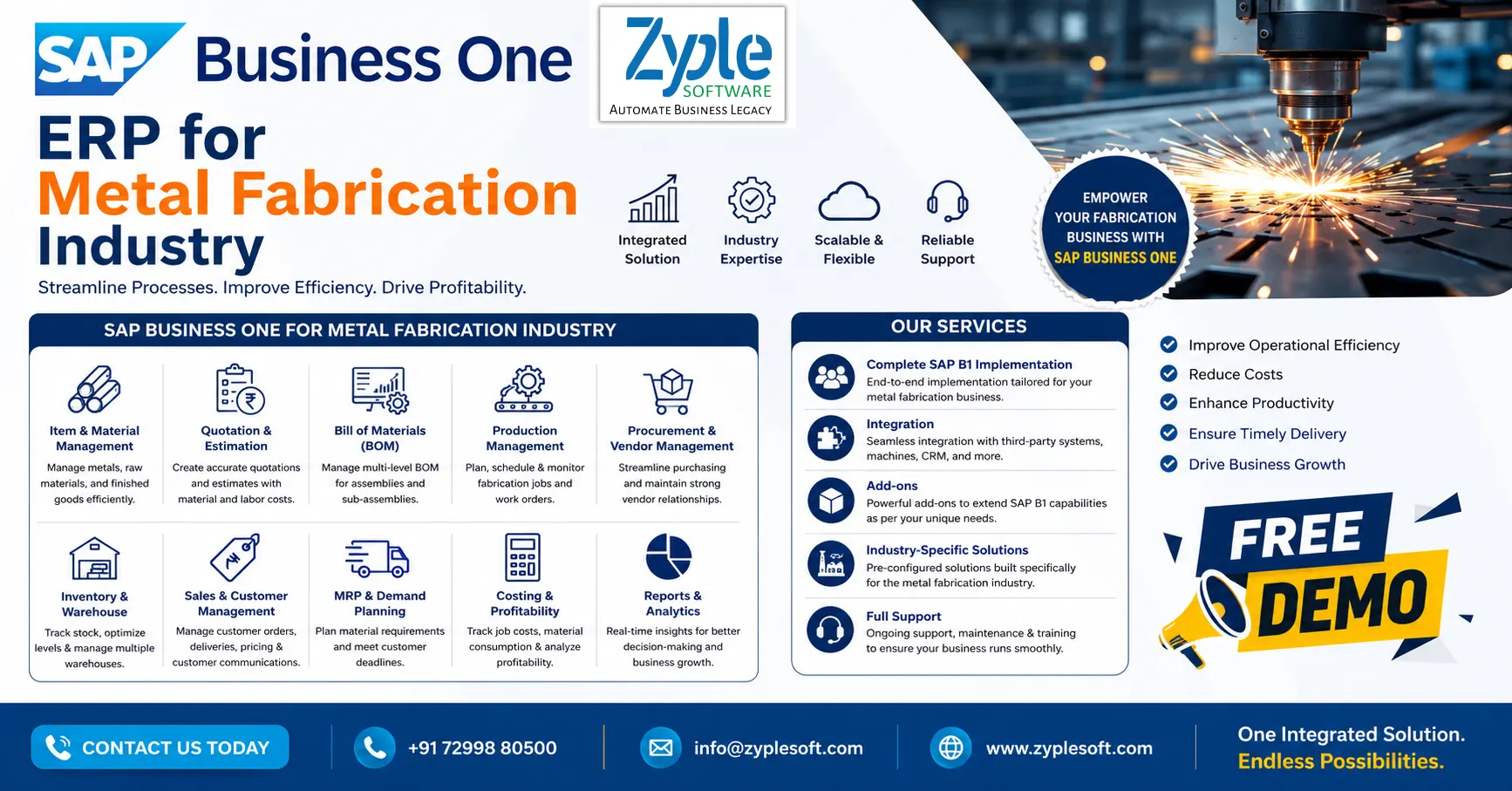
In the ever-evolving landscape of the metal fabrication industry, staying ahead of the curve is important for success. The metal fabrication industry is under constant pressure to improve efficiency, handle costs effectively, and ensure smooth operational flow. SAP Business One ERP for metal fabrication handles these challenges by providing a complete solution to optimize production, inventory, and financial management.
Challenges Faced By The Metal Fabrication Industry
The metal fabrication industry faces serious hurdles, notably severe skilled labor shortages, fluctuating raw material costs, and complex supply chain disruptions. Also, operators must navigate strict decarbonization mandates, the integration of automation tech, and rising demands for highly customized parts.
1. Skilled Labor Shortages
Finding certified welders, machinists, and assemblers remains a top challenge, driving many businesses to invest heavily in in-house training and advanced automation.
2. Supply Chain Disruptions
Fabricators struggle with material shortages, stock availability, and fluctuating costs (especially for steel and base metals), which delays production schedules.
3. Energy and Production Costs
Metal processing is highly energy-intensive. Rising power costs and the need for expensive, compliant environment equipment crush profit margins.
4. Quality and Waste Control
Common technical issues like inaccurate blending, tool wear, and poor edge finishes lead to expensive rework and excessive scrap.
5. Decarbonization and Green Steel
The industry faces a massive push to minimize carbon dioxide emissions and embrace green manufacturing, forcing secondary steel facilities to adapt and update legacy equipment.
6. Changing Customer Demands
There is a growing pressure to produce high-mix, low-volume custom parts on faster timelines, increasing the complexity of shop-floor scheduling.
Features of SAP Business One ERP for Metal Fabrication Industry
1. Production Planning and Shop Floor Control
- It includes bill of materials (BOM) management for complex assemblies.
- Routing and operation sequencing like cutting, bending, welding, and machining.
- It includes work order creation, release, and tracking.
- It includes real-time shop floor visibility.
- It includes machine capacity planning and scheduling.
- Minimized downtime and optimized resource utilization.
2. Raw Material and Inventory Management
- Handles metal grades, sizes, thickness, and dimensions.
- Batch or lot tracking like heat numbers, coils, and sheets.
- It includes real-time inventory visibility across warehouses.
- It includes scrap and waste management.
- It includes bin location and warehouse management.
- It includes automatic replenishment.
3. Procurement and Supplier Management
- It includes automated purchase requisitions and purchase orders.
- It includes vendor comparison and price management.
- It includes raw material procurement planning based on production demand.
- It includes integration with inventory and finance.
- It includes multi-currency and tax handling for global sourcing.
4. Sales and Customer Relationship Management (CRM)
- It includes lead and opportunity management.
- It includes quotation management for custom fabrication jobs.
- Customer order management, like make-to-order and engineer-to-order.
- It includes after-sales service and contract management.
- It includes integration with production for accurate delivery times.
5. Job Costing and Profitability Analysis
- Accurate job-wise costing, like material, labor, and machine time.
- Tracks work-in-progress (WIP).
- It includes margin analysis per order or project.
- It includes cost variance tracking and control.
- It helps improve pricing and profitability decisions.
6. Financial Management and Accounting
- It includes general ledger, accounts payable, and accounts receivable.
- It includes cash flow management and budgeting.
- It includes fixed asset accounting.
- It includes bank reconciliation and GST compliance.
- It includes real-time financial reporting and audit trials.
7. Quality Control and Compliance
- It includes inspection plans at multiple production stages.
- Quality check dimensions for dimensions, weight, finish, and tolerance.
- It includes non-conformance tracking and corrective actions.
- Compliance with industry standards like ISO and fabrication specs.
- It includes batch traceability for quality audits.
8. Production Cost Control and Material Optimization
- Minimizes material wastage and scrap.
- Optimizes cutting plans and material utilization.
- Tracks yield losses and improves efficiency.
- Controls over production, time, cost, and consumption.
9. Project and Contract Management
- Suitable for custom fabrication projects.
- Tracks project timelines, budgets, and resources.
- Links projects with procurement, production, and finance.
- Monitors project profitability in real-time.
10. Business Intelligence and Real-Time Analytics
- It includes real-time dashboards and KPI monitoring.
- It includes production efficiency analysis.
- It includes inventory and sales insights.
- It includes custom reports using Excel integration.
- It includes data-driven decision-making.
11. Multi-Warehouse and Logistics Management
- Handles multiple warehouses and yards.
- Tracks inward and outward movement of materials.
- It includes delivery scheduling and dispatch planning.
- It includes integration with transportation and logistics.
12. Integration and Automation
- It includes seamless integration of production, inventory, finance, and sales.
- It includes automated workflows and approvals.
- It includes integration with CAD, MES, and IoT (via add-ons).
- It includes e-invoicing, GST, and compliance automation.
13. Mobile and Cloud Access
- It includes a mobile app for real-time business access.
- It includes cloud or on-premises deployment.
- It includes remote monitoring of production and sales.
- Decision-making can be done anywhere, anytime.
14. Industry-Specific Capabilities for Metal Fabrication
- Handles cutting, welding, bending, and machining workflows.
- It includes support for make-to-order and engineer-to-order production.
- Weight-based inventory tracking is common in steels and metals.
- It includes fast quotations for custom fabrication jobs.
- Complete traceability from raw material to finished goods.
Benefits of SAP Business One ERP for Metal Fabrication
The ERP software, SAP Business One (SAP B1) system, facilitates metal fabrication by replacing fragmented systems with a unified platform. It connects shop-floor operations with financials, allowing fabricators to generate accurate quotes, optimize raw material nesting, track batches from purchase to delivery, and control project costs.
1. Accurate Job Costing
Gains real-time visibility into material, labor, and machine overheads. This ensures your price quotes are competitive while protecting profit margins using SAP implementation.
2. Material Optimization and Nesting
Through industry-specific add-ons, you can track raw metals (sheets, plates, and pipes) by batch or heat numbers and optimize cutting or nesting processes to decrease waste.
3. Integrated Production Planning
Seamlessly manage work orders, allocate resources, and schedule shop-floor production to eliminate obstacles and ensure on-time delivery.
4. End-to-End Traceability
Track materials from the initial supplier purchase through production and onto final delivery, which is essential for quality control and industry compliance.
5. Optimized Inventory Management
Maintain ideal stock levels of expensive raw materials, minimizing carrying costs and preventing stockouts using SAP solutions.
Conclusion of Metal Fabrication ERP
Zyple Software is an official SAP Business One partner in India specializing in implementation, digital transformation, licensing, integration, add-on solutions, migration, and consulting for the metal fabrication industry. By implementing SAP software, metal fabrication businesses can facilitate their processes, minimize inefficiencies, and gain better control over their operations, allowing them to scale and grow in a competitive market.
If you’re fascinated, schedule a demo of SAP Business One.
Do you command the SAP Business One ERP system for your business or industry?
Complete all the details in the defined contact form; our team will return to you.
FAQs for Metal fabrication
How can SAP Business One improve efficiency in metal fabrication operations?
SAP Business One automates key processes like production planning, inventory tracking, and order management. This minimizes manual errors, improves workflow visibility, and helps metal fabricators deliver projects faster and more efficiently.
Can SAP Business One handle custom and project-based fabrication jobs?
Yes, it supports make-to-order (MTO) and engineer-to-order (ETO) processes, enabling businesses to manage custom designs, job costing, and project timelines with precision.
How does SAP Business One help reduce material waste and costs?
With real-time inventory tracking and accurate demand planning, SAP Business One reduces overstocking and shortages, helping minimize scrap, optimize material usage, and control overall production costs.
Is SAP Business One suitable for growing metal fabrication companies?
Absolutely. It is designed for small and medium-sized businesses and scales as your operations grow, making it a cost-effective ERP solution for expanding fabrication companies.
How can I get started with SAP Business One for my metal fabrication business?
You can start by consulting a certified SAP Business One partner like Zyple Software, who will evaluate your requirements, provide a demo, and guide you through implementation, customization, and support.