Tag Archives: sap business one

erp services in dharwad

ERP Services Provider in Dharwad

ERP Services in Dharwad

erp services in dharwad

Dharwad, a bustling industrial hub known for its diverse sectors, is experiencing unique challenges that demand innovative solutions. From electronics to rice mills, industries in Dharwad require robust systems to manage complex supply chains and increase production workflows. Zyple Software provides SAP Business One, a comprehensive ERP software that is designed to handle the unique needs of different industries.

Why SAP Business One for businesses in Dharwad?

SAP Business One is a useful ERP (Enterprise Resource Planning) solution for businesses in Dharwad because it provides a comprehensive, integrated system to facilitate operations, improve efficiency, and allow smarter decision-making, ultimately contributing to business growth and profitability. 

Here are the reasons why SAP Business One is a good fit for the businesses in Dharwad:

Integrated Operations

SAP Business One integrates important business functions such as finance, sales, inventory, purchasing, and operations into a single system, eliminating data storage and repetitive entries. This results in increased efficiency and minimized errors.

Enhanced Decision-Making

Businesses in Dharwad can gain improved financial visibility and make better decisions on accurate, updated information using real-time data and reporting capabilities.

Streamlined Processes

This is specifically for businesses like those in the electronics or trading and distribution sectors in Karnataka.

Scalability and Flexibility

SAP Business One is designed to grow with the business, accommodating evolving needs and expansion plans without requiring continuous system overhauls. It can also be customized with various add-ons to meet specific industry or business requirements.

Cost-Effectiveness for SMEs

While providing enterprise-level features, SAP Business One is cost-effective for small and medium-sized businesses, providing the same powerful tools that big companies use.

Improved Customer Relationships

The system includes a robust CRM module to help businesses manage customer interactions, track sales opportunities, and improve customer service, which is crucial for sustained growth.

Top ERP Services in Dharwad

Installation and License Procurement

It helps in choosing the best module of SAP B1 for your business. Thereby, it helps in selecting suitable installation and licensing procurement arrangements to make profitable business with the SAP Business One solution in Dharwad.

Customization and Implementation

It deals with full-stack deployment on-premise, in the cloud, or in hybrid setups. Module integration across finance, inventory, materials, and service can be done.

SAP Business One SQL to HANA Migration

There are few steps, such as evaluating all the processes, doing live testing, and delivering support, so that businesses can enjoy smooth and effortless migration.

Add-Ons Development

We are the certified SAP B1 add-ons partner catering to over 20+ industries to ensure that you do not miss out on any opportunities and business solutions.
 

Industry Coverage Relevant to Dharwad

Given Dharwad’s business profile, Zyple’s SAP B1 industry-specific modules are especially useful:

Electronics

Production, inventory management, purchasing, sales, finance and accounting, CRM, and business intelligence to optimize operations of electronics businesses.

Textile

Financial Management, Production and Operations, Inventory Management, Sales and Distribution, Customer Relationship Management (CRM), Purchasing and Procurement, and Analytics and Reporting to help textile businesses handle everything from raw material procurement and production planning to quality control, sales, and financial operations.

Manufacturing

Production management, materials requirement planning (MRP), inventory management, supply chain management, and sales and CRM are crucial for the manufacturing businesses.

Heavy Engineering

Financial management, project management, supply chain management, inventory management, and more to benefit heavy engineering businesses.

Why Zyple is Best for SAP ERP Services in Dharwad

1.SAP Partner Expertise

Our organization is a recognized SAP Business partner with a focus on SAP B1, illustrating proficiency in delivering exceptional service and project outcomes.

2.Tailored Solutions

They highlight understanding unique business needs and configuring/implementing SAP solutions to align with those specific goals like customized add-ons and industry-specific approaches.

3.Comprehensive Support and Training

Our organization provides full support from initial consultation to consistent support to make sure a seamless and easy SAP B1 environment.

4.Focus on Innovation and Modernization

To gain a competitive advantage, they help businesses use cutting-edge technology, such as SAP B1 HANA and cloud platforms.

5.Local Insight with Global Expertise

While emphasizing local understanding, Zyple integrates this with global-grade SAP expertise to deliver solutions that are affordable, easy to use, and designed for businesses in Dharwad.

6.Proven Track Record

Zyple has extensive experience with SAP implementations across different industries in India, such as manufacturing, construction, retail, pharma and services.
 

Overview of ERP Implementation Process

1.Planning

This important phase involves determining project scope, objectives, timelines, and budget. It also includes identifying key stakeholders, evaluating current business processes, and selecting the right ERP solution.

2. Configuration

Once the ERP system is preferred, it needs configuration to position with the organization’s distinct requirements and workflows. This may involve designing the software, setting up user roles and permissions, and defining data migration strategies.

3.Data Migration

Progressing data from legacy systems to the latest ERP system is a necessary step. This involves clearing, verifying, and transforming data to ensure accuracy and consistency in the latest system.

4.Testing

Unit testing, integration testing, user acceptance training (UAT), and performance testing are incorporated in this stage of ERP implementation.

5.Training

End-users require proper training on how to use the new ERP system effectively. This training should involve system functionality, navigation, and specific workflows pertinent to their roles.

6.Deployment and Go-Live

This may involve a progressive roll-out or a big bang approach, depending on the organization’s needs and complexity.

7.Post-Implementation Support

Continuous support is crucial for addressing user questions, resolving issues, and ensuring the system continues to meet the organization’s needs. This may incorporate technical support, maintenance, and system updates.

Business Outcomes for Industries in Dharwad

  • Improved production scheduling, optimized inventory control, better procurement management, and inclusive real-time analytics for decision-making.
  • Boosted operational efficiency, improved decision-making, and minimized costs through automation and real-time insights.
  • Data security and providing real-time availability of information, which is important for managing financial transactions and client data.
  • Automation of many business processes, minimizing manual effort and improving overall operational efficiency across different departments.
  • Higher accuracy in data management and user-friendliness to accommodate business growth and changing needs.
  • Handling supply chain challenges by enabling efficient tracking of goods, managing inventory, and optimizing final delivery to customers. This can lead to minimized lead times and improved customer satisfaction.
  • Management of customer interactions, tracking sales opportunities, and optimization of overall customer service through better information management.
healthcare erp software

What is Healthcare ERP?

What is Healthcare ERP Software?

healthcare erp software

It is a software system that integrates different business processes within a healthcare business. It facilitates operations, improves communication, and optimizes data management across different departments, ultimately aiming to enhance patient health care and operational efficiency.

What is ERP in healthcare?

Enterprise Resource Planning (ERP) systems are important in supply chain management and inventory control. It involves integration of different aspects of the supply chain management, from procurement and supply chain management to distribution and inventory tracking.

ERP Software which is suitable for the Healthcare Industry in India

SAP Business One is an inclusive ERP system that can be productively utilized in the healthcare industry to facilitate operations, improve patient care, and optimize financial management. Integration of different aspects of healthcare operations into a single platform, such as patient management, appointment scheduling, inventory control, financial accounting, and compliance, can be done using this ERP software.

Types of ERP Systems in Healthcare

There are different types of ERP systems available in the market, and you should find the right choice for your healthcare business. Let’s have a look at them:

1. On-Premise ERP System

Healthcare servers and devices host everything giving them complete server ownership using on-premise ERP system. Facilities that require a high level of security and privacy typically choose this type of ERP system.

2. Cloud-Based ERP System

It guarantees that the data is updated in the centralized software and is accessible to everyone who has permissions in this type of ERP system. For support, updates, training, and customization, the software vendor will be responsible.

3. Hybrid ERP System

Its purpose is to provide flexibility to host and set up services as per their requirements.

Key Features of Healthcare ERP

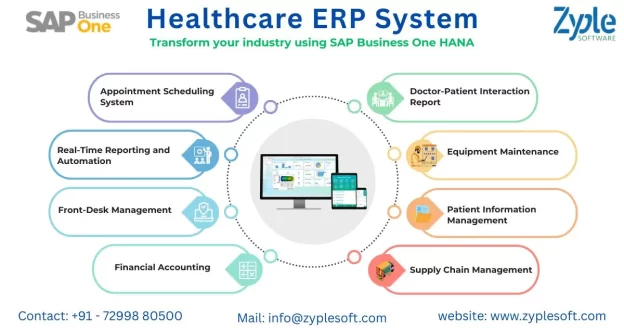
1. Appointment Scheduling System

It has a record of the time, date, and place of scheduled appointments as well as medical examinations or forecasts of indoor, outdoor, or remote patients.

2. Doctor-Patient Interaction Report

It is a single platform for all important schedules, past and future examination dates, prescriptions, and test reports of patients in a comprehensive manner.

3. Front-Desk Management

The ERP software for the healthcare industry has a unique module to support the admin to  handle various processes at once from a single, interactive dashboard.

4. Financial Accounting

This is one of the most crucial features of a healthcare ERP solution that facilitates financial processes and helps you to plan the budget accordingly.

5. Equipment Maintenance

This feature helps your organization operate the equipment and connected devices in various procedures and report immediately if any of these need servicing.

6. Real-Time Reporting and Automation

The specialized ERP healthcare software can automate processes and deliver real-time reports on predetermined actions and diagnoses or medications.

7. Patient Information Management

This feature of the healthcare ERP system helps organizations to facilitate patient data storage, recovery, and capture.

8. Supply Chain Management

Integration of supply chain management is important for healthcare businesses to ensure the easy accessibility of medical supplies, facilitate procurement processes, and control costs. Purchase order tracking, vendor management, inventory management, and demand forecasting are included.

9. Human Capital Management

It facilitates staff recruitment and onboarding, tracks credentials, and supports career growth with predictive analytics.

Benefits of ERP in Healthcare

With technological advancements in the industry, many healthcare corporations are considering software integration for business growth as it provides personalized solutions and delivers quality services. When it comes to integrating an ERP system in healthcare, you must know its benefits and role in the growth of your facility.

1. Managing Medical Records

With the help of SAP solutions, the end users will be able to add, update, access, and monitor the medical records of every patient. This will minimize time consumption and complexities and overburden the staff, leading to a more focused approach to patients’ concerns.

2. Gaining Data Privacy

When you have a healthcare ERP system, it enables you to add authorizations and permissions for each user based on their role in the healthcare facility. This will guarantee your data is safe from online threats and breaches. Also, securing patients’ information helps to acquire their trust and deliver better care.

3. Saving Operational Costs

To ensure a seamless process in the healthcare sector using SAP services, maintaining a balance between labor costs and inventory is important. Healthcare providers can monitor their expenditures and define labor costs in detail.

4. Following Industry Protocols

Healthcare businesses are always bound to follow standard protocols. With SAP implementation, businesses can ensure that all operations are secure, transparent, and monitored regularly. Whether it is legacy systems, record-maintaining methods, audits, or upgrading systems, everything will be organized.

5. Analysis and Planning

Gaining real-time insights about patient visits, costs, inventory, labor, and more helps you analyze your labor performance. This information can be accessed by the top management to understand the area of improvement and plan for a better solution for their patients.

6. Collaborations

Different processes coincide in a small or large healthcare facility, which might be challenging to keep track of. The process becomes easy and productive if your team knows how to embrace an enterprise system. Collaborating with them in a unified system will keep everyone connected and updated.

Things to Consider While Choosing the Best ERP System for Healthcare

1. Identify Your Healthcare Needs

There are many types of healthcare providers, including medical facilities, clinics, health insurance providers, and pharmaceutical companies, having distinct needs and requirements.

For instance, hospitals might need an ERP system with features, such as medical billing, bed allocation, and patient management while facilitating inventory management. Instead, ERP services are prioritized by clinics to increase clinical processes and centralize patient data via EHR (Electronic Health Records) integration.

2. Evaluate ERP Industry-Based Features

Healthcare ERP systems don’t have a one-size-fits-all approach. Therefore, evaluating industry-specific features is essential. Look for a healthcare ERP solution that supports data security and complies with regulatory compliance standards and medical device integration.

3. Consider Integration Capabilities

Healthcare enterprises depend on different systems, such as patient portals, laboratory systems, and EHRs, functioning smoothly. Therefore, while choosing an ERP system for a healthcare business, it’s important to ensure that it integrates seamlessly with your existing systems.

4. Assess Vendor Capabilities

You should pay heed to these vital aspects when evaluating your potential ERP software development services:

  • Cloud or On-Premise: There is a need to select between a cloud-based ERP system (remote access, affordable, scalable) or an on-premise ERP system (higher upfront cost, greater control).
  • Support and Training: Examine the degree of client support your service provider delivers.
  • Client Feedback: Meticulously research your vendor’s reputation by reviewing client feedback, testimonials, and case studies from other healthcare providers.
  • Upgrades and Maintenance: Select an ERP software company that provides frequent software updates, scalability options, and security patches, which will help you achieve the ever-changing needs of the healthcare organizations.

5. Work With Experts

Before taking the final call, seeing the ERP system up and running is critical. You can schedule SAP B1 demos to evaluate the system’s performance, features, and usability under real-life conditions.

Conclusion of Healthcare ERP System

Zyple Software provides SAP Business One ERP to transform your healthcare operations to address your company’s unique needs. If you’re looking to facilitate patient care, optimize financial management, or improve compliance, this ERP software is here to revolutionize your practice.

Read Also: SAP Business One for Healthcare Industry

Inventory Control in SAP Business One

Inventory Control in SAP Business One

What is Inventory Control in SAP Business One?

Inventory Control in SAP Business One

Inventory control in SAP Business One is a powerful feature that helps small and midsize enterprises (SMEs) efficiently manage their stock levels, track inventory movement, and optimize warehouse operations. As part of the larger SAP Business One ERP suite, inventory control integrates seamlessly with purchasing, sales, production, and accounting modules and offering businesses real-time visibility and operational efficiency.

What is Inventory Control?

Inventory control, also known as stock control, refers to the processes involved in managing a company’s inventory of goods. It includes tracking quantities, managing stock levels, monitoring stock movements, and make sure that goods are stored, ordered, and used efficiently. The goal is to balance supply and demand while minimizing costs and maximizing service levels.

In SAP Business One, inventory control is not just about counting stock. It offers advanced capabilities like real-time inventory tracking, automated stock updates, bin location management, serial and batch number tracking, multiple units of measure and inventory valuation. These tools help businesses maintain optimal inventory levels, reduce stock-outs and overstocking, and improve cash flow.

Key Features of Inventory Control in SAP Business One

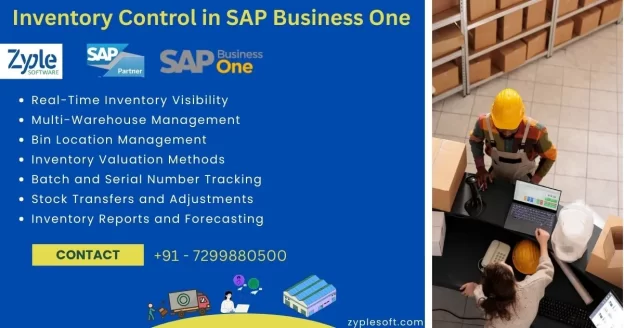
1. Real-Time Inventory Visibility

SAP Business One provides a centralized view of inventory across multiple warehouses and locations. This means decision-makers can access up-to-date information about stock levels, item availability, and movement history in real time. This capability eliminates delays and improves responsiveness to customer demands.

2. Multi-Warehouse Management

With SAP Business One, businesses can manage inventory across multiple warehouses, each with its own settings and parameters. Users can transfer stock between locations, define warehouse hierarchies, and monitor inventory levels across all branches from a single dashboard.

3. Bin Location Management

For businesses with complex storage needs, bin location management allows stock to be tracked at the bin level within each warehouse. This granular control helps optimize space usage and speeds up the picking and packing process.

4. Inventory Valuation Methods

SAP Business One supports several inventory valuation methods such as:

  • Standard costing
  • Moving average
  • FIFO (First In, First Out)

Each method provides insights into inventory costs and helps align accounting practices with business goals.

5. Batch and Serial Number Tracking

For industries like pharmaceuticals, food, and electronics, tracking inventory by batch or serial number is crucial for compliance and traceability. SAP Business One allows you to track each item by unique identifiers, enabling precise control over quality, recalls, and warranty claims.

6. Stock Transfers and Adjustments

Users can easily manage stock transfers between warehouses or bins, and make stock adjustments due to damage, loss, or stocktaking results. These actions are recorded in real-time and integrated into accounting and audit trails.

7. Inventory Reports and Forecasting

SAP Business One comes with built-in inventory reports, like:

  • Inventory audit reports
  • Inventory valuation reports
  • Stock aging reports
  • Item-wise sales and purchase analysis

These reports help businesses make data-driven decisions regarding inventory planning, reordering, and demand forecasting.

Benefits of Inventory Control in SAP Business One

Implementing inventory control through SAP Business One brings numerous operational and financial advantages:
  1. Improved Accuracy: Automated data entry, real-time tracking, and barcode scanning reduce human error and ensure accurate stock levels across all locations.
  2. Reduced Inventory Costs: Better inventory visibility helps avoid overstocking or understocking, leading to more efficient purchasing decisions and reduced holding costs.
  3. Enhanced Customer Satisfaction: With accurate stock data, businesses can fulfill orders more reliably and quickly, improving customer service and satisfaction.
  4. Improve Warehouse Operations: Efficient stock management simplifies warehouse processes like picking, packing, and shipping, reducing lead times and operational inefficiencies.
  5. Seamless Integration: Inventory control is fully integrated with other modules in SAP B1, such as sales, purchasing, production, and finance. This integration ensures consistent data and streamlines end-to-end business processes.

Who Should Use SAP Business One Inventory Control?

SAP Business One is ideal for small to medium-sized businesses in sectors such as:
  • Manufacturing
  • Wholesale and distribution
  • Retail
  • Food and beverage
  • Pharmaceuticals
  • Electronics
These industries benefit the most from features like multi-warehouse management, batch tracking, and inventory forecasting.
 

Common Use Cases of Inventory 

  1. A retail business uses SAP Business One to manage seasonal inventory and avoid stock-outs during peak shopping periods.
  2. A food distributor leverages batch tracking and expiration date management to comply with safety regulations.
  3. A manufacturer uses inventory control to ensure raw materials are available for production planning.

Optimizing Inventory Control with SAP Add-Ons

SAP Business One is highly customizable. Businesses can extend its inventory capabilities using third-party add-ons for:
  • Barcode scanning
  • Advanced warehouse management systems (WMS)
  • E-commerce integration
  • Demand forecasting powered by AI
These add-ons help businesses tailor the system to meet specific needs and scale operations more effectively.
 

Conclude words of Inventory Control

Inventory control in SAP Business One is a very important component of business and supply chain management. It empowers companies to manage their inventory more accurately, reduce costs, and improve service levels. By offering real-time visibility, robust tracking, and seamless integration with other core processes, SAP Business One provides SMEs with the tools they need to grow efficiently and stay competitive.
 
For businesses looking to improve their inventory processes, SAP Business One delivers a reliable, scalable, and user-friendly solution that adapts to your operational needs.
 
erp services in Sangli

ERP Services in Sangli

ERP Services Provider in Sangli

erp services in Sangli

Sangli, a vibrant city in Maharashtra known for its agricultural produce, manufacturing units and thriving SME ecosystem, faces unique business challenges. From managing seasonal inventory surges to handling intricate accounting and supply‑chain logistics, companies in Sangli need an integrated, robust ERP system. Zyple Software is a certified SAP Business One (B1) partner providing ERP service in Sangli to brings immense value.

There are many industries in Sangli like Food and dairy, water-pumps, sugar, grapes wine, turmeric, cold storages, machine-shops foundry-components manufacturing, cutting tool, manufacturing of farming equipment, boilers and valves manufacturing etc.

Why SAP Business One ERP for business in Sangli?

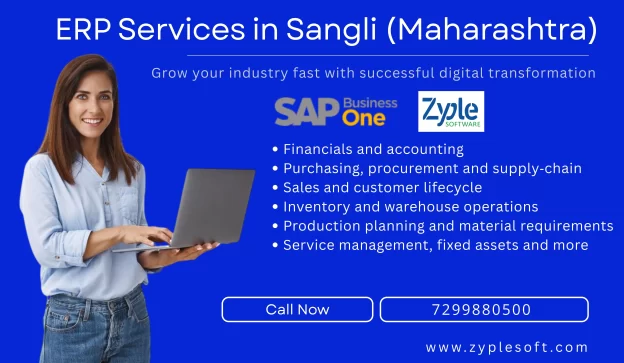
SAP Business One is an ERP software platform developed for small, medium and large industries or businesses. It provides complete tool to manage all functions at single system:

  • Financials and accounting
  • Purchasing, procurement and supply‑chain
  • Sales and customer lifecycle
  • Inventory and warehouse operations
  • Production planning and material requirements
  • Service management, fixed assets and multi‑currency support
  • Tender Bid, Weighbridge, Plant Maintenance and Legal Management

Built on either Microsoft SQL Server or SAP HANA, it offers real‑time analytics, mobile access and cross‑module integration. These features ensure that Sangli‑based businesses gain visibility, agility and efficiency.

Your Top SAP B1 ERP Partner in Sangli – Zyple Software

Zyple Software is a fully accredited SAP Business One partner working across India, including Maharashtra. Though headquartered elsewhere, they extend their services into Sangli through remote consulting and on‑site visits. 

The company is offerings core value, ideal for Sangli SMEs, include:

1. Consulting and Advisory

  • Workflow analysis tailored to Sangli industries
  • Process mapping to align SAP software capabilities with operational needs.

2. Implementation and Configuration

  • Full‑stack deployment on‑premise, cloud or hybrid setups
  • Module integration across finance, inventory, materials and service

3. Customization and Add‑Ons

  • Industry‑specific modules for manufacturing, construction, pharmaceuticals, textiles, retail, logistics and more
  • Localisation components like GST/E‑invoicing add‑ons to comply with Indian regulations

4. Data Migration and Upgrades

  • Transition paths from legacy systems or SAP ECC to SAP B1 HANA
  • Assistance with version upgrades and migration to HANA database

5. Integration and Extensions

  • Connecting SAP B1 with existing tools (portals, POS, CRM, mobile apps, CNC machines) via B1 and Service Layer
  • Innovative integrations such as WhatsApp for alerts and support

6. Training and Change Management

  • Hands‑on training, user workshops and proof of concept (POC) demos to ensure team readiness
  • Role‑based access, authorization guidelines and governance support

7. Support and Managed Services

  • Ongoing application management services, 24*7 SAP support and remote assistance.
  • BOT (Build-Operate-Transfer) model: Zyple manages ERP initially, then hands over to your internal team.

8. Analytics and Reporting

  •    Real‑time dashboards, KPI monitoring, SAP Analytics Cloud for business intelligence
 

Industry Coverage Relevant to Sangli

Given Sangli’s business profile, Zyple’s SAP B1 industry‑specific modules are especially advantageous:
 

1. Manufacturing and Agro‑Processing

  • Support for Bill of Materials (BOM), production orders, inventory planning, and MRP to handle seasonal demand

2. Pharmaceuticals and Food Processing

  • Traceability, batch tracking, quality management, compliance modules vital for regulated products

3. Textiles and Apparel

  • Style/color/size matrix, seasonal forecasting, production planning offering to Sangli’s textile houses

4. Retail and Trading

  • POS integration, inventory sync across stores and warehouses for efficient retail distribution

5. Logistics and Fleet Management

  • Add‑ons for fleet tracking, logistics planning and warehouse control to optimize transport operations

6. Automotive and After‑Sales

  • Warranty tracking, service call management, parts inventory – benefits auto parts dealers and garages

Deployment Options

Zyple offers flexible deployment to suit Sangli businesses:

On‑Premise Deployment

  •   Ideal for companies with existing local infrastructure looking for direct data control.

Cloud and Hybrid Setup

  •   Cost‑effective, scalable options using AWS, Azure or third‑party data centres – zero local server dependency

SQL to HANA Migration

  •  Upgrade path off legacy databases to in‑memory HANA for faster analytics and reporting

Why Choose Zyple for SAP ERP Service in Sangli?

1. Localised Expertise

   Though not based in Sangli, Zyple’s experience across Maharashtra (Nashik, Pune) and pan‑India ensures they understand local industry needs

2. Certified Partner Credentials

   As an SAP B1 and Solution Partner, Zyple offers certified consulting, development and support.

3. End‑to‑End Services

   From advisory to go‑live, through add‑on development and ongoing AMS, Zyple supports the full ERP life cycle

4. Cost‑Effective & Scalable

   With cloud and on‑premise options, licensing price support and add‑on modularity, costs match Sangli business scale.

5. Regulatory Compliance

   GST and e‑invoicing integration ensure compliance with India’s tax laws

6. Rapid Deployment

   Typical go‑live timelines are weeks to a few months depending on complexity


 ERP Implementation Process Overview

1. Assessment and Scoping

   Diagnostic workshops to understand Sangli‑specific workflows like agriculture cycles, manufacturing batch schedules, distribution routes.
 

2. Configuration and Customisation

   Align SAP B1 modules, configure localisation, build add‑ons and process flows for daily operations.
 

3. Data Migration and Testing

   Transfer historical data, test functionality and user acceptance, iterate until stable.
 

4. Training and User Adoption

   Role‑based training sessions for accounts, production, warehouse, sales teams using real Sangli‑specific scenarios.
 

5. Go‑Live and Hypercare

   Dedicated support during cut‑over, BOT model ensures a smooth handoff to operations.
 

6. Post‑Go‑Live Support and Scaling

   Ongoing AMS, scheduled upgrades, analytics rollout and expansion into new functions or geographies.
 

Business Outcomes for Industries in Sangli

  1. Accurate, real‑time visibility into inventory, sales, purchases, and production
  2. Optimized working capital through automated MRP, avoiding stock overflows or shortages
  3. Operational efficiency by replacing spreadsheets and manual processes
  4. Compliance adherence via GST and E‑invoicing integration, audit trails and secure authorization
  5. Scalable growth engine by adding modules, users or geographies becomes frictionless
  6. Informed decision‑making powered by dashboards and BI analytics

Last discussion for ERP

Zyple Software’s SAP Business One offering is a best ERP solution ideal for Sangli’s SMEs, manufacturers, agro‑processors, retailers and service providers. With offering services like consulting, implementation, customisation, integrations, training and support, Zyple ensures smooth deployment aligned with Sangli’s unique operational and regulatory context.
 
If you’re exploring ERP for your Sangli business, Zyple combines local insight with global-grade SAP expertise to deliver a solution that’s affordable, scalable and tailored to drive efficiency and growth.
 
 
sap business one erp for renewable energy companies

How SAP Business One ERP is helping renewable energy companies

How SAP Business One ERP Empowers Renewable Energy Companies

sap business one erp for renewable energy companies

1. Centralized data and project tracking

SAP Business One brings all business data like finance, inventory, operations into one unified platform. Renewable energy firms, like solar and wind installers, can track every asset, transaction and project in real time.

This gives teams:
  • Live visibility into inventory, maintenance, and bills
  • Accurate, consolidated data – no spreadsheet chaos
  • Faster, better-informed decisions

2. Resource optimization and waste reduction

Using real-time insights, companies can control material usage like panels, cables, batteries and spare parts.

Benefits include:
  • Smarter procurement, fewer shortages
  • Reduced overstock, less waste
  • Improved stock movements for projects across sites

3. Financial oversight and cost control

SAP Business One’s financial module automates accounting, budgeting, and real-time cost tracking.
For renewable projects, this enables:

  • Live tracking of income/costs per project
  • Efficient invoicing and billing workflows
  • Improved cash flow planning and financial forecasting

4. Tailored project management

Renewable energy firms manage complex installations and schedules. SAP B1’s project module helps with:

  • Timelines, budgets, and milestones tracking.
  • Resource assignment – human and material
  • Job-cost tracking and variance analysis

This leads to improved delivery, on-time completion and fewer cost overruns.

5. Supply chain & procurement efficiency

With suppliers for panels, turbines, converters, SAP B1 optimizes procurement:

  • Supplier evaluation and order tracking
  • Just-in-time inventory, reducing holding costs
  • Local sourcing to cut lead times and carbon footprint

6. IoT integration and predictive maintenance

SAP Business One integrates with IoT platforms to monitor equipment like solar arrays, wind turbines, inverters and tracking performance and detecting anomalies.

Firms can then:
  • Schedule maintenance only when needed
  • Avoid unnecessary service visits
  • Keep assets running smoothly and efficiently

7. Environmental compliance & sustainability reporting

SAP B1 includes tools to measure sustainability KPIs like CO₂ emissions, energy use, waste generated.

It helps companies to:
  • Generate audit-ready environmental reports
  • Track regulatory compliance (local and global)
  • Document sustainability efforts clearly for stakeholders

8. Better billing for prosumers and feed‑in tariffs

For firms managing prosumers (who both consume and supply energy), specialized SAP modules like IS‑U (Utilities) support complex billing 

scenarios:
  • Energy fed into the grid versus consumed
  • Feed-in tariff rate calculation
  • Automated invoices by meter readings
  • Managing green energy certificates and regulatory subsidies

This makes billing operations transparent and compliant.

9. Cloud deployment & lower IT footprint

Running SAP Business One in the cloud reduces reliance on in‑house servers, lowers energy use, and improves scalability.

Cloud ERP offers:
  • Lower hardware costs
  • Eco-friendly operations
  • Easy business scaling with demand

10. Better customer engagement & service

Complementing back-end ERP, SAP B1 integrates with CRM and self‑service tools.

Benefits:
  • Full overview of customer history, contracts, and equipment
  • Faster response with integrated service request handling
  • Better client satisfaction through transparency

11. Scaling with flexibility

SAP Business One serves as a scalable foundation for growth. Add‑ons and partner modules allow companies to expand into sophisticated processes like asset management, advanced analytics or integrate into S/4HANA later.
It strikes a balance: feature-rich yet usable for mid‑sized firms.

Why it attracts renewable energy firms

SAP B1 fits these key criteria:

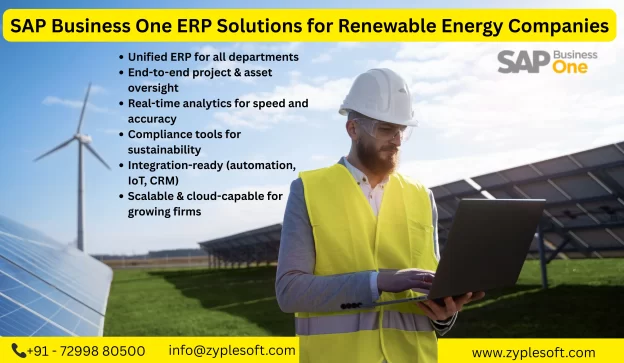
  • Unified ERP for all departments
  • End-to-end project and asset oversight
  • Real-time analytics for speed and accuracy
  • Compliance tools for sustainability
  • Integration-ready (automation, IoT, CRM)
  • Scalable & cloud-capable for growing firms

Partnership with SAP Business One Partner for Renewable Energy ERP

Partnering with a SAP Business One partner like Zyple Software for a Renewable Energy ERP solution offers a strategic edge for clean energy companies looking to improve operations and scale sustainably. With deep expertise in SAP Business One, Zyple customizes ERP systems to meet the unique demands of the renewable energy industry and integrating project management, asset tracking, regulatory compliance, and financial reporting into one intelligent platform. This partnership empowers energy firms to gain real-time visibility, optimize resource utilization and make data-driven decisions that support long-term environmental and economic goals.

Summary of Renewable Energy ERP

SAP Business One ERP equips renewable energy companies with digital tools to operate smarter, greener and more profitably. It empowers them to:

  1. Track and manage projects end-to-end
  2. Optimize resources and reduce waste
  3. Automate financial and billing processes
  4. Prioritize preventive maintenance
  5. Meet reporting and regulatory requirements
  6. Engage customers with personalized service
  7. Scale operations seamlessly, supporting long-term growth

By process of successful SAP implementation, renewable energy companies gain operational clarity, sustainability insights, and growth-ready digital infrastructure. That’s why it consistently ranks among top ERP choices in this sector.

Read also: https://www.zyplesoft.com/solar/

SAP B1 Consultant

What is an SAP B1 Consultant and Why Your Business Need One

What is an SAP B1 Consultant and Why Your Business Might Need One

SAP B1 Consultant

All sizes Companies are looking for ways to improve their operations, improve decision-making, and scale efficiently. One of the most powerful tools available to small and mid-sized enterprises (SMEs) is SAP Business One (SAP B1). It is an integrated enterprise resource planning (ERP) solution designed specifically for growing businesses. But while SAP B1 is powerful, implementing and optimizing it requires expertise. That’s where an SAP B1 Consultant becomes necessary.

Who is an SAP B1 Consultant?

An SAP B1 Consultant is a professional who specializes in the implementation, customization, and support of the SAP Business One software. These consultants are experts in both the technical and functional aspects of the system. They bridge the gap between a business’s unique processes and the capabilities of the SAP B1 platform, ensuring that the software aligns seamlessly with operational goals.
 
SAP B1 Consultants can work independently, as part of a consulting firm, or be employed in-house by companies using SAP Business One. Their primary role is to help businesses implement the software effectively, minimize disruptions, and provide continuous support for optimal performance.

Key Responsibilities of an SAP B1 Consultant

An SAP B1 Consultant wears many hats throughout the software lifecycle. Their responsibilities typically include:
  1. Requirements Gathering: Understanding the client’s business processes, objectives and current pain points.
  2. Solution Design: Mapping business needs to SAP B1 features, and designing tailored workflows.
  3. Implementation and Configuration: Installing and configuring the system, ensuring compatibility with business processes.
  4. Customization: Developing custom reports, dashboards, or add-ons to meet unique requirements.
  5. Data Migration: Transferring legacy data to SAP B1 without losing accuracy or consistency.
  6. Training: Educating end-users and administrators on how to use the software effectively.
  7. Support and Maintenance: Troubleshooting issues, upgrading systems, and offering technical support post-implementation.

Skills and Expertise of an SAP B1 Consultant

To be effective, an SAP B1 Consultant must possess a blend of technical knowledge and business acumen. Key skills include:
  • Deep understanding of ERP principles and how they apply to SMEs.
  • Proficiency in SAP B1 modules such as finance, inventory, sales, CRM, and production.
  • Technical skills in SQL, SAP Crystal Reports, and SDK (Software Development Kit).
  • Strong communication and project management abilities.
  • Experience in change management and end-user training.

Benefits of Hiring an SAP B1 Consultant

A Successful SAP implementation is a significant investment, and a skilled consultant can ensure a high return on that investment. Here’s how businesses benefit from hiring an SAP B1 consultant:
  1. Faster Implementation: Consultants bring proven methodologies that reduce the time required to go live.
  2. Reduced Risk: Mistakes during implementation can be costly. A consultant helps you avoid common pitfalls.
  3. Custom Fit: They tailor the system to meet the specific needs of your business, rather than forcing you to adapt to generic settings.
  4. Training and Support: Ensures your team knows how to use the system effectively, increasing user adoption and satisfaction.
  5. Scalability: Consultants design systems that grow with your business, reducing the need for future overhauls.

When Should You Hire an SAP B1 Consultant?

Hiring an SAP B1 Consultant is advisable when:
  • You are planning your first ERP implementation.
  • You are migrating from another ERP or legacy system.
  • You are struggling with underutilized features or inefficient workflows.
  • You need to integrate third-party apps or customize reports.
  • Your in-house IT team lacks specialized SAP B1 knowledge.

Choosing the Right SAP B1 Consultant

Not all consultants are created equal. When selecting an SAP B1 Consultant, consider:
  • Certifications: Are they SAP-certified or have proven credentials?
  • Experience: Have they worked with ERP in your industry or of a similar size?
  • References: Can they provide client testimonials or case studies?
  • Communication: Are they able to explain complex ideas in simple terms?
  • Support Plans: Do they offer ongoing SAP support after implementation?

SAP B1 Consultant Vs SAP B1 Partner

While SAP B1 Consultants are individuals or small teams, SAP B1 Partners (Best Example: Zyple Software) are official resellers and implementers recognized by SAP. A consultant can work independently or as part of a partner network. For smaller companies, a freelance consultant might offer a more cost-effective solution. For larger projects, a certified SAP partner with a team of consultants may be more appropriate.

Last Words

The success of any ERP system hinges not just on the software itself, but on how well it is implemented and adopted. An SAP B1 Consultant ensures that your SAP software solution is aligned with your unique business needs, enabling you to automate workflows, gain real-time insights, and make smarter decisions.
 
Whether you are starting from scratch or optimizing an existing setup, the right consultant can be the difference between a smooth transformation and a costly misstep. Investing in an SAP B1 Consultant is not just about adopting software but it’s about setting your business up for long-term success.
 
 
If you are looking for consultant for your business. then fill you details in form. We will contact you soon.
 

    Best ERP Solutions for Business in India

    Best ERP solutions for business in India

    Best ERP Solutions for Businesses in India

    Best ERP Solutions for Business in India

    In rapid business environment, companies in India are increasingly turning to Enterprise Resource Planning (ERP) solutions to efficient operations, improve decision-making with better productivity. An ERP system integrates core business processes such as finance, sales, inventory, purchasing, MRP and customer relationship management into a unified platform. This helps businesses reduce redundancies, increase efficiency and maintain a competitive edge.

    When it comes to ERP software in India, several solutions stand out. However, SAP Business One (SAP B1) is widely regarded as one of the best ERP solutions for small and mid-sized enterprises (SMEs) in India. Offered through certified SAP B1 partners, it provides tailored functionality, scalability, and local support that Indian businesses need.

    Why Indian Businesses Need ERP

    India’s dynamic economic environment and diverse industry era make ERP implementation increasingly essential. Whether it’s a manufacturing company in Bengaluru (Bangalore), a retail business in Mumbai or a service provider in Chennai, all face challenges that ERP can help solve:
    • Fragmented data systems leading to inefficiencies
    • Manual processes that consume time and resources
    • Regulatory compliance like GST, TDS, and e-invoicing
    • Inventory management challenges across multiple warehouses
    • Need for real-time business intelligence
     Modern ERP solutions offer digital transformation opportunities that enable businesses to scale with accuracy and control.
     

    Top ERP Solutions in India

    Here’s a look at one of the leading ERP systems popular among Indian businesses:

    SAP Business One (SAP B1) ERP

    SAP Business One is one of the most reliable ERP systems for small and medium-sized businesses (SMBs) in India. It is a comprehensive, affordable solution that integrates all core business functions on a single platform.

    Key Features:

    1. Financial management and accounting
    2. Inventory and warehouse management
    3. Sales and customer relationship management
    4. Production planning and control
    5. Analytics and reporting with real-time dashboards
    6. GST-compliant billing and e-invoicing
    7. Mobile access for remote operations
    SAP B1 is highly customizable, which makes it suitable for a wide range of industries like construction, manufacturing, pharmaceuticals, retail, distribution and process Industries.
     

    Why Choose SAP Business One?

    • Local Support from SAP B1 Partners: One of the biggest advantages of SAP B1 in India is the extensive network of certified SAP Business One partners. Zyple Software is the best out of them as per their clients experience in market. These partners provide end-to-end implementation, training, and after-sales support tailored to local business needs.
    • Scalability: As your business grows, SAP B1 grows with you. It can support multiple users, locations, and even international operations.
    • Integration with Third-Party Apps: SAP B1 can be integrated with ecommerce, CRM, POS, HRMS and logistics platforms used in India.


    Industry-Specific ERP Customization

    One of the standout features of SAP Business One offered by certified partners is its ability to cater to industry-specific requirements. Whether you’re in:
    • Manufacturing: Real-time production monitoring, raw material tracking
    • Retail & Distribution: POS integration, warehouse management, GST billing
    • Pharmaceuticals: Batch traceability, compliance with FDA norms
    • Textile or Apparel: Order customization, style-wise inventory
    SAP B1 partners in India offer custom add-ons and modules of SAP B1 to meet these specific needs.
     

    Cloud vs. On-Premise ERP in India

    Indian businesses can choose between cloud-based and on-premise ERP solutions, depending on their budget and IT infrastructure.
    • Cloud ERP like SAP Business One on HANA Cloud offers flexibility, automatic updates, and lower upfront costs.
    • On-premise ERP provides more control over data and systems but requires higher initial investment and IT resources.
    SAP B1 is available in both deployment models, giving businesses the freedom to choose based on their strategic priorities.
     

    Choosing the Right SAP B1 Partner

    The success of any ERP implementation depends significantly on the expertise of the ERP partner. A certified SAP Business One partner in India ensures:
    • Smooth implementation and integration
    • Post-go-live support and upgrades
    • Staff training and troubleshooting
    • Local tax and regulatory compliance expertise
    Look for a partner with a proven track record in your industry, strong client testimonials, and transparent pricing.
     

    Conclusion of ERP Solutions

    ERP adoption is a necessity for businesses looking to thrive in India’s competitive markets. Among the many ERP options available, SAP Business One consistently emerges as a top ERP choice for Indian SMEs due to its all features, scalability, and localized support through experienced SAP B1 partners.
     
    Whether you are a growing manufacturer, a busy distributor or a fast-paced retailer, SAP Business One can help you improve operations, reduce costs, and unlock growth opportunities. By choosing the right partner for SAP implementation, your business can gain a future-proof ERP system built for the Indian market.
     
     
    Expense Tracking Software

    Expense Tracking Software

    Expense Tracking Software for Business

    Expense Tracking Software

    What is Expense Tracking?

    Expense tracking means recording all your expenditures so you have a clear and precise understanding of your budget. This is usually done for a certain project or over a certain period, so you can stay on budget and make any necessary adjustments.

    For many small businesses, expense tracking may cover fixed expenses like rent and utilities as well as fluctuating costs like labor, product orders, and advertising. It’s especially necessary to record one-time and variable costs, as these aren’t always accounted for in the initial budget.

    What is Expense Tracking Software?

    It is also known as expense management software. It is a digital tool that helps businesses and individuals track, record, and process expenses, automating tasks like receipt scanning, expense report creation, and reimbursement processing, ultimately facilitating financial processes and improving accuracy.

    This software minimizes the need for paper, lowers the amount of time spent on handling expenses and reduces errors.

    Which is the best software for Expense Tracking?

    SAP Business One is the best software for expense tracking. It is software that helps businesses and individuals manage, record and analyze expenses, facilitating processes like expense reporting, reimbursement and auditing.

    Features of Expense Tracking Software

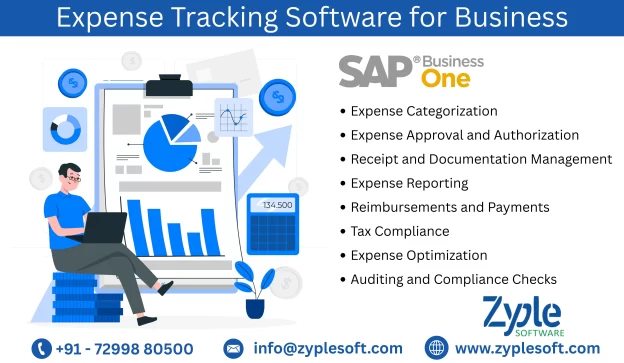
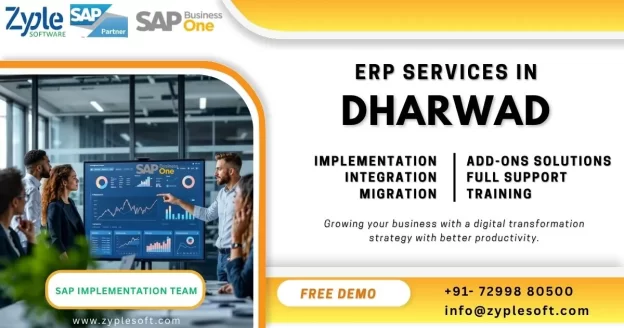
    1. Expense Categorization

    Expenses are categorized to give clarity and organization. Common categories include office supplies, rent, utilities, salaries, marketing, travel and entertainment, and so on.

    2. Expense Approval and Authorization

    Companies often develop approval workflows for expenses. In accordance with corporate policies, managers or other designated people examine and approve expense reports that employees submit.

    3. Receipt and Documentation Management

    Keeping receipts, invoices, and other supporting documents is necessary for expense verification and compliance with tax regulations. Many businesses have changed to digital document management for convenience and accessibility.

    4. Expense Reporting

    Businesses generate expense reports to analyze spending patterns, identify cost-saving opportunities, and make better financial decisions. Modern expense management tools often provide powerful reporting and analytics features. 

    5. Reimbursements and Payments

    Once expenses are approved, businesses require a process for reimbursing employees or paying vendors promptly. Automation can accelerate this process.

    6. Tax Compliance

    Expenses are closely linked to tax deductions. Ensuring accurate documentation and compliance with tax regulations can result in significant tax savings.

    7. Expense Optimization

    Expense management isn’t only about control but it’s also about finding ways to reduce expenses. This may involve handling better vendor contracts, optimizing travel expenses or finding more cost-effective suppliers.

    8. Auditing and Compliance Checks

    Regular audits help ensure expenses are managed according to established policies and procedures. Auditors may analyze expense reports, receipts, and financial records to identify irregularities.

    Types of Expense Management Systems

    There are different types of expense management software catering to different needs and preferences of businesses. Here are some common types of expense management systems:

    1. Desktop Software

    Traditional desktop expense management software is installed on a computer to help businesses input expense data, manage receipts and create reports directly on their desktop or laptop.

    2. Mobile Expense Apps

    Mobile expense apps are tailored for smartphones and tablets. They enable businesses to capture receipts, log expenses and track spending. Many of these apps are synchronized with cloud-based platforms for seamless integration.

    3. Enterprise Expense Management Systems

    These systems are designed for large organizations and often include features such as advanced approval workflows, policy enforcement, and integration with other enterprise software like ERP (Enterprise Resource Planning) systems.

    4. Small Business Expense Software

    Designed for small to medium-sized businesses, these systems offer basic expense software for tracking and reporting features at a cost-effective price point.

    5. Travel Expense Management Software

    This focuses on handling travel-related expenses, including booking flights, hotels and transportation for business travel.

    Benefits of Expense Tracking Software

    Here are the following benefits:

    1. Faster and Easy Processes

    Printing paper copies, adding receipts and delivering reports to managers—who would either approve them or send them back to the employee for revision—were the traditional methods of submitting expenses. But with SAP Business One, the workflow is automated. Once the employee clicks “submit,” the report is automatically routed to the appropriate person for approval. After approval, the amount to be reimbursed can be submitted automatically to payroll.

    2. Faster Employee Reimbursement

    With automated expense reimbursement, employees can submit expense reports and corresponding documentation without delay, and managers can quickly and easily examine and approve claims as notifications come in. Hence, these tools put cash back in employees’ bank accounts more quickly and eliminate the frustration that comes with errors and delays, thereby improving employee satisfaction.

    3. Fewer Delays and Errors

    In addition to minimizing the time it takes to reimburse employees, the automation features in SAP software improve accounting accuracy. For example, with manual expense reports, employees might make data-entry errors that could be further compounded when finance staff transcribe the information into spreadsheets. SAP B1 ERP can flag errors and duplicate entries and avoid over-payment or notify managers if the dollar figure seems too high. Additionally, the software has the ability to notify users when a report or payment is past due.

    4. Increased Operational Efficiency

    If you bill expenses directly to clients, employees’ reports must be timely and accurate to increase cash flow. Ideally, SAP Business One ERP is integrated with time tracking, project management, accounting, and enterprise resource planning (ERP) software. When this process is simple for the employees for tracking and the managers who are approving and reporting, your company could see enhanced cash flow.

    And because all employees spend less time on day-to-day, error-prone, and time-consuming manual expense reports, they’re not focused on the “input” portion of the input : output ratio. Rather than that, they can focus on the tasks and projects that bring value to the organization, whether that’s going on sales calls or preparing strategic budgets. This is one main reason that startups can greatly benefit from SAP implementation.

    5. Expense Policy Reinforcement

    Even the most accurate manager may not be up-to-date on every new expense policy and tax change. By enforcing custom rules designed for your business, SAP Business One flags out-of-policy travel expenses. For example, per day meal allowances may have increased per federal guidelines, but employees are submitting expense reports based on the old amounts. Or, an employee may be attempting to request reimbursement for a new addition to the policy, like an ergonomic keyboard, but is being blocked.

    6. Improved Visibility

    SAP B1 ERP includes a dashboard that compiles employee expense data and presents it in an easy-to-understand visual format using charts and other graphics. Metrics such as the average time it takes to approve expense reports or the amount spent by a company by employee or category are available to managers.

    7. Enhanced Fraud Prevention

    That report from the Association of Certified Fraud Examiners says 20.5% of businesses with less than 100 employees and 13.5% of larger organizations have reported fraudulent expense reimbursements. It’s understandable that busy finance teams and managers might manage well-camouflaged fake entries from trusted employees or contracts. Once that money has been paid, it’s painful to get back in. And, if an auditor spots a questionable entry, that raises a big flag and spurs more drilling.

    8. Simplified Reporting

    Reporting and analytics provide real-time insight into company expenditure. Reporting expense options include by employee, by project, and by category. SAP B1 makes it possible to integrate into a single report. Furthermore, companies can implement expense management best practices by:

    • Determining chronic rules violators, high-spending individuals, and each employee’s spending patterns over time.
    • Suggesting which national hotel, car rental, and even restaurant chain companies may want to approach for volume discounts.
    • Encouraging employees to help save money by connecting the dots between frugality and the ability to invest in growth. 

    Businesses can also use these data to pinpoint areas where their spending policies need to be clarified or enforced more effectively.

     9. Increase Compliance

    SAP B1 ERP helps companies stay on the right side of compliance with local, state, and federal tax agencies. Certain expenses, like the majority of entertainment and dues to country, golf, and athletic clubs, are no longer tax deductible, so include them could attract the IRS’s notice. However, businesses can classify expenses into categories like office, travel, and mileage and appropriately tag them. This ERP software also delivers easily accessible electronic copies of reports and receipts, which are helpful if the organization is audited.

    Conclusion of Expense Tracking Software

    Zyple Software provides SAP Business One, an all-inclusive platform that prevents you from using multiple apps. It provides you all the features and functionality you need to manage expense claims and settle under one hood.

    expense tracking - erp software services
    sap software

    What is SAP Software? Meaning, Uses and Examples

    What is SAP Software? Meaning, Uses, and Examples

    sap software

    In the world of enterprise resource planning (ERP), SAP software stands as a dominant solution, widely adopted by organizations globally to improve their business processes. But what exactly is SAP software? How does it function and what makes it a preferred choice for many companies? This article dives deep into the meaning, uses, and examples of SAP software and highlights a top offering by SAP partner Zyple Software, known for delivering best SAP solutions.

    What is SAP Software: Meaning and Definition

    SAP stands for Systems, Applications, and Products in Data Processing. Founded in 1972 in Germany, SAP SE has grown into a global leader in enterprise software, providing solutions that help businesses manage operations and customer relations efficiently.

    At its core, SAP software is an integrated suite of applications designed to help organizations manage their business processes in a unified system. It enables data sharing across departments, reducing redundancy and increasing productivity. Unlike standalone software that focuses on a single task, SAP integrates various business functions such as finance, human resources, supply chain, manufacturing, sales and customer service into one platform.

    SAP software operates on a client-server architecture and often runs on a database management system to store and retrieve data in real-time. This enables businesses to have access to up-to-date and accurate information for decision-making.


    Key Uses of SAP Software

    SAP software caters to a broad spectrum of business needs. Below are the primary uses that demonstrate why it is indispensable for many enterprises:
     

    1. Enterprise Resource Planning (ERP)

    SAP’s flagship product, SAP ERP, helps companies integrate core business functions like accounting, procurement, project management, supply chain operations, MRP and manufacturing. By centralizing these processes, businesses reduce errors and improve operational efficiency.
     

    2. Financial Management

    SAP’s financial modules provide tools for handling accounting, controlling, treasury and risk management. It automates financial reporting and ensures compliance with global accounting standards, helping organizations maintain financial health.
     

    3. Supply Chain Management (SCM)

    Efficient supply chain operations are important for any manufacturing or distribution company. SAP ERP software supports demand planning, procurement, logistics and inventory management, ensuring the right products reach customers on time.
     

    4. Human Capital Management (HCM)

    SAP offers modules to manage the entire employee lifecycle, from recruitment and onboarding to payroll and performance evaluation. This helps HR departments optimize workforce productivity and engagement.
     

    5. Customer Relationship Management (CRM)

    SAP CRM solutions enable companies to manage interactions with current and potential customers, improve sales strategies, and enhance customer service.
     

    6. Business Intelligence and Analytics

    SAP provides powerful data analytics tools that allow businesses to analyze trends, forecast outcomes and make data-driven decisions.

    Examples of SAP Software in Use

    1. Vijay Raja Group uses SAP Business One ERP to manage its company operations and production processes efficiently.
    2. Firefly integrates SAP B1 software to improve its manufacturing and finance operations across global locations.
    3. Vibhava Corporation leverages SAP to manage its diverse product portfolio and optimize marketing and sales.
    4. William Penn employs SAP B1 modules to ensure effective finance, project and inventory management worldwide.
    These examples highlight the versatility and robustness of SAP B1 software in handling complex, large-scale enterprise processes.
     

     How SAP Software Transforms Business Operations?

    The adoption of SAP ERP software offers several transformational benefits:
     
    • Improved Data Accuracy: With centralized data storage, organizations avoid duplication and discrepancies, ensuring consistency.
    • Enhanced Productivity: Automation of routine tasks frees employees to focus on strategic work.
    • Scalability: SAP solutions grow with the business, supporting expanding operations and new business models.
    • Regulatory Compliance: SAP incorporates compliance checks for tax laws, industry standards, and global regulations.
    • Real-Time Reporting: Businesses can make faster, informed decisions based on up-to-date information.
    • Customization and Integration: SAP can be tailored to meet specific industry needs and integrates with other software and platforms seamlessly.

    SAP Software Modules Breakdown

    To understand SAP better, it is essential to look at its core modules:
     
    • SAP FI (Financial Accounting): Manages financial transactions and accounting.
    • SAP CO (Controlling): Supports internal cost control and reporting.
    • SAP MM (Materials Management): Handles procurement and inventory.
    • SAP SD (Sales and Distribution): Manages sales processes and order fulfillment.
    • SAP PP (Production Planning): Oversees manufacturing processes.
    • SAP HCM (Human Capital Management): Manages employee data and HR processes.
    • SAP BW (Business Warehouse): Provides data warehousing and analytics.
    • SAP CRM (Customer Relationship Management): Focuses on customer interactions and sales.
     Each module is designed to cater to specific business functions but can also work together for a holistic business management system.
     

    SAP Cloud Solutions and Digital Transformation

    In recent years, SAP has shifted focus toward cloud-based solutions with SAP S/4HANA Cloud, a next-generation ERP suite designed for the digital age. This cloud platform leverages in-memory computing to process data faster and provide real-time insights. Cloud adoption reduces infrastructure costs and enhances flexibility, making SAP accessible for businesses of all sizes.
     

    Why Partnership with SAP Partners?

    Implementing SAP ERP software is a complex task that requires expert knowledge and experience. This is where SAP partners come in. Zyple Software is a renowned SAP partner that specializes in SAP implementation, customization and support services.
     
    Zyple Software helps businesses:
    • Assess and select the right SAP modules tailored to their unique needs.
    • Ensure smooth migration from legacy systems to SAP platforms.
    • Customize SAP solutions for industry-specific requirements.
    • Provide ongoing support and training to maximize SAP ROI.
    Their expertise ensures businesses can leverage the full potential of SAP ERP software, reduce implementation risks and accelerate digital transformation.
     

    Conclude regards SAP ERP Software for your Business

    SAP software remains a cornerstone for enterprise management in today’s competitive business environment. Its complete suite of applications supports diverse functions across industries, enabling companies to optimize operations, improve decision-making, and innovate continuously.
     
    For organizations looking to implement or upgrade SAP ERP software, partnering with experienced SAP providers like Zyple Software guarantees a strategic approach, smooth deployment and continued success in harnessing SAP’s capabilities.
     
    If you’re ready to transform your business with SAP solutions, contact Zyple Software—trusted SAP Business partners dedicated to helping you unlock efficiency, scalability and growth through customized SAP offerings.

      SAP B1 important for Accounting

      Why SAP B1 Is Important for Accounting

      Why SAP B1 Is Important for Accounting?

      SAP B1 important for Accounting

      In fast-paced business environment, robust accounting software is not just a convenience but it’s a necessity. SAP Business One (SAP B1) delivers enterprise‑grade accounting within a tailored package designed for small and medium-sized enterprises (SMEs). Here we explain, why SAP B1 is a game-changer for accounting departments and why it matters for businesses aiming for efficiency, scalability and real‑time insights.

      1. Integrated Financial Management

      One of SAP B1’s core strengths is unifying accounting with sales, purchasing, inventory and operations through a single SQL or HANA database. This integration means every invoice, journal entry or stock movement automatically posts to the general ledger for improving reconciliations and reducing data silos. For accountants, this translates to fewer data entry errors, elimination of duplicate records and reliable financial accuracy.

      2. Real‑Time Data and Analytics

      Unlike many traditional accounting tools that rely on batch processing, SAP B1 updates the general ledger immediately following any transaction. This supports real‑time financial reporting, enabling users to generate live balance sheets, profit & loss statements and cash-flow analyses—facilitating informed decision‑making at any time . Further, built-in dashboards and KPI tracking empower finance teams with advanced analytics and forecasting.

      3. Automation of Routine Tasks

      With templates for recurring postings, automatic journal creation and bank reconciliation, SAP  solutions automates manual accounting chores. It is also saving time and reducing human error substantially. It handles tax calculations, multi-currency invoices, batch payments and depreciations effortlessly. This automation enhances productivity, enabling finance teams to focus on strategic planning instead of repetitive tasks.

      4. All Financial Functions

      SAP B1’s accounting suite covers the full breadth of finance tasks:

      • General Ledger (GL): Multiple charts of accounts, budget control, and drill-down capabilities.
      • Accounts Payable/Receivable: Invoice automation, ageing analysis, streamlined reminder processes.
      • Fixed Assets Management: Guided asset lifecycle handling with automated depreciation calculations.
      • Cash and Banking: Bank statement imports, multi-method payment processing, and auto-reconciliation.
      • Budgeting & Cost Control: Multi-dimensional cost tracking, alerts for budget thresholds and comparisons of actual vs. planned expenditure.

      5. Strengthened Internal Controls & Auditability

      SAP B1 enhances internal control through audit trails, workflow approvals, and secure user-role permissions. Every modification, who made it and when is logged, which is vital for internal auditing and compliance. Built-in workflows allow approvals for high-value transactions or cost overruns, reducing fraud risk.
       

      6 Enhanced Compliance & Global Readiness

      Multi-currency and multi-language capabilities make SAP B1 a strong fit for global businesses. It supports tax regulations, local statutory reporting, and IFRS or GAAP standards across 40+ localized countries. Automated tax postings and compliance features help maintain accuracy across regions.
       

      7. Scalability & Flexibility

      What begins as a basic accounting ledger with SAP Business One can expand to include CRM, manufacturing, service, project management, and more as needs evolve—without migrating to a new platform . This flexibility is key for SMEs aiming to scale without disruption.
       

      8. Centralized Reporting & Business Intelligence

      SAP B1 offers robust reporting from standard financial statements to tailored dashboards and drill-down analysis, all in real time. Business users can create custom reports without IT assistance, enabling finance teams to respond faster to market dynamics.
       

      9. Improved Cash Flow Management

      Managing cash flow is critical. SAP B1 gives visibility into AR/AP ageing, provides reminders for unpaid invoices, automates payment runs, and makes cash forecasting more accurate . Real-time cash insights help companies optimize their working capital.
       

      10. Lower Total Cost of Ownership

      While some ERPs are costly and complex, SAP B1 provides enterprise-level functionality at SMB-friendly pricing. It offers cloud or on-premise options, SAP implementation and rapid ROI through efficiency and reduced errors . This makes SAP B1 an affordable long-term accounting solution.
       

      11. Automation & Workflow Notifications

      Beyond core accounting, SAP B1 automates workflows. For example, sending alerts when costs exceed budgets or stock levels fall below thresholds. These automated notifications help finance teams monitor issues proactively
       

      12. Drill‑Down & Traceability

      Every transaction in SAP B1 is traceable back to its source document. From a GL line you can drill into sales orders, purchase invoices, or bank details—shortening investigation time and enhancing financial transparency.
       

      13. Future‑Ready with Automation & AI

      SAP B1 now supports AI, RPA, predictive accounting and ESG reporting trends driving future financial operations. Its presence on the SAP Business Technology Platform ensures ongoing innovation and integration possibilities.
       

      Conclusion of SAP B1 for Accounting

       SAP Business One stands out as vital accounting software for SMEs due to its:
      • Centralized operations across finance and beyond
      • Automated, real‑time accounting with built‑in workflows
      • Powerful analysis tools and BI
      • Scalability that supports growth
      • Compliance-ready framework across geographies
      • Low total cost of ownership with cloud/on-prem flexibility
      For growing businesses that need more than basic bookkeeping, SAP B1 offers a powerful, integrated accounting platform. Its real-time consolidation, workflow automation, regulatory strength and global reach deliver strategic control—while empowering finance teams to operate efficiently with accurate, accessible data.
       
      Zyple Software is an ERP Software company offering SAP for company around the globe with with implementation and support.