
What is an ERP System? Examples and Why It is Used

In today’s competitive business environment, managing different operations under one umbrella is crucial for efficiency and growth. That’s where ERP systems come in. But what is an ERP system, and why do so many companies from startups to global enterprises, rely on it? In this guide, we are going to explain about what ERP means, give you real-world examples like SAP Business One, and explain why ERP systems are so widely adopted.
What is an ERP System?
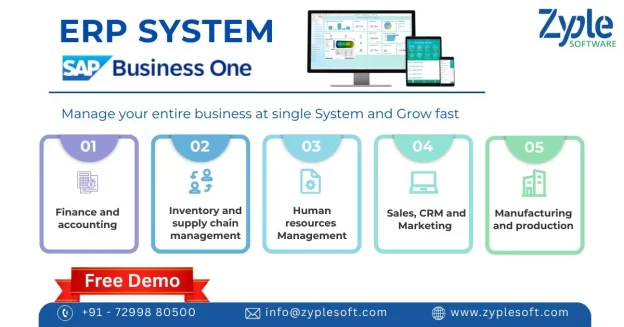
- Finance and accounting
- Inventory and supply chain management
- Human resources Management (HRMS)
- Customer relationship management (CRM)
- Sales and marketing
- Manufacturing and production
Key Features of an ERP System
- Centralized database for accurate, real-time data
- Automation of routine tasks and workflows
- Reporting and analytics for smarter decision-making
- Custom modules tailored to business-specific needs
- Scalability to support growth and expansion
- Integration capabilities with third-party tools and services
Why is an ERP System Used?
ERP systems solve one of the most common challenges in business: operational efficiency. By uniting data and processes, an ERP helps businesses streamline operations, reduce errors, and make better decisions.
1. Improved Productivity
Manual processes are slow and prone to error. ERP software automates routine tasks like order processing, payroll, and financial reconciliation, freeing up employees for higher-value work.
2. Real-Time Data Access
With a centralized database, stakeholders can access real-time data across departments. This leads to better collaboration, faster decision-making, and more agile business operations.
3. Cost Reduction
Though ERP systems can require upfront investment, they save money in the long run by improving resource management, reducing operational delays, and minimizing waste.
4. Regulatory Compliance
ERP systems often come with built-in tools for compliance management, helping businesses stay on top of tax laws, financial reporting standards, and industry regulations.
5. Enhanced Customer Service
With integrated CRM and inventory tools, employees can access accurate customer data, order statuses, and service history in one place, improving customer satisfaction.
Example of an ERP Software System
Key Modules of SAP Business One ERP
- Financial Management: Automate accounting, manage cash flow, and track expenses.
- Sales and CRM: Track leads, manage customer relationships, and streamline sales processes.
- Inventory Control: Gain real-time visibility into stock levels, manage warehouses, and optimize procurement.
- Purchasing and Procurement: Automate vendor transactions and improve purchase orders.
- Business Intelligence: Create detailed reports and dashboards to support strategic decisions.
Why Businesses Use SAP Business One
- Affordability: Designed for SMEs, SAP Business One offers enterprise-level functionality at a lower cost.
- Scalability: As your business grows, SAP B1 can grow with you, adding users, modules, and integrations.
- Ease of Integration: SAP Business One can be integrated with eCommerce platforms, shipping services, and other third-party software.
- Global Compliance: Supports multiple currencies, languages, and tax regulations, making it ideal for global operations.
- Cloud and On-Premise Options: Businesses can choose the deployment model that suits their needs.
Who Uses ERP Systems?
- Manufacturing: To manage production schedules, inventory, and supply chain.
- Retail: For point-of-sale integration, inventory tracking, and customer data management.
- Healthcare: For patient record management, billing, and compliance.
- Construction: To oversee budgeting, project timelines, and resource allocation.
- Finance and Insurance: For risk analysis, account management, and regulatory compliance.