SAP Business One ERP for Appliances and White Goods Manufacturing industry
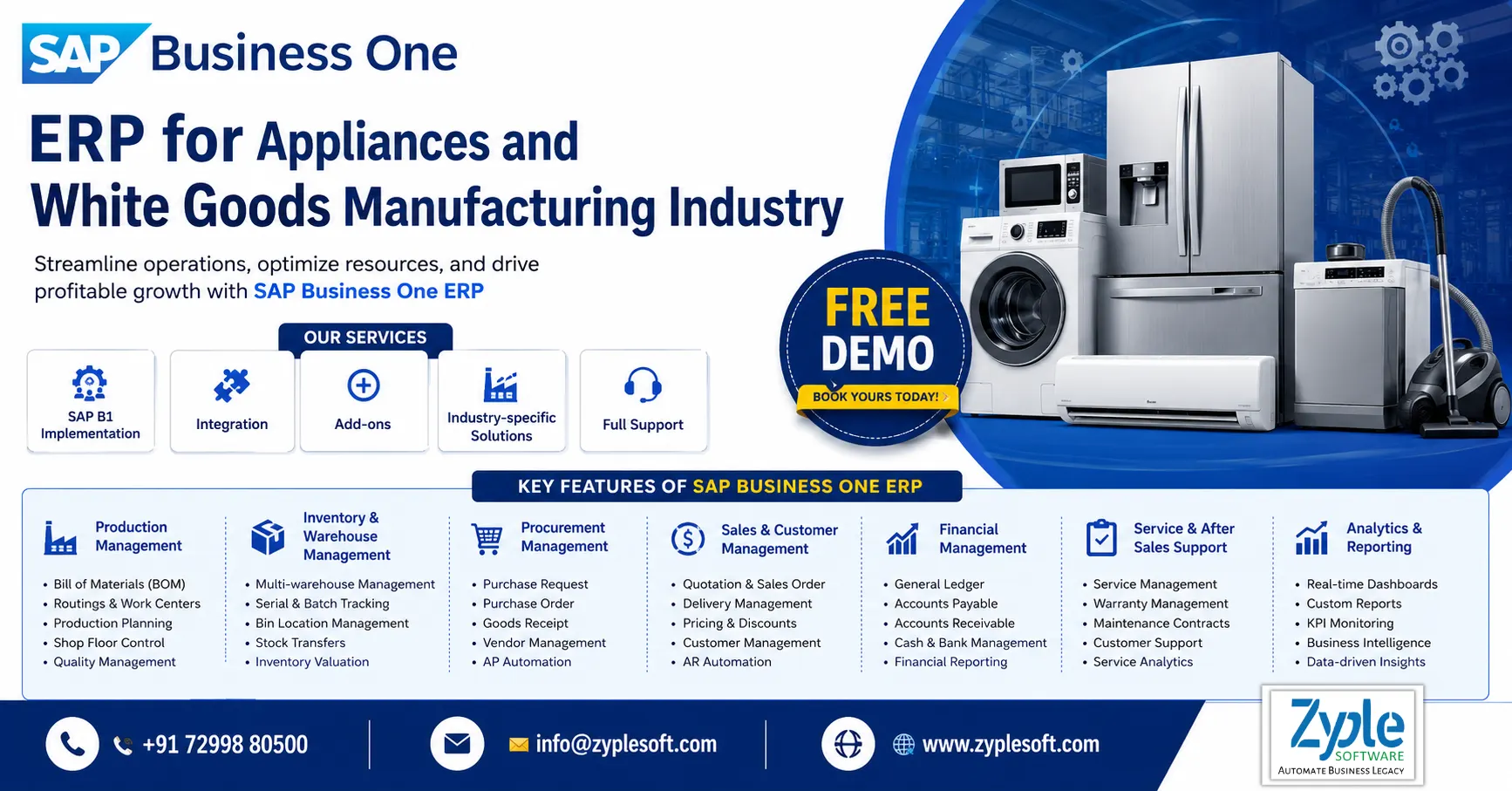
As the appliances and white goods manufacturing industry grows exponentially, it has become tiresome and challenging to handle multiple operations all around the world, along with the business processes. Moreover, with a large industry like appliance and white goods manufacturing, integrating different departments and tackling any issues that occur also requires also requires so much time and effort. SAP Business One ERP for appliances and white goods manufacturing not only improves efficiency but also increases the quality of products of the appliances and white goods industry.
Challenges Faced By The Appliances and White Goods Manufacturing Industry
The appliances and white goods manufacturing industry faces significant operational and market hurdles, mainly driven by supply chain vulnerabilities, heavy import dependencies for essential components, and shrinking margins from fierce global competition. Manufacturers also struggle with a shortage of skilled labor, complex regulatory compliance, and quick technological shifts.
1. High Import Dependence
The industry relies heavily on international suppliers for essential components, such as semiconductors, high-end electronic chips, and specialized compressors. This dependency leaves supply chains highly vulnerable to geopolitical tensions and global shipping delays.
2. Regulatory and Compliance Hurdles
Navigating complex local and international regulations, including thorough testing and certification frameworks (like Bureau of Indian Standards in India), often causes production obstacles and increases manufacturing costs.
3. Skilled Labor Shortage
Modern appliance manufacturing involves highly trained personnel to operate, maintain, and program advanced automated machinery. A noticeable skills gap slows the adoption of cutting-edge production lines.
4. Continuously Shifting Consumer Demands
Consumers are demanding smarter, connected devices with shorter product lifecycles. To maintain economies of scale, manufacturers must frequently update product lines while keeping retail prices competitive.
5. Inventory Management Issues
Manual tracking, inaccurate stock forecasting, and handling high product variations lead to poor resource utilization and increased carrying costs.
Features of SAP Business One ERP for Appliances and White Goods Manufacturing
1. Financial Management and Cost Control
- It includes general ledger, accounts payable and receivable, and journal entry automation.
- It includes fixed asset management for plant machinery and equipment.
- It includes real-time financial reporting and profitability analysis.
- It helps manufacturers track product-wise margins and production costs.
2. Sales and Customer Lifecycle Management
- Lead and opportunity tracking, like dealer and distribution networks.
- Sales quotation, order, and delivery to the invoicing cycle.
- After-sales service is essential for appliance warranty.
- It includes CRM with a complete customer and dealer database.
- It supports service-heavy white goods business models.
3. Purchasing and Supplier Management
- It includes purchase requisitions, purchase orders, and GRNs.
- It includes vendor evaluation and supplier performance tracking.
- Multi-currency procurement is crucial for imported components.
- It includes automated invoice matching and accounts payable.
- It ensures smooth sourcing of electronics, compressors, motors, and more.
4. Inventory and Warehouse Management
- It includes real-time inventory tracking across multiple warehouses.
- Batch and serial number tracking is essential for appliance parts.
- It includes bin location and warehouse optimization.
- It includes automatic stock updates with production and sales.
- Minimizes stockouts and excess inventory.
5. Bill of Materials (BOM) Management
- Multi-level BOMs for complex appliances like PCB, motor, and casing.
- It includes version control for product variants and models.
- It includes engineering change management.
- It ensures accurate product structure and costing.
6. Production Planning and Control
- Production order creation, like manual and automated.
- It includes work order scheduling based on demand.
- It includes shop-floor level tracking of production stages.
- It includes real-time monitoring of work-in-progress (WIP).
- It improves assembly-line efficiency and throughput efficiency.
7. Material Requirements Planning (MRP)
- It includes demand forecasting based on sales orders and history.
- It includes auto-calculation of raw material requirements.
- It includes procurement and production recommendations.
- It includes capacity planning for machines and labor.
- Prevents delays in production due to material shortages.
8. Production Costing and Variance Analysis
- It includes a standard vs. actual cost comparison.
- It includes labor, machine, and overhead cost tracking.
- It includes scrap and wastage monitoring.
- It includes product-wise profitability.
- Essential for cost-sensitive white goods manufacturing.
9. Quality Control and Compliance
- It includes incoming material quality checks.
- In-process inspection like assembly line testing.
- It includes finished goods quality assurance.
- Compliance tracking like BIS, ISO, energy ratings, and more.
- It ensures product reliability and regulatory compliance.
10. Batch Production and Serial Tracking
- Serial number tracking for appliances due to warranty and service.
- It includes batch traceability and components.
- It includes recall management.
- Necessary for after-sales service and warranty claims.
11. Sales and Distribution Management
- Multi-channel distribution, like dealers, retailers, and e-commerce.
- It includes pricing management and discount structures.
- It includes delivery scheduling and logistics tracking.
12. Demand Planning and Forecasting
- It includes historical sales analysis.
- Seasonal demand planning is crucial for ACs and refrigerators.
- It includes automated replenishment.
13. Import and Export Management
- It includes documentation for international trade.
- It includes customs, duties, and compliance tracking.
- It includes multi-location and multi-currency operations.
- Ideal for companies sourcing globally.
14. Real-Time Dashboards and Reporting
- It includes production efficiency dashboards.
- It includes sales and inventory KPIs.
- It includes financial and operational reports.
- It includes drill-down analytics for decision-making.
- Allows data-driven manufacturing decisions.
15. Business Intelligence (BI)
- It includes custom report creation.
- It includes integration with Excel and analytics tools.
- It includes predictive insights using historical data.
16. Mobile and Web Access
- It includes mobile apps for sales and management teams.
- It includes remote monitoring of operations.
- It includes web-based ERP access.
- Handles operations anytime, anywhere.
17. Workflow Automation
- Approval workflows like purchase, production, and finance.
- It includes alerts and notifications.
- Minimized manual errors and faster processing.
Benefits of SAP Business One ERP for Appliances and White Goods Manufacturing
The ERP software, SAP Business One (SAP B1) system, benefits white goods and appliance manufacturing by connecting sales, procurement, and production into a unified platform. It improves material requirements planning (MRP) to prevent stockouts of essential components, ensures strict quality control and traceability, and delivers real-time cost-to-manufacture analysis to protect your profit margins.
1. Advanced Material Requirements Planning (MRP)
Automatically calculates exactly what raw materials like compressors, motors, and control boards are required based on sales forecasts and production schedules, ensuring Just-In-Time (JIT) availability while avoiding overstocking using SAP implementation.
2. Real-Time Cost Recalculation
Monitors real-time labor, machine, and material usage to recalculate production costs accurately. This is essential for margin analysis and smart pricing in a highly competitive appliance market.
3. Quality Control and Compliance
Integrates strict quality checkpoints throughout the assembly line to handle defect tracking, warranty compliance, and regulatory standards.
4. Multi-Level Bill of Materials (BOM)
Easily manages complex assemblies by linking sub-assemblies to the main finished appliance, enabling both standard builds and customizable product variations using SAP solutions.
5. Supply Chain and Supplier Management
Evaluates and compares vendors based on lead times and past performance, optimizing the procurement of bulk materials and reducing carrying costs.
Conclusion of Appliances and White Goods Manufacturing ERP
Zyple Software is a certified SAP Business One partner in India specializing in implementation, digital transformation, licensing, integration, add-on solutions, migration, and consulting for the semiconductor manufacturing industry. Better sales and more customers are the key goals of the appliances and white goods industry, and SAP software makes you achieve these goals easier and quicker.
If you’re involved, arrange a demo of SAP Business One.
Do you want the SAP B1 ERP solution for your business or industry?
Finish all the details in the given contact form; our team will reach out to you.
How can SAP Business One minimize operational costs in white goods manufacturing?
SAP Business One helps minimize costs by optimizing inventory levels, reducing production waste, and improving procurement planning. With updated data insights, manufacturers can make smarter decisions that directly impact profitability.
Is SAP Business One ERP customizable for appliance manufacturing businesses?
Yes, SAP Business One ERP is highly customizable. It can be designed for matching specific manufacturing processes, compliance requirements, and reporting needs of appliance and white goods companies, ensuring a perfect fit for your operations.
How long does it take to implement SAP Business One in a manufacturing company?
The SAP B1 implementation timelines vary based on business size and complexity, but most small to medium-sized appliance manufacturers can go live within a few weeks to a few months with the right implementation partner.
Can SAP Business One improve demand forecasting and planning?
Absolutely. SAP Business One uses historical data and analytics to improve demand forecasting, helping manufacturers align production with market demand and prevent overstocking or stockouts.
How can I get started with SAP Business One for my manufacturing business?
Getting started is simple: connect with the best SAP Business One partner, like Zyple Software, for a consultation, business assessment, and demo. This helps you understand how the solution can be customized for your appliance manufacturing needs.