SAP Business One ERP for Semiconductor Manufacturing Industry
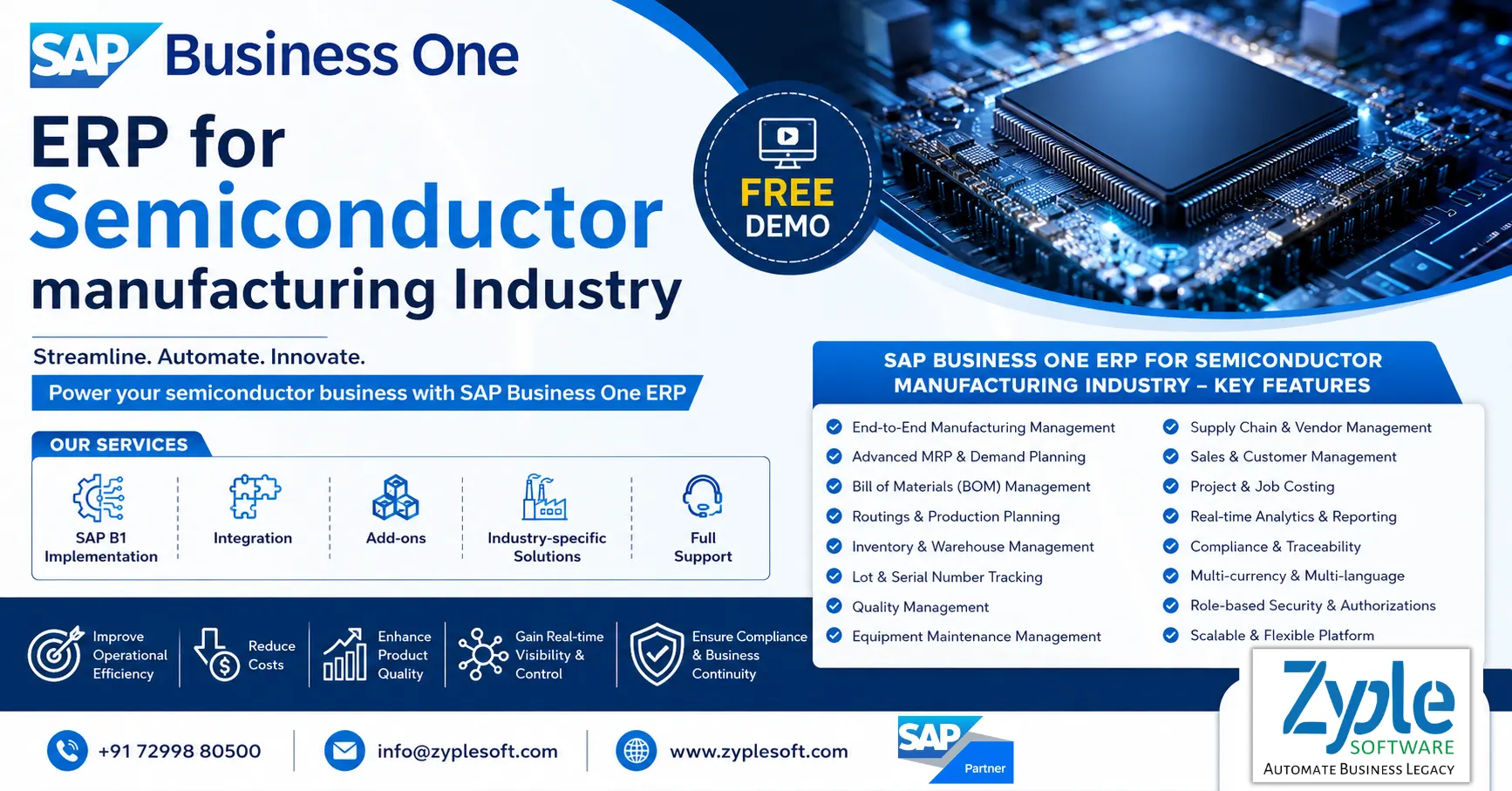
The semiconductor manufacturing industry is the backbone of modern technology, powering everything from smartphones to electric vehicles. But with rising demand, global supply chain disruptions, and complex manufacturing processes, chipmakers face significant issues. SAP Business One ERP for semiconductor manufacturing helps the semiconductor manufacturing industry to facilitate operations, improve productivity, and maintain quality.
Challenges Faced By The Semiconductor Manufacturing Industry
The semiconductor manufacturing industry faces massive barriers, including extreme capital costs, geopolitical supply chain vulnerabilities, and serious talent shortages. Also, the sector tackles demanding physical infrastructure needs, environmental compliance pressures, and the rapid pace of technological miniaturization.
1. Massive Capital Expenditure
Building a single advanced fabrication plant requires huge capital expenditure.
2. Long Gestation Periods
Factories take five to seven years to build, preventing quick returns on private investment.
3. Geopolitical Concentration
Over 60% of the global semiconductor manufacturing and nearly 100% of advanced sub-10nm chips are concentrated in Taiwan and South Korea.
4. Supply Chain Fragility
The industry heavily depends on limited resources for raw materials, rare earths, and specialized equipment like EUV lithiography.
5. Serious Talent Shortages
The industry faces a projected shortfall of hundreds and thousands of specialized chip engineers and process-critical fab staff globally.
6. Intense Power and Infrastructure
Fabs need uninterrupted 24/7 and huge infrastructure stability.
7. Large Water Usage
Producing a single wafer uses large volumes of ultrapure water, straining resources in drought-prone regions.
8. Environmental Chemical Hazards
The usage and disposal of toxic metals, hazard chemicals, and strict ESG compliance add significant operational expenses.
9. Technological Miniaturization
Shrinking transistors to the atomic level requires continuous R&D investments to solve extreme physics and heat barriers.
Features of SAP Business One ERP for Semiconductor Manufacturing
1. Financial Management
- It includes general ledger, accounts receivable, accounts payable, and banking integration.
- It includes budgeting, cost accounting, and financial forecasting.
- It includes multi-currency and global compliance support.
2. Sales and Customer Lifecycle Management
- It includes lead and opportunity tracking.
- It includes customer data and contract management.
- It includes after-sales service and warranty tracking.
3. Purchasing and Supplier Management
- It includes vendor management and procurement automation.
- It includes purchase orders, GRNs, invoicing, and returns.
- It includes supplier performance tracking.
4. Investment and Warehouse Management
- Real-time inventory tracking like raw materials, work-in-progress, and finished goods.
- It includes multi-warehouse and bin location management.
- Batch or serial number tracking for traceability.
5. Business Intelligence and Analytics
- It includes real-time dashboards and KPIs.
- It includes custom reports and predictive insights.
- It includes drill-down analytics with Excel integration.
6. End-to-End Production Planning
- Production order creation, like manual and automated.
- It includes multi-stage production cycle tracking.
- It includes integration with sales and demand planning.
7. Bill of Materials (BOM) Management
- It includes multi-level BOMs for complex chip structures.
- It includes component hierarchy and routing stages.
- It includes version control for engineering changes.
8. Material Requirements Planning (MRP)
- It includes demand forecasting and planning.
- It includes automated procurement suggestions.
- It includes optimization of raw materials and components.
9. Shop Floor Control
- Tracks real-time production activities.
- Monitors machine utilization and downtime.
- Captures actual vs planned production data.
10. Batch, Lot, and Serial Traceability
- It includes end-to-end traceability from wafer to finished chip.
- Tracks defects, recalls, and compliance.
- Essential for semiconductor quality audits.
11. Quality Control and Compliance
- It includes in-process and final quality inspections.
- It includes test result recording and validation.
- It includes compliance with global semiconductor standards.
12. Yield and Scrap Management
- Monitors yield rates at every stage.
- Minimizes scrap and rework.
- Improves production efficiency.
13. Engineering Change Management
- Handles product lifecycle changes.
- It includes version control for designs and BOMs.
- It includes faster new product introduction (NPI).
14. Production Costing
- It includes standard and actual cost tracking.
- It includes labor, material, and overhead cost allocation.
- It includes real-time profitability analysis.
15. Capacity and Resource Planning
- It includes machine capacity planning.
- It includes workforce allocation.
- Obstacle identification.
16. Just-In-Time (JIT) and Lean Manufacturing
- Optimizes inventory levels.
- Minimizes lead times and wastage.
- Improves throughput efficiency.
17. Supply Chain Management
- It includes multi-tier supplier coordination.
- It includes demand-supply synchronization.
- It includes logistics and distribution planning.
18. Multi-Location and Global Operations
- Handles multiple plants and warehouses.
- It includes localization for taxes and compliance.
- It includes multi-currency transactions.
19. SAP B1 HANA Integration
- It includes in-memory for high-speed processing.
- It includes real-time analytics and simulations.
20. IoT and Machine Integration
- Connects machines and sensors.
- Captures real-time production data.
- Allows smart factory capabilities.
21. Mobile and Web Access
- ERP access for mobile.
- It includes remote monitoring of production and inventory.
22. Workflow Automation
- It includes approval workflows.
- It includes alerts and notifications.
- Minimized manual intervention.
23. Real-Time Reporting
- It includes production efficiency reports.
- It includes cost and variance analysis.
- It includes supply chain performance dashboards.
Importance of SAP Business One ERP for Semiconductor Manufacturing
The ERP software, SAP Business One (SAP B1) system, is essential because it unifies complex production, supply chain, and quality control into a single platform. It enables these capital-intensive businesses to reduce material waste, improve wafer yield, ensure strict regulatory compliance, and optimize costs.
1. Precision Inventory Tracking
Handles the microscopic supply chain of semiconductor manufacturing by tracking raw materials, WIP (Work-In-Progress), and wafers in real-time across multiple facilities using SAP implementation.
2. Stringent Quality Control
Features built-in QA tools that allow batch and serial number traceability, ensuring compliance with strict semiconductor-grade standards and precise product recalls if necessary.
3. Advanced Production Scheduling
Prioritizes tasks, assigns resources, handles complex Bills of Materials (BOMs), and tracks production cycles to maintain optimal throughput and avoid obstacles.
4. Cost Management
Delivers instant access to real-time financials and overhead controls, directly comparing actual expenditures against budgets to unlock essential cost-saving opportunities using SAP solutions.
5. System Integration
Seamlessly connects with Manufacturing Execution Systems (MES), testing tools, and IoT automation systems to ensure a seamless flow of data across the entire factory floor.
Benefits of SAP Business One for Semiconductor Manufacturing
SAP Business One delivers semiconductor manufacturers with a flexible, integrated ERP framework to handle complex production cycles, wafer lot tracking, and stringent quality control. It drives profitability by minimizing material waste, accelerating time-to-market, and optimizing procurement across multiple global plants.
1. Precision Lot and Serial Traceability
Monitors raw materials, wafers, and sub-assemblies across multiple manufacturing plants in real time to ensure end-to-end compliance and quality assurance.
2. Advanced Production Scheduling
Optimizes throughput and resource allocation by handling complex, multi-level Bills of Materials (BOMs) and monitoring strict production cycles.
3. Supply Chain Optimization
The SAP software reduces chip component shortages and avoid expensive overstocking through automated demand forecasting, vendor lead-time planning, and just-in-time procurement.
4. Cost and Profit Management
Facilitates financial operations with instant, real-time data, enabling you to track actual production costs versus budgets to improve margins in a highly competitive market.
5. Equipment Integration
Connects shop-floor manufacturing machinery directly into your ERP for better equipment utilization and predictive maintenance.
Conclusion of Semiconductor Manufacturing ERP
Zyple Software is an Official SAP Business One partner in India specializing in implementation, digital transformation, licensing, integration, add-on solutions, migration, and consulting for the semiconductor manufacturing industry. SAP Business One ERP delivers the automation, visibility, and control needed to achieve demand, maintain quality, and stay competitive.
If you’re resilient, schedule a demo of SAP Business One.
Do you seek the SAP Business One ERP system for your business or industry?
Complete all the details in the designated contact form; our team will return to you.
1. How can SAP Business One ERP minimize operational costs in semiconductor manufacturing?
SAP Business One helps minimize costs by optimizing inventory levels, reducing material wastage, improving production planning, and automating manual processes. This results in better resource utilization and higher profitability.
2. Is SAP Business One suitable for small and medium-sized semiconductor companies?
Yes, SAP Business One is specifically customized for growing small and medium-sized businesses. It delivers enterprise-level capabilities at an affordable cost, making it ideal for semiconductor companies looking to scale efficiently.
3. Can SAP Business One be customized for our semiconductor manufacturing processes?
Absolutely. SAP Business One can be designed for your specific workflows, including wafer processing, assembly, testing, and quality control. Industry-specific add-ons further improve its capabilities.
4. How quickly can we see ROI after implementing SAP Business One?
Most semiconductor companies start seeing ROI within months due to improved efficiency, reduced errors, better inventory control, and improved decision-making with real-time data insights.
5. How can we get started with SAP Business One for our semiconductor business?
Getting started is easy; connect with a certified SAP Business One partner like Zyple Software for a consultation, demo, and needs assessment. They will guide you through implementation, customization, and ongoing support designed for your semiconductor operations.