SAP Business One ERP for Furniture Manufacturing Industry
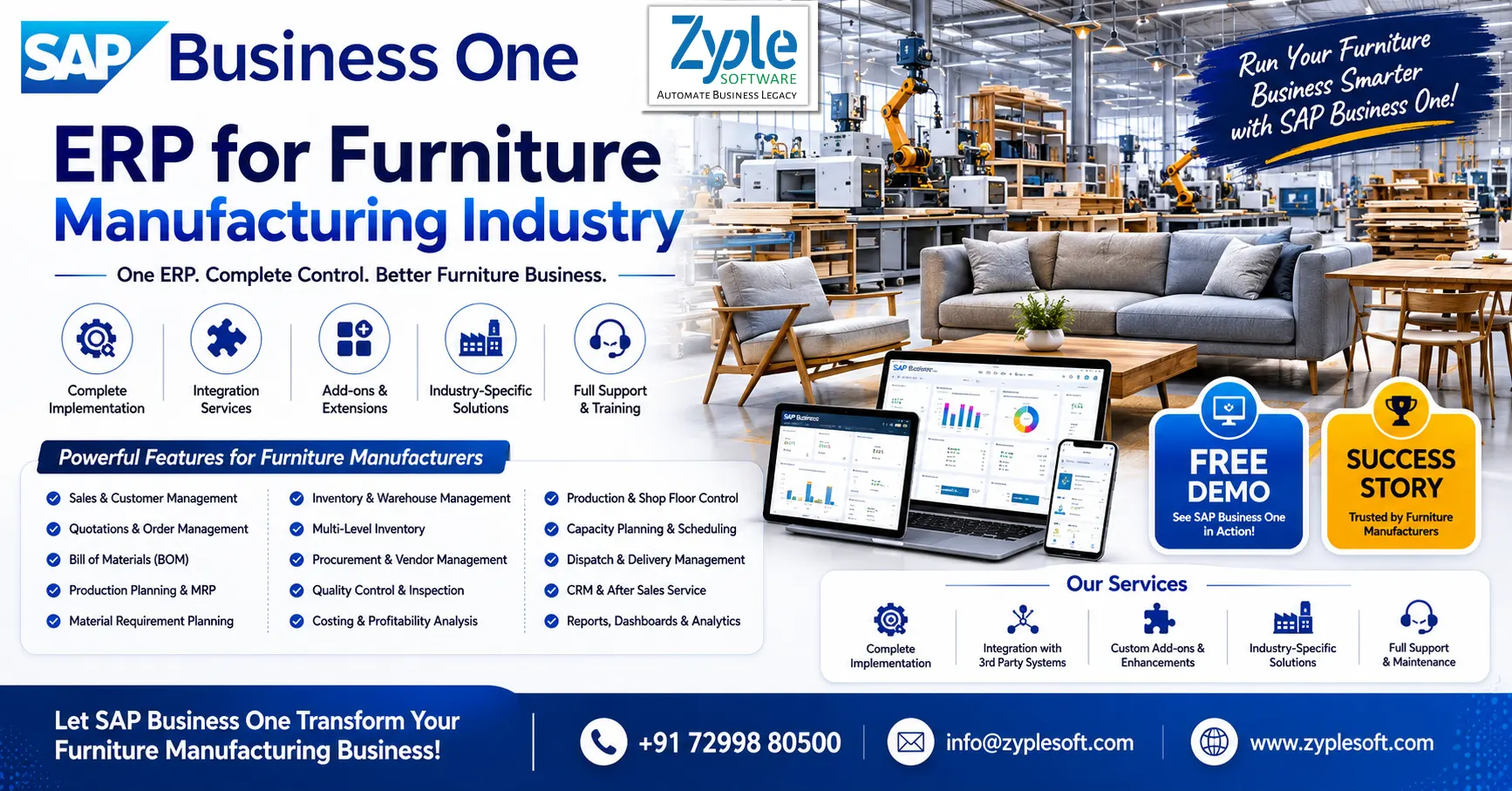
The furniture manufacturing industry is increasingly pressurized by price sensitivity, volatile raw material costs, labor demands, and customer requirements. The businesses in the furniture manufacturing industry need an ERP solution to overcome these challenges. SAP Business One ERP for furniture manufacturing bridges the gap in the furniture manufacturing industry by prompting innovation to grow sales and facilitate the supply chain.
Challenges Faced By The Furniture Manufacturing Industry
1. Fluctuating Material Prices
Volatile pricing for timber, fabric, resin, and metal strains profitability and makes it difficult to maintain stable consumer pricing.
2. Skilled Labor Shortages
An aging workforce and a decline in vocational training have led to lack of skilled craftsmen, woodworkers, and upholsterers.
3. Supply Chain Bottlenecks
Heavy dependence on global shipping leaves manufacturers vulnerable to logistical delays and freight cost fluctuations.
4. Shifting Consumer Demands
Consumers expect faster delivery times, increased product customization, and seamless omnichannel buying experiences, putting pressure on typical inventory models.
5. Intense Global Competition
Local manufacturers face high competition from overseas markets that benefit from lower labor costs and government subsidiaries.
Features of SAP Business One ERP for Furniture Manufacturing
1. Production and Manufacturing Management
- It includes multi-level BOM for components like wood, hardware, and upholestery with revision control.
- Creates and tracks custom furniture orders (made-to-order or batch production).
- Auto-calculates raw material needs based on demand forecasts.
- Optimizes machine and labor usage.
- Monitors real-time production progress and WIP.
- Defines processes like cutting, polishing, and finishing.
- Suitable for customized furnitures.
- Minimizes wood wastage and optimizes material usage.
2. Inventory and Warehouse Management
- It includes raw materials, WIP, and finished goods.
- Tracks wood batches, fittings, and finished items.
- Handles multiple storage locations.
- It includes efficient storage of wood panels and components.
- Stock transfers between production units and warehouses.
- Faster stock handling and picking using barcode integration.
- Inventory valuation methods like FIFO, moving average, and standard costing.
3. Procurement and Supplier Management
- Automates raw material procurement.
- Maintains vendor details for timber, hardware, and fabrics.
- Optimizes procurement costs.
- Handles incoming materials efficiently.
- Manages imported materials and compliance.
4. Financial Management and Cost Control
- Complete accounting automation using a general ledger, accounts payable, and accounts receivable.
- Tracks cost per furniture item (materials, labor, and overhead).
- It includes budgeting and cash flow management.
- Fixed asset management includes machines, tools, and factory equipment.
- It includes banking and reconciliation.
- It includes multi-currency and tax compliance (GST-ready).
- Profitability analysis includes per product, project, and consumer.
5. Sales and Customer Relationship Management (CRM)
- Handles custom order furnitures.
- Customer database includes store design preferences and past orders.
- It includes pricing and discount management.
- It includes order tracking and delivery scheduling.
- It includes after-sales service and warranty management.
- Marketing campaign management promotes furniture collections.
6. Business Intelligence and Reporting
- Real-time dashboards and KPIs for production, sales, and inventory insights.
- Custom reports for sales trends, inventory aging, and production efficiency.
- Interactive analytics for drilling down into operations.
- It includes forecasting and demand planning.
- It includes Excel integration for data analysis.
7. Quality Control and Compliance
- Quality inspection at each stage for raw material, production, and finishing.
- It includes defect tracking and rework management.
- Compliance management like industry and export standards.
- It includes automated quality reports and certificates.
8. Supply Chain and Logistics
- It includes order fulfillment management.
- It includes delivery and dispatch planning.
- Logistics tracking from factory to showroom or customer.
- It includes export documentation manager.
- It includes demand-supply synchronization.
9. Project Management (Custom Furniture Projects)
- Project-based manufacturing for interior or bulk orders.
- It includes cost and resource tracking per project.
- It includes timeline and milestone management.
- It includes integration with production and finance.
10. Mobility and Integration
- Mobile app access of sales, inventory, and approvals on-the-go.
- It includes web client access.
- E-commerce integration for online furniture sales.
- Third-party add-ons for advanced furniture-specific needs.
11. Furniture Industry-Specific Capabilities
- Variant configurations like size, color, and material combinations.
- Cutting optimization reduces wood wastage.
- It includes upholstery and fabric tracking.
- It includes design-to-production integration.
- It includes a make-to-stock and make-to-order hybrid models.
- It includes dealer and distribution management.
- It includes showroom and retail integration.
12. Automation and Workflow Management
- Approval workflows for purchase, production, and finance.
- Alerts and notifications for low stock, delays, and approvals.
- Document management for drawings, invoices, and production sheets.
- Process automation reduces manual errors and delays.
Importance of SAP Business One ERP for Furniture Manufacturing
The ERP software, SAP Business One (SAP B1) system, is an essential ERP solution for furniture manufacturers, centralizing core processes like inventory tracking, multi-level bills of materials (BOMs), and supply chain management. It improves resource allocation, minimizes material waste, and ensures smooth, made-to-order production scaling.
1. Multi-Level Bill of Materials (BOM)
Furniture manufacturing involves complex component tracking, from raw timber, hardware, and fabrics to sub-assemblies. SAP B1 handles these hierarchical BOMs seamlessly to ensure accurate material consumption and costing.
2. Made-To-Order and Customization
The furniture manufacturing industry heavily depends on custom orders and varying dimensions. SAP B1 tracks specific customer configurations, connecting sales orders directly to custom production tickets and purchasing.
3. Material Requirements Planning (MRP)
MRP automates purchasing decisions by analyzing lead times, fluctuating seasonal demands, and existing stock levels. This eliminates overstocking and prevents expensive production delays.
4. Real-Time Inventory and Warehouse Management
Gain granular, real-time visibility across multiple showrooms, workshops, and warehouses. This helps you track the movement of raw materials and finished goods, reducing surplus or shortages using SAP implementation.
5. Shop Floor Control and Efficiency
Facilitates routing, coordinates assembly and finishing processes, and tracks labor hours to ensure economical production cycles.
6. Integrated CRM and After-Sales Cycle
Handles the entire customer lifecycle, from initial showroom quotation and pricing analysis to delivery scheduling, installation tracking, and after-sales warranty support.
Benefits of SAP Business One for Furniture Manufacturing
SAP Business One drives efficiency in furniture manufacturing by facilitating complex processes like bills of materials (BOM), material requirements planning (MRP), and shop-floor routing. It helps manufacturers improve lumber and hardware inventory, minimize material waste, and accelerate production.
1. Advanced Production Planning
Easily handles complex product structures, tracking different types of wood, upholstery, hardware, and sub-assemblies. Schedules, tracks, and manages production steps from cutting and assembling to finishing and packaging. Integrates with shop floor machines and barcode systems to automate data capture and reduce human error.
2. Facilitated Inventory and Procurement
Automatically calculates material needs depending on sales orders, production schedules, and supplier lead times. Tracks stock levels of bulk materials, avoiding explosive raw material shortages or excess surpluses. Handles supplier relationships, automates purchase orders, and monitors raw material costs in real-time.
3. Cost Control and Quality Management
Optimizes raw material utilization (e.g., increasing wood yield) to directly reduce production costs. Maintains strict quality control checks, tracks defects, and enforces compliance standards throughout the production lifecycle.
4. Real-Time Insights and Scalability
Uses dashboards to track key performance indicators (KPIs) like production throughput, labor efficiency, and order backlogs using SAP solutions. Easily add new users, integrates with e-commerce platforms, or scale production capacity as your furniture business grows.
Conclusion of Furniture Manufacturing ERP
Zyple Software is a Top SAP Business One partner in India specializing in implementation, digital transformation, licensing, integration, add-on solutions, migration, and consulting for the furniture manufacturing industry. By implementing SAP software, furniture manufacturers gain a unified platform to manage sales, inventory, procurement, deliveries, finance, and customer relationships with complete visibility and control.
If you’re interested, schedule a demo of SAP Business One.
Do you demand the SAP Business One ERP system for your business or industry?
Complete all the details in the allotted contact form; our team will return to you.