SAP Business One ERP for FMCG Industry
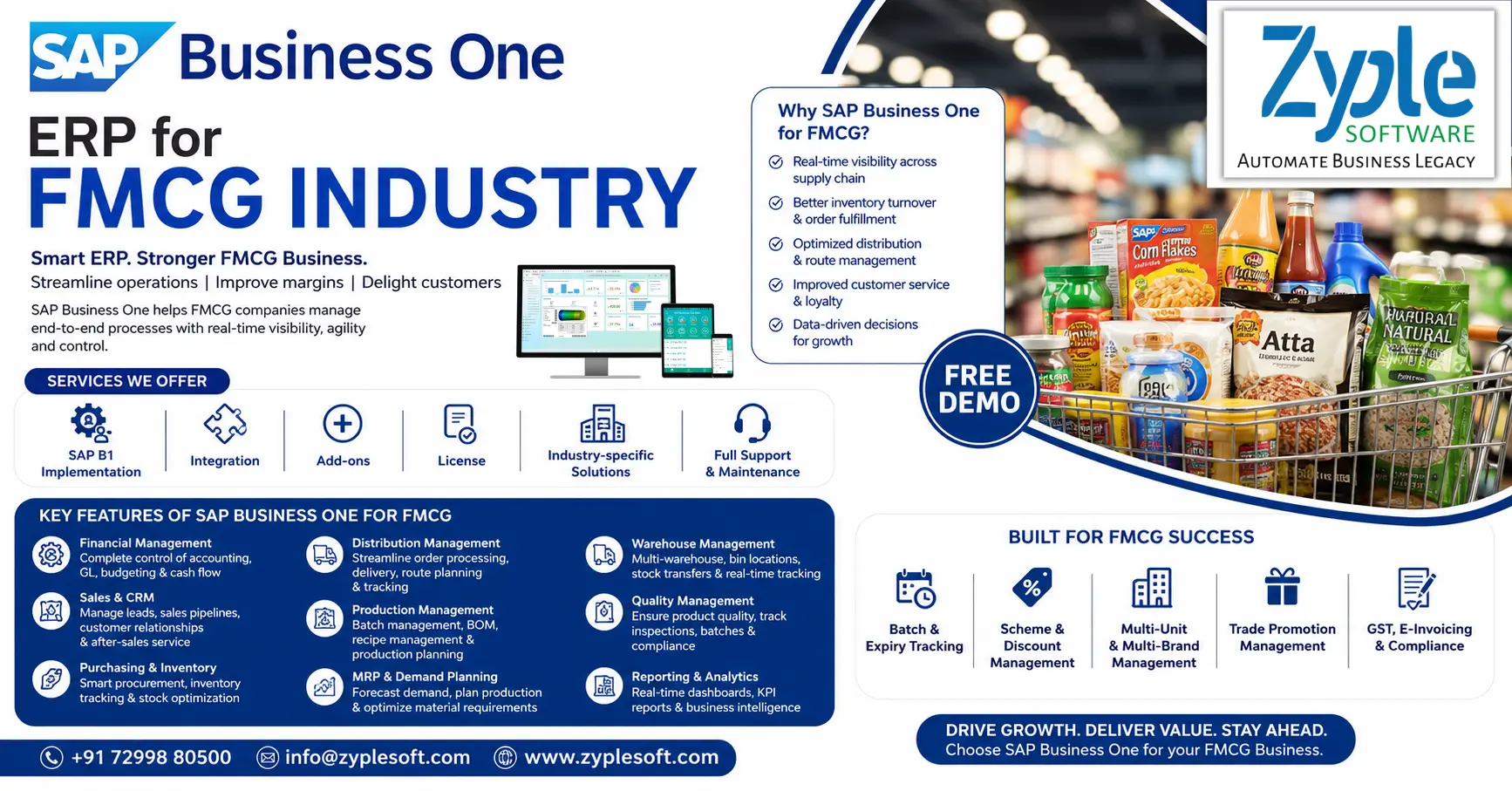
The FMCG industry is in huge demand. The products in this industry often need to be sold fast before they perish. The success of the FMCG sector revolves around speed, accuracy, and efficiency. Businesses in this sector must ensure timely deliveries and handle huge deliveries. SAP Business One ERP for FMCG industry provides real-time business insights in the reports to optimize the business workflow.
Challenges Faced By The FMCG Industry
The fast-moving consumer goods (FMCG) industry faces serious challenges, including supply chain disruptions, rising raw material costs, and shifting consumer preferences.
1. Supply Chain Disruptions
Geopolitical tensions, inflation, and climate events create freight delays and material shortages.
2. Thin Profit Margins
High transportation and input costs decrease profitability across low-margin product lines.
3. Inventory Complexities
Short product shelf lives and seasonal demand surplus risk high waste or costly stockouts.
4. Changing Demands
Shoppers increasingly look for eco-friendly, clean-label, and health-conscious products.
5. Rising Competition
Local startup brands and retail private labels chip away at conventional market share.
6. Omnichannel Integration
Achieving consumer expectations smoothly across both physical and retail e-commerce channels strains legacy systems.
Features of SAP Business One ERP for FMCG Industry
1. Inventory and Warehouse Management
- It includes real-time inventory tracking across multiple warehouses.
- It includes batch-wise and serial number tracking.
- It includes FIFO or FEFO (First Expiry First Out) stock management.
- It includes automated stock replenishment and reorder levels.
- It includes bin location management for optimized storage.
- It includes barcode and QR code integration.
2. Sales and Distribution Management
- It includes end-to-end sales order processing.
- Multi-channel distribution management like retailers, distributors, and wholesalers.
- It includes pricing management with discounts, schemes, and promotions.
- It includes sales forecasting and demand planning.
- Mobile sales like van sales and route sales integration.
- It includes real-time sales analytics and reporting.
3. Production and Manufacturing Management
- It includes bill of materials (BOM) management.
- It includes production planning and scheduling.
- Recipe and formula management for food and beverages.
- It includes quality control and compliance tracking.
- It includes real-time production monitoring.
- It includes waste and by-product management.
4. Procurement and Supplier Management
- It includes automated purchase order creation.
- It includes vendor management and evaluation.
- It includes material requirement planning (MRP).
- It includes procurement cycle tracking and approvals.
5. Financial Management and Accounting
- It includes general ledger, accounts payable, and accounts receivable.
- It includes cost accounting and profitability analysis.
- It includes budgeting and financial forecasting.
- It includes GST and tax compliance.
- It includes multi-currency and multi-branch financial consolidation.
- It includes real-time financial dashboards.
6. CRM (Customer Relationship Management)
- It includes customer database and contract management.
- It includes sales lead and opportunity tracking.
- It includes customer buying behavior analysis.
- It includes complaint and service management.
- It includes loyalty programs and customer engagement tracking.
7. Demand Planning and Forecasting
- It includes AI-driven demand forecasting.
- It includes seasonal and trend-based planning.
- It includes demand vs. supply analysis.
- It includes reduction of stockouts and overstocking.
- It includes data-driven decision-making.
8. Batch, Expiry, and Traceability Management
- It includes expiry date tracking and alerts.
- It includes batch recall management.
- It includes compliance with food safety and regulatory standards.
9. Reporting and Business Intelligence (BI)
- It includes real-time dashboards and KPI tracking.
- Customizable reports like sales, inventory, finance, and production.
- It includes predictive analytics and insights.
- It includes integration with Excel and other BI tools.
- It includes drill-down reporting for better decision-making.
10. Mobility and Cloud Capabilities
- It includes mobile access for sales and management teams.
- It includes cloud deployment for remote accessibility.
- It includes real-time data synchronization.
- It includes improved collaboration across departments.
11. Compliance and Quality Control
- Regulatory compliance for FMCG like FSSAI, GST, and more.
- It includes quality inspection at multiple stages.
- It includes audit trails and documentation.
- It includes standard operating procedure (SOP) enforcement.
12. Integration and Scalability
- It includes integration with e-commerce platforms, CRM, and third-party tools.
- It includes API-based connectivity.
- It is scalable for growing FMCG businesses.
- It includes custom add-ons for industry-specific needs.
Importance of SAP Business One ERP for FMCG Industry
The ERP software, SAP Business One, is essential for the fast-moving consumer goods (FMCG) industry because it improves inventory control, facilitates the supply chain, and automates financial and sales operations. It helps growing businesses manage high-volume transactions and fast-changing market demands with ease.
1. Live Stock Tracking
Provides real-time data on stock levels across multiple warehouses to avoid running out of popular items or keeping too much extra stock with the SAP implementation process.
2. Batch and Lot Control
Tracks production batches and expiration dates easily, which is very essential for food, drink, and personal care items.
3. Supply Chain Speed
Connects purchasing, production, and delivery so products move from factories to stores faster.
4. Sales and CRM
Handles customer orders, tracks pricing rules, and sets credit limits for different distributors and retailers using SAP solutions.
5. Money and Tax Management
Maintains all accounting, budgeting, and local tax rules in one clear place.
Benefits of SAP Business One for FMCG Industry
SAP Business One helps the fast-moving consumer goods (FMCG) industry by providing real-time inventory tracking, facilitated supply chain management, and integrated financial control. It enables growing consumer goods companies to reduce waste, prevent stockouts, and handle product batches efficiently.
1. Real-Time Stock Visibility
Monitors stock levels across multiple warehouses instantly.
2. Batch and Lot Tracking
Handles expiry dates and product traceability to minimize perishable waste.
3. Automatic Reordering
Triggers low-stock alerts to avoid production delays or empty shelves.
4. Material Requirements Planning (MRP)
Automates raw material planning based on actual demand using SAP Business One add-ons.
5. Bill of Materials (BOM)
It standardizes recipes and component lists for consistent product quality.
6. Facilitated Distribution
Improves procurement, manufacturing, and shipping workflows.
7. Integrated CRM
The SAP software maintains customer databases, tracking buying habits and order histories.
8. Unified Accounting
Integrates ledger, accounting, and local tax compliance into one dashboard.
9. Business Analytics
Generates fast, data-driven reports to find shifting market trends.
Conclusion of FMCG ERP
As a qualified SAP Business One partner, Zyple Software is delivering services like SAP B1 implementation, integration, migration, licensing, add-ons, digital transformation, and support to different industries, like construction, manufacturing, solar, food and beverage, aerospace, healthcare, retail, jewellery, pharma, and textiles.
SAP Business One is an ERP software customized for small and medium-sized enterprises that connects finance, procurement, sales, CRM, production, inventory, and reporting into one platform. For FMCG or any other businesses, it can improve project costing, procurement, subcontractor billing, and inventory management.
If you’re involved, register a SAP Business One demo.
Do you search for the SAP B1 ERP software for your business or industry?
Complete all the details in the displayed contact form; our team will get back to you.
FAQs
1.Why should FMCG companies choose SAP Business One over other ERP solutions?
SAP Business One provides industry-specific features like batch tracking, expiry management, and distribution control, making it ideal for FMCG businesses. It delivers real-time insights and scalability, helping companies grow without switching systems.
2.How can SAP Business One reduce operational costs for FMCG businesses?
By automating inventory, procurement, and sales processes, SAP Business One reduces manual errors and wastage. This leads to better resource utilization, minimized inventory holding costs, and improved profit margins.
3.Can SAP Business One integrate with current FMCG systems and tools?
Yes, SAP Business One can seamlessly connect with CRM, e-commerce platforms, and third-party applications. This ensures smooth data flow across departments and improves overall business efficiency.
4.What kind of support and services are available during SAP Business One implementation?
With the right implementation partner like Zyple Software, you get end-to-end services, including SAP B1 implementation, consultation, add-on development, data migration, training, and support to ensure a smooth and successful ERP deployment.
5.How can I request a demo or consultation for SAP Business One for my FMCG business?
You can connect with an authorized SAP B1 partner like Zyple Software to schedule a personalized demo. They will evaluate your business requirements, showcase relevant features, and guide you on the best implementation approach.