SAP Business One for Automotive and Transportation Industry
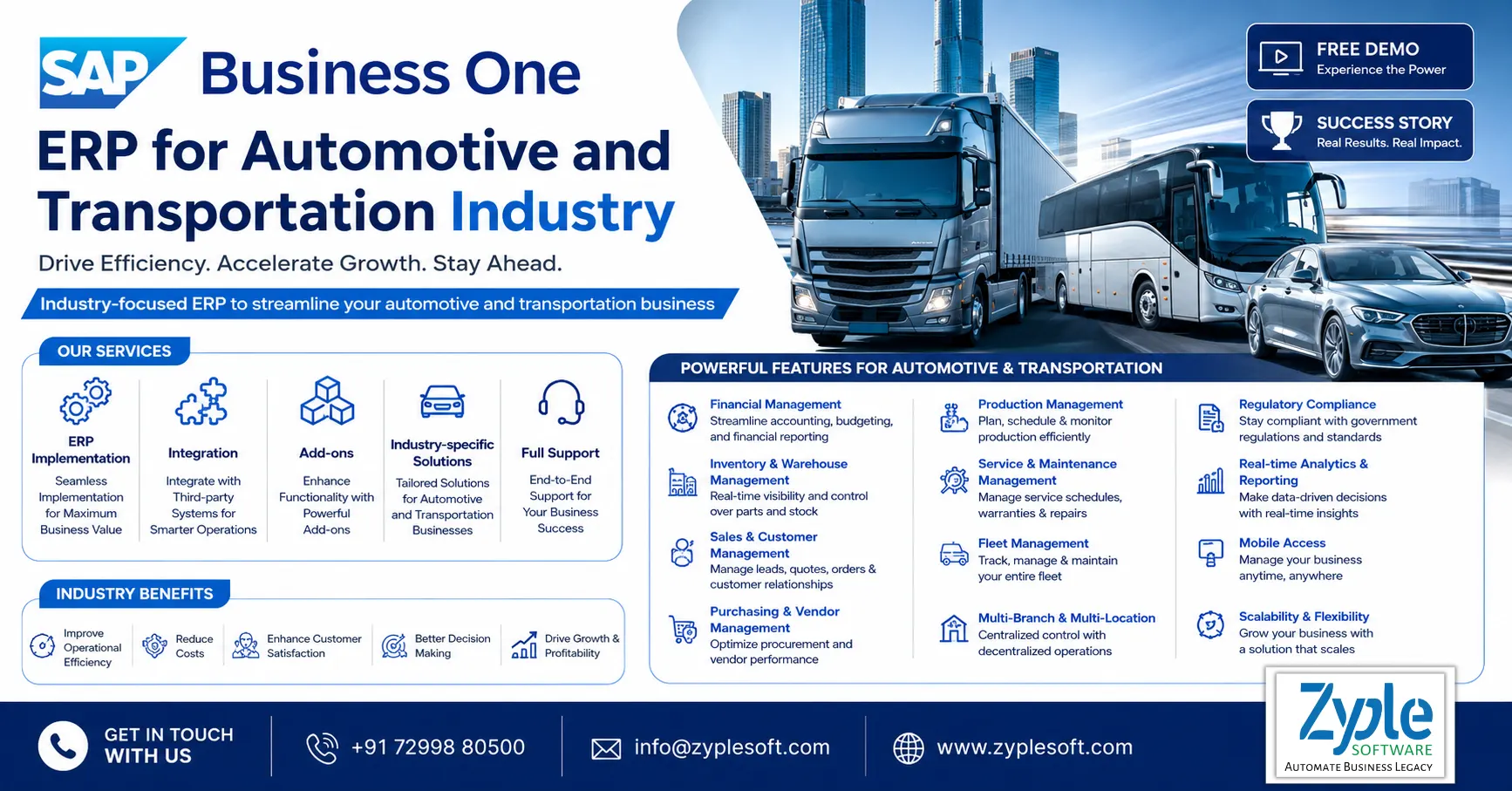
The automotive and transportation industry is evolving fast, and staying ahead involves innovative solutions. SAP Business One delivers a powerful ERP solution that helps manufacturers optimize operations, minimize costs, and boost customer satisfaction. SAP Business One for automotive and transportation facilitates supply chains, improves dealer collaboration, and increases marketing and sales processes.
Challenges of the Automotive and Transportation Industry
The automotive and transportation industry faces a tumultous landscape defined by the rapid shift to electric vehicles (EVs), supply chain vulnerabilities, and increasing cybersecurity threats. Key challenges include handling high production costs, adapting to software-driven vehicles, meeting strict emission regulations, and navigating shifting consumer demands toward shared mobility.
1. EV Transition and Battery Costs
The industry faces high production costs for electric vehicles, mainly due to expensive battery technologies, along with the need to develop infrastructure.
2. Supply Chain Disruptions
Continuous shortages of essential components (such as semiconductors) and fluctuating raw material prices threaten production schedules and inventory levels.
3. Regulatory and Environmental Compliance
Manufacturers are struggling to achieve global emission standards and sustainability goals while maintaining profitability.
4. Cybersecurity Risks
As vehicles become more connected, cybersecurity has become a foremost priority, with significant damages reported from cyber attacks on infrastructure and vehicles.
5. Software-Defined Vehicles and Technology
The rapid shift towards autonomous driving and advanced driver assistance systems (ADAS) involves massive investment and a workforce skilled in software, rather than just mechanical engineering.
6. Shifting Customer Preferences
Increased consumer demand for shared mobility and on-demand transportation (e.g., ride-hailing services) is decreasing the demand for personal vehicle ownership.
7. Infrastructure and Workforce Shortages
Limited EV charging infrastructure and a growing shortage of skilled technicians and drivers present significant operational challenges.
Features of SAP Business One for Automotive and Transportation
1. Production Planning and Bill of Materials (BOM)
- Handles multi-level BOMs for complex automotive assemblies (engines, components, and spare parts).
- Tracks sub-assemblies, labor, and machine resources.
- Manages engineering changes and version control easily.
- Suitable for auto component manufacturers and OEM suppliers.
2. Material Requirements Planning (MRP) and Scheduling
- Plans raw materials based on demand forecasts.
- Optimizes production schedules and capacity planning.
- Minimizes delays with advanced planning and scheduling (APS).
- Suitable for just-in-time manufacturing and supply chain efficiency.
3. Inventory and Warehouse Management
- It includes real-time visibility of spare parts, components, and finished goods.
- Tracks inventory across multiple warehouses and locations.
- It includes bin-level tracking and automated stock updates.
- It helps prevent stockouts and overstock situations.
4. Supply Chain and Vendor Management
- Handles suppliers, dealers, and distributors in one system.
- Tracks procurement cycles from purchase order to payment.
- Improves vendor performance and collaboration.
- Essential for automotive supplier ecosystems.
5. Quality Control and Traceability
- Tracks batch or serial numbers for parts traceability.
- Monitors quality checks and compliance.
- Handles rejections, returns, and defect ranking.
- Necessary for automotive compliance and safety standards.
6. Sales, CRM, and Dealer Management
- Handles dealer networks and customer relationships.
- Tracks the entire sales lifecycle from lead, order, and delivery to service.
- It includes support pricing, discounts, and promotions.
- Suitable for automotive dealerships and distributors.
7. After-Sales and Service Management
- Handles warranty claims and service contracts.
- Tracks service requests and maintenance schedules.
- Allows faster issue resolution.
- Important for customer satisfaction in the automotive sector.
8. Transportation and Logistics Management
- Tracks inbound and outbound shipments.
- Handles dispatch, delivery, and logistics operations.
- Monitors transportation costs and delivery timelines.
- Suitable for logistics and fleet-based businesses.
9. Financial and Cost Management
- It includes entire financial control features like accounting, budgeting, and cash flow.
- Tracks product costing, margins, and profitability.
- Handles multi-currency and global operations.
10. Business Intelligence and Real-Time Analytics
- It includes real-time dashboards and KPIs.
- Analyzes production efficiency, sales performance, and inventory.
- Predicts demand and optimizes operations.
- It supports data-driven decision-making.
11. Integrated End-To-End ERP Platform
- Single system including finance, production, inventory, CRM, and procurement.
- It eliminates data storage and improves visibility.
12. Mobility and Cloud Access
- It includes access to the system via mobile apps.
- It includes real-time updates for field sales and logistics teams.
- It includes cloud or on-premise deployment options.
Importance of SAP Business One for Automotive and Transportation
The enterprise resource planning (ERP) software, SAP Business One system, is essential for automotive and transportation businesses by facilitating operations, optimizing inventory, and handling complex supply chains in real-time. It delivers 360-degree visibility across manufacturing, procurement, and logistics, enabling lower costs, improved quality compliance, and faster decision-making for manufacturers, dealers, and logistics providers.
1. Inventory Optimization and Traceability
Handles stock across multiple locations to avoid stock-outs and excess inventory, with inclusive traceability for spare parts.
2. Production Planning and Quality Control
Improves material resource planning (MRP) and advanced scheduling, ensuring quality standards are achieved.
3. Transportation and Fleet Management
Integrates with GPS or telematics to track vehicle location, monitor driver behavior, handle maintenance, and optimize routes using SAP implementation.
4. Supplier and Supply Chain Collaboration
Improves supplier management with automated procurement, sharing demand forecasts to minimize disruptions.
5. Cost Reduction and Financial Control
Automates accounting, tracks costs in real-time, and delivers analytics to improve ROI.
6. Future-Ready Tech Adoption
It supports the Internet of Things (IoT), electric vehicle management, and sustainability initiatives.
Benefits of SAP Business One ERP for Automotive and Transportation
The SAP Business One (SAP B1) system provides automotive and transportation companies a scalable, integrated ERP system that improves supply chain visibility, optimizes inventory with batch or serial tracking, and facilitates production scheduling. It allows real-time monitoring of fleet operations, improves compliance with quality standards, and delivers 360-degree data insights for faster decision-making.
1. Inventory and Production Management
Optimized inventory tracking, including batch management and serial numbers, minimizes holding costs and prevents stock-outs. Material requirements planning (MRP) matches raw material availability with production schedules using SAP solutions.
2. Supply Chain and Supplier Management
Improved tracking of vendor contracts, consignment stock, and deliveries to handle supplier relationships, including EDI integration.
3. Quality and Compliance
Powerful QC/QA modules for automated inspections, ensuring compliance with environmental and industry standards.
4. Production Efficiency
Advanced Planning and Scheduling (APS) improves the balance between raw materials and production capacity, increasing on-time delivery.
5. Real-time Fleet Tracking
Integration with GPS and telematics to monitor vehicle status, location, and speed from a central dashboard using SAP software.
6. Route Planning and Optimization
Automated tools to create efficient routes and handle multi-stop journeys, reducing fuel costs.
7. Maintenance Optimization
Preventive maintenance alerts for vehicles to minimize downtime and manage maintenance expenses.
Conclusion of Automotive and Transportation ERP
Zyple Software is an authorized and Trusted SAP Business One partner in India specializing in implementation, digital transformation, migration, licensing, integration, add-on solutions, and consulting for the automotive and transportation industry. ERP company Zyple Software is the trusted SAP Business One partner providing customized SAP B1 solutions for automotive and transportation companies across the world.
If you’re organized, book a demo of SAP Business One.
Do you require the SAP Business One ERP software for your business or industry?
Complete all the details in the arranged contact form; our team will get back to you.