SAP Business One ERP for Auto Components and Spare Parts Industry
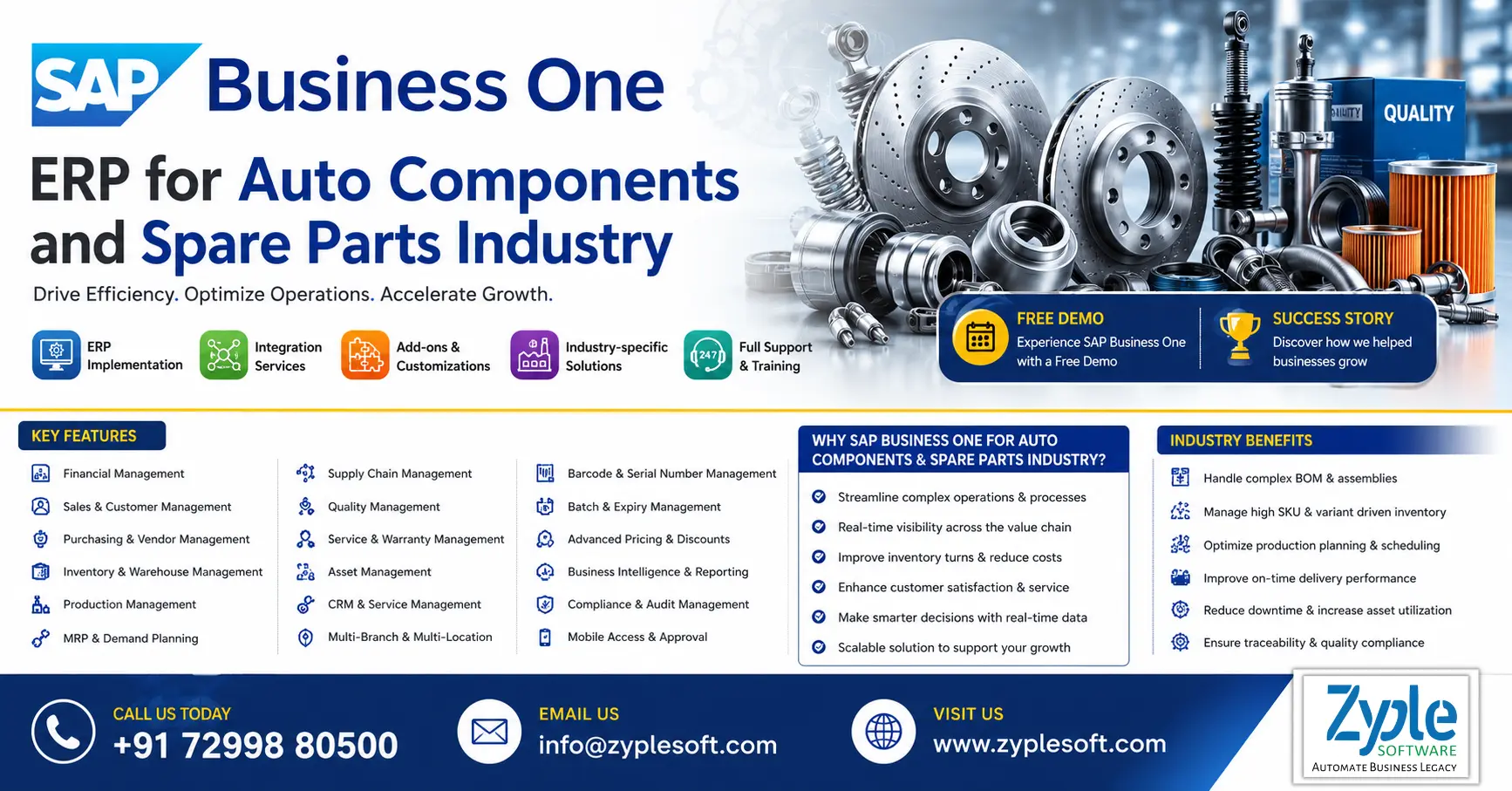
The auto components and spare parts industry requires precise inventory management, cost tracking, and facilitated processes. The continuously changing market dynamics of the auto components and spare parts sector have always presented a series of challenges to cope with. SAP Business One ERP for auto component and spare part plays an important role in helping auto components and spare parts businesses implement a cost-effective ERP solution designed for these needs.
Challenges Faced By the Auto Components and Spare Parts Industry
The auto components and spare parts industry faces serious challenges, mainly driven by rapid technology shifts towards electric vehicles (EVs), supply chain volatility, and high raw material costs. Key hurdles include handling complex inventory, navigating strict regulatory compliance, managing counterfeiting, and investing in new technology for automation and electrification.
1. Technology Transition (EV Shift)
The transition to electric vehicles involves huge investment, as EVs have fewer moving parts than internal combustion engines, making many traditional components obsolete.
2. Supply Chain Disruptions
Shortages of essential components like semiconductors, raw material fluctuations, and logistics delays impede production schedules.
3. Inventory Management and Diversity
Manufacturers struggle with the high diversity of parts, resulting in high storage costs, risk of obsolescence, and the need for complex inventory management systems.
4. Counterfeit Products
A massive influx of fake, lower-quality products affects revenue and damages brand reputation.
5. Regulatory Compliance
Navigating strict international and local regulations on safety, emissions, and importing or exporting components.
6. Cost Pressures
High inflation, rising labor costs, and competitive pricing pressures minimize profit margins.
7. Skilled Labor Shortages
Growing difficulty in finding skilled technicians to manage advanced electronics and diagnostic technologies.
Features of SAP Business One ERP for Auto Components and Spare Parts
1. Production Planning and Bill of Materials (BOM)
- Handles multi-level BOMs for complex auto components (assemblies, sub-assemblies, and spare kits).
- Tracks raw materials, machining processes, and labor costs.
- Manages job work or subcontracting (common in auto component manufacturing).
- Optimizes production scheduling.
- Ideal for industries producing parts like brake systems, engine components, fasteners, and more.
2. Inventory and Spare Parts Management
- It includes real-time stock visibility across warehouses.
- Handles batch and serial number tracking (essential for traceability).
- Manages fast-moving and slow-moving spare parts efficiently.
- Supports multi-warehouse and bin location management.
3. Procurement and Vendor Management
- Handles multiple suppliers and price lists.
- Tracks vendor performance and quality.
- Ensures timely procurement of raw materials and spare parts.
- Essential for auto industries relying on multiple-tier suppliers.
4. Sales and Distribution Management
- The entire order-to-cash cycle from quotation, order, and delivery to invoice.
- It includes customer-specific pricing and discounts.
- It includes dealer and distributor management.
- It includes sales forecasting and pipeline tracking.
- It includes integration with CRM and marketing campaigns.
- Multi-channel sales, including retail, wholesale, and e-commerce integration.
- Necessary for spare parts wholesalers and automotive distributors.
5. Material Requirements Planning (MRP)
- It includes an automated MRP wizard to plan procurement and production.
- Demand forecasting subject to sales orders and historical data.
- Auto-generation of purchase orders and production orders.
- It includes lead-time scheduling for suppliers.
- Helps prevent stockouts and overstocking in spare parts distribution.
- Essential for handling thousands of spare parts.
6. Spare Parts Traceability and Compliance
- It includes batch or serial traceability for each component.
- Tracks parts from the supplier and warehouse to the customer.
- It includes quality inspection and rejection handling.
- It includes compliance with automotive standards.
- It includes recall management support.
- Essential for safety-critical components.
7. Quality Control Management
- It includes incoming, in-process, and final inspection.
- It includes quality test parameters for parts.
- It includes non-conformance tracking.
- It includes vendor quality analysis.
- It includes integration with production.
- It ensures consistent product quality in manufacturing.
8. Service and Warranty Management
- It includes warranty tracking and claim management.
- It includes service contracts and AMC management.
- It includes service call logging and resolution.
- It includes spare parts consumption during service.
- It includes after-sales service tracking.
- Essential for dealers, service centers, and OEMs.
9. Financial Management and Accounting
- It includes general, accounts payable, accounts receivable, and taxation.
- It includes cost accounting for production.
- It includes profitability analysis by product or consumer.
- It includes budgeting and cash flow management.
- It includes multi-currency and multi-branch accounting.
- Delivers full financial control over operations.
10. Business Intelligence and Reporting
- It includes real-time dashboards and KPIs.
- It includes sales, inventory, and production analytics.
- It includes custom reports and Excel integration.
- It includes demand vs. supply analysis.
- It includes profitability reports.
- Allows data-driven decision-making.
11. Multi-Branch and Multi-Location Management
- Handles multiple warehouses, plants, and branches.
- Integrated reporting across locations.
- It includes inter-branch transactions.
- Ideal for automotive companies with multiple depots.
12. Integration and Automation
- Integration with CRM systems, e-commerce platforms, and logistics and payment gateways.
- It includes automated workflows and approvals.
- It includes API-based integrations.
13. Mobile and Web Access
- It includes mobile apps for sales and service teams.
- It includes real-time access everywhere.
14. Industry-Specific Automotive Capabilities
- It includes parts lifecycle management from procurement and sale to service.
- It includes vendor and dealer collaboration.
- It includes aftermarket spare parts management.
- It includes demand planning for seasonal parts.
- It includes logistics and distribution optimization.
- Support for OEM suppliers, tier-1 or tier-2 manufacturers, and spare parts distributors.
Importance of SAP Business One ERP for Auto Components and Spare Parts
The enterprise resource planning (ERP) software, SAP Business One (SAP B1) system, is essential for the auto components and spare parts industry by delivering end-to-end operational visibility, real-time inventory management, and facilitated production tracking. It allows manufacturers to handle complex supply chains, maintain precise compliance, and minimize stockouts, directly increasing profitability and efficiency.
1. Real-Time Inventory and Warehouse Management
Automates stock tracking, minimizes carrying costs, and eliminates overstocking through accurate demand forecasting and barcode scanning.
2. Improved Production Planning
Connects shop floor processes to optimize production, identify obstacles in real-time, and improve overall manufacturing efficiency.
3. Complete Supply Chain Control
Gives visibility from initial supplier procurement to final dealer delivery, ensuring timely delivery of raw materials using SAP implementation.
4. Quality Control and Compliance
Allows precise tracking of parts, lots, and serial numbers, necessary for strict automotive quality regulations and reducing recall risks.
5. Financial Accuracy and Reporting
Provides integrated financial management for monitoring margins, tracking supplier costs, and handling complex, multi-currency transactions.
6. Customer and Dealer Management
Facilitates sales processes, allowing customized pricing, discount management, and improved customer service, which increases satisfaction using SAP solutions.
Benefits of SAP Business One for Auto Components and Spare Parts
SAP Business One (SAP B1) delivers auto component manufacturers and spare part dealers an integrated, scalable ERP solution to optimize supply chains, handle complex inventory, and improve profitability. It allows real-time tracking of parts, improves production planning, and ensures compliance with industry standards, leading to improved customer satisfaction and lower operational costs.
1. Facilitated Inventory Management
Real-time visibility and barcode scanning optimize stock levels, minimizing carrying costs and reducing stockouts.
2. Improved Production and Planning
Allows efficient material requirements planning (MRP), handling production schedules, and tracking raw materials to finished components.
3. Complete Supply Chain Visibility
Integrates suppliers, manufacturers, and customers, allowing accurate, timely deliveries and forecasting.
4. Quality Control and Compliance
The SAP software ensures compliance with ISO standards and supports electronic data interchange (EDI) to handle high-quality standards and vendor communication.
5. Integrated Financials and CRM
Automates financial processes and delivers complete insights into profitability, pricing, and sales performance.
Conclusion of Auto Components and Spare Parts ERP
Zyple Software is a certified SAP Business One partner in India specializing in implementation, digital transformation, migration, licensing, integration, add-on solutions, and consulting for the auto component and spare parts industry. The SAP Business One solution is customized to benefit auto components and spare parts companies in different ways including effective inventory management, materials requirement planning, quality control, and supply chain management.
If you’re proficient, book a demo of SAP Business One.
Do you demand the SAP Business One ERP system for your business or industry?
Complete all the details in the provided contact form; our team will return to you.