SAP Business One ERP for AEC Industry
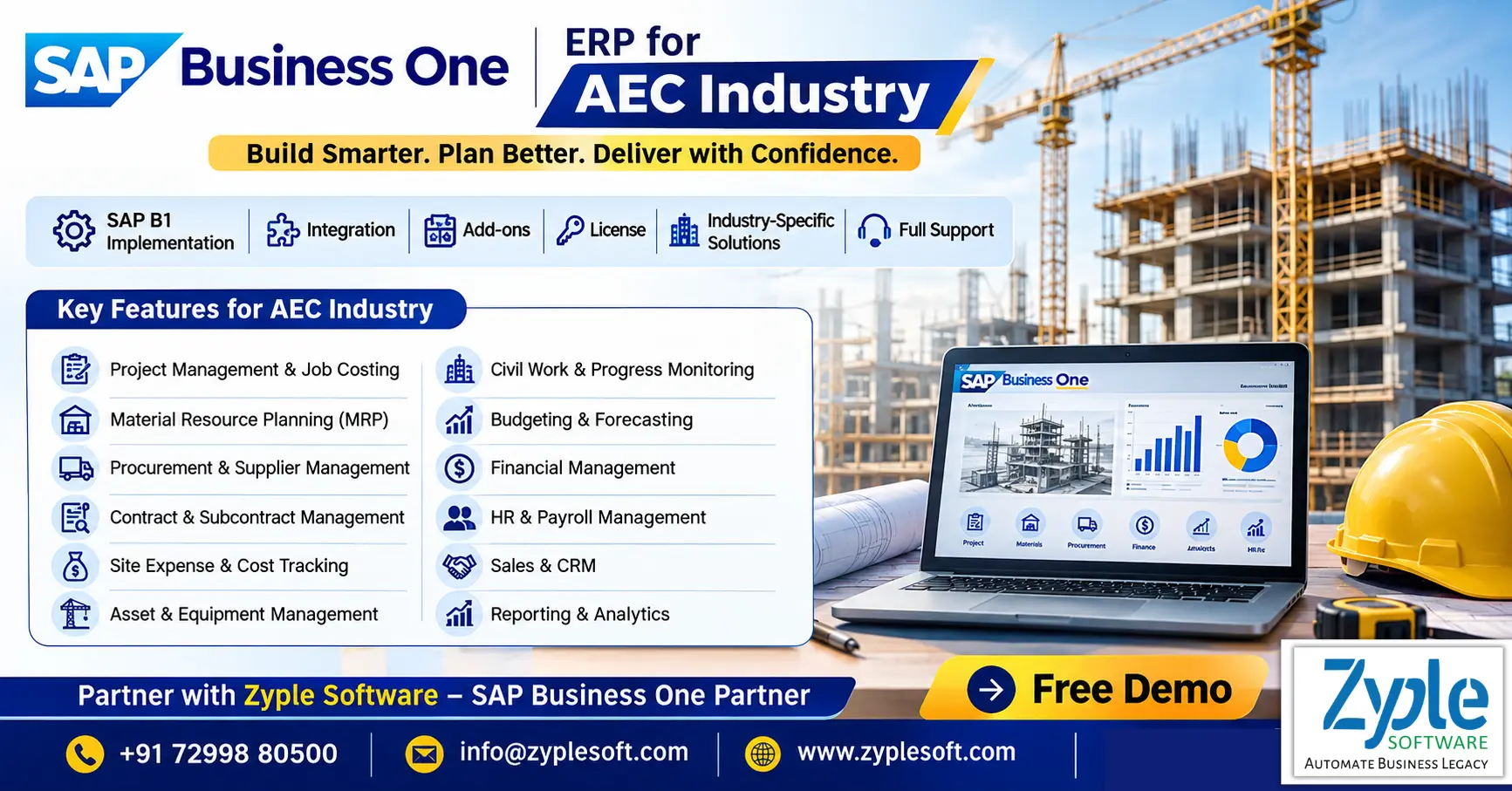
In the AEC industry, no matter what the size, organizations in this sector need to keep up with the competition. To handle all the core business functions like inventory, customer relationship management (CRM), supply chain, finance, and more, a business requires a powerful ERP solution. SAP Business One ERP for AEC industry helps architecture, engineering, and construction (AEC) firms handle project financials, subcontractor tracking, and inventory or material procurement.
Challenges Faced By The AEC Industry
The architecture, engineering, and construction (AEC) industry faces serious challenges, including labor shortages, slow digitalization, and inefficient collaboration. These obstacles increase project costs and cause severe delivery delays.
1. Labor Shortages and Skills Gap
An aging workforce, high retirement rates, and trouble attracting young talent leave large gaps. Workers also struggle to learn new technologies like building information modeling (BIM).
2. Disconnected System and Storage
Teams often work in isolation. Disconnected systems between finance, design, and field crews result in errors, outdated paperwork, and miscommunication.
3. Slow Digital Adoption
This sector limits new technologies due to tight profit margins and risk aversion. Upfront costs for AI and BIM software or hardware also hamper small firms.
4. Cost Overruns and Data Mess
Unpredictable material prices, design changes, and poorly handled project data derail budgets. Operators often receive messy, raw data after handover.
Let us discuss about features including SAP Business One modules for industry.
Features of SAP Business One ERP for AEC Industry
1. Project Planning and Management
- It includes end-to-end project lifecycle management from planning to handover.
- Work breakdown structure (WBS) for complete project tracking.
- It includes Gantt charts and milestone tracking for scheduling.
- It includes resource allocation and utilization planning.
- It includes real-time project progress monitoring.
2. Project Costing and Budget Control
- Complete project cost estimation and budgeting.
- Tracks actual vs. planned costs in real-time.
- It includes cost allocation by project, phase, or activity.
- Profitability analysis for every project.
- Controls cost overruns with alerts and reports.
3. Financial Management and Accounting
- Integrated financial accounting like general ledger, accounts payable, and accounts receivable.
- It includes multi-currency and multi-branch accounting.
- It includes automated journal entries and financial reports.
- It includes cash flow management and forecasting.
- It includes tax compliance and statutory reporting.
4. Procurement and Vendor Management
- It includes material requirements planning (MRP) based on project needs.
- It includes vendor selection and comparison tools.
- It includes purchase order creation and approval workflows.
- It includes subcontractor and supplier management.
- It includes real-time tracking of procurement status.
5. Inventory and Material Management
- Tracks construction materials across multiple sites.
- It includes inventory optimization and stock level monitoring.
- It includes material issue and return management for projects.
- It includes batch and serial number tracking.
- Minimizes wastage and material shortage.
6. Resource and Workforce Management
- It includes workforce scheduling and labor tracking.
- It includes timesheet and attendance integration.
- It includes equipment and machinery allocation.
- It includes productivity tracking and performance analysis.
- It includes subcontractor workforce management.
7. Contractor and Subcontractor Management
- Handles client contracts and subcontract agreements.
- Tracks contract terms, milestones, and deliverables.
- It includes progress billing and milestone-based invoicing.
- It includes retention and variation order management.
- Minimizes disputes with clear contract tracking.
8. CRM and Sales Management
- It includes lead and opportunity management for projects.
- It includes tender and bid management support.
- It includes customer communication tracking.
- It includes sales pipeline visibility.
- It improves win rates with better follow-ups.
9. Document Management and Compliance
- It includes centralized document storage for drawings, contracts, and reports.
- It includes version control and document approvals.
- It includes compliance tracking and audit readiness.
- It includes quality and safety documentation management.
- Minimizes paperwork and manual errors.
10. Reporting and Analytics
- It includes real-time dashboards for project and financial KPIs.
- It includes customizable reports for management insights.
- It includes predictive analytics for better decision-making.
- It includes drill-down reporting capabilities.
- Monitors overall business performance.
11. Mobility and Integration
- It includes mobile access for on-site teams and managers.
- Cloud deployment options for ease of use.
- It includes integration with CRM, BIM, and third-party tools.
- It includes real-time data synchronization across departments.
- Allows remote project monitoring.
Importance of SAP Business One ERP for AEC Industry
The ERP software, SAP Business One (SAP B1), helps the architecture, engineering, and construction (AEC) industry by facilitating project management, improving financial control, and optimizing resource allocation. It connects key operations like job costing, procurement, and field tracking into one platform.
1. Accurate Job Costing
Tracks direct and indirect project expenses, labor, and materials from start to finish to protect profit margins with the SAP implementation process.
2. Integrated Project Management
Evaluates resources, resource distribution, and task progress in real-time.
3. Facilitated Procurement
Automates vendor management, purchase orders, and material tracking to avoid project delays.
4. Financial Transparency
Handles industry-specific accounting needs, including progress billing, budgeting, and automated compliance reporting using SAP solutions.
Benefits of SAP Business One for AEC Industry
SAP Business One delivers architectural, engineering, and construction (AEC) firms with core advantages like integrated project management, real-time cost tracking, and facilitated resource allocation. It connects office teams and field operations into a single easy system.
1. Job Costing
The SAP software tracks real-time labor, material, and equipment expenses against project budgets.
2. Milestone Billing
Automates billing schedules tied directly to project stages and contract terms.
3. Subcontractor Control
Handles vendor bids, purchase orders, and compliance documents in one place.
4. Equipment Tracking
Evaluates machinery usage, maintenance schedules, and allocation across multiple job sites.
5. Material Planning
Forecasts raw material needs to avoid costly project delays using SAP Business One add-ons.
6. Mobile Access
Provides field crews real-time data access through mobile devices.
Conclusion of AEC ERP
As the Best SAP Business One partner in India, Zyple Software is delivering services like SAP B1 implementation, integration, migration, licensing, add-ons, digital transformation, and support to different industries, like construction, manufacturing, solar, food and beverage, aerospace, healthcare, retail, jewellery, pharma, and textiles.
SAP Business One is an ERP software customized for small and medium-sized enterprises that connects finance, procurement, sales, CRM, production, inventory, and reporting into one platform. For AEC or any other businesses, it can improve project costing, procurement, subcontractor billing, and inventory management.
Do you necessitate the SAP B1 ERP software for your business or industry?
Complete all the details in the placed contact form; our team will get back to you.
FAQs
1.How can SAP Business One improve profitability in construction projects?
This helps AEC companies minimize cost overruns, improve financial control, and maximize project profitability. Businesses can make quick, data-driven decisions to stay ahead of delays and unexpected expenses.
2.Is SAP Business One customizable for my AEC business needs?
Yes, SAP Business One can be customized for meeting the unique requirements of AEC companies, including project management, subcontractor billing, and material tracking. With industry-specific add-ons and integrations, businesses can create a solution that fits their correct workflow.
3.How quickly can I implement SAP Business One in my construction company?
SAP B1 implementation timelines vary depending on business size and complexity, but with the right partner, many AEC companies can go live within weeks. A structured SAP B1 implementation approach ensures minimal disruption and faster ROI.
4.Will SAP Business One integrate with my current tools and systems?
Absolutely. SAP Business One connects seamlessly with CRM, project management tools, and other third-party applications. This ensures seamless data flow across departments and eliminates manual work, improving overall efficiency.
5.How do I get started with SAP Business One for my AEC business?
Getting started is easy; connect with a certified SAP Business One partner like Zyple Software for a consultation, demo, and requirement analysis. This helps identify the right solution, pricing, and implementation roadmap customized for your construction business.
Book a Free SAP Business One Demo for the AEC Industry with Zyple Software and discover how you can improve project efficiency, reduce costs, and increase profitability.