SAP Business One ERP for Railway Equipment Manufacturing Industry
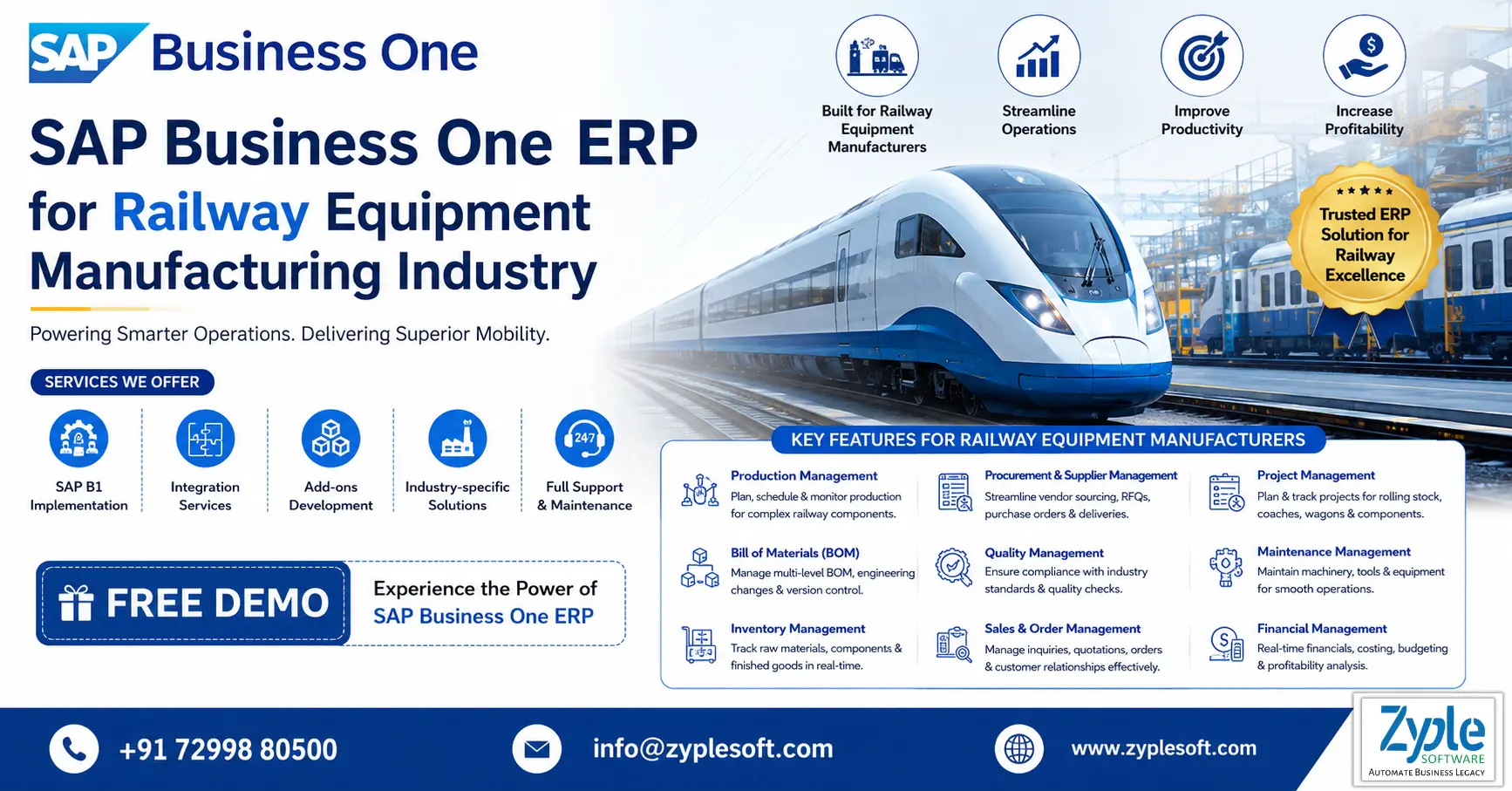
The railway equipment manufacturing industry faces huge pressure due to its large scope of work, which requires project management, heavy machinery loading, and other responsibilities. The railway equipment manufacturing industry needs a system that unifies different company departments. SAP Business One ERP for railway equipment manufacturing unites processes and helps in boosting production and efficiency.
Challenges Faced By The Railway Equipment Manufacturing Industry
The railway equipment manufacturing industry faces significant challenges, mainly fluctuating raw material costs, technological gaps, and stiff global competition. Also, manufacturers struggle with supply chain inefficiencies, strict sustainable development regulations, and a shortage of skilled technical workers.
1. Raw Material Volatility
The availability of high-grade raw materials like specialized steel and alloys at competitive prices is a key obstacle. Fluctuations in costs directly affect profit margins.
2. Technological and Digital Gaps
Smaller and legacy facilities often struggle to adjust to modern, high-precision engineering. There is continuous pressure to integrate advanced technologies like AI-driven diagnostics, robotics, and IoT sensors into traditional manufacturing processes.
3. Global Competition and Tendering
Local manufacturers face intense competition from big international players. In markets like India, the lowest-bid tendering culture forces a compromise on equipment quality to achieve tight budget constraints.
4. Supply Chain and Inventory Management
Inefficiencies in the supply chain, combined with delayed vendor payments and poor inventory management, cause production obstacles.
5. Strict Sustainability Regulations
With global targets to minimize carbon footprints, the sector is under pressure to shift towards green tech, hybrid or electric propulsion solutions, and eco-friendly manufacturing materials.
Features of SAP Business One ERP for Railway Equipment Manufacturing
1. Core Manufacturing and Production Management
- Bill of materials (BOM) management like multi-level and complex assemblies.
- It includes production orders and work orders.
- It includes routing and operation sequencing.
- Engineer-to-Order (ETO) and Make-to-Order (MTO) support for custom railway components.
- It includes shop floor control and work-in-progress (WIP) tracking.
- It includes scrap, rework, and yield management.
- Production cost calculation, like planned vs. actual.
- Suitable for handling large, complex assemblies like bogies, braking systems, couplers, and signalling equipment.
2. Advanced Production Planning and Scheduling
- It includes material requirements planning (MRP).
- Capacity planning, like machines and labor.
- It includes production scheduling and sequencing.
- Demand forecasting based on contracts and tenders.
- It includes lead time and resource optimization.
- Essential for railway manufacturers dealing with long production cycles and strict delivery timelines.
3. Project-Based Manufacturing and Contract Management
- Project lifecycle management from tender and execution to delivery.
- It includes milestone-based billing.
- It includes project costing and profitability tracking.
- It includes budget vs actual analysis.
- It includes integration with production and procurement.
- Ideal for government railway contracts, EPC projects, and custom builds.
4. Inventory and Warehouse Management
- It includes multi-warehouse and bin location management.
- Batch and serial number tracking for traceability.
- It includes raw material, WIP, and finished goods tracking.
- It includes spare parts and maintenance inventory.
- It includes automated stock replenishment.
- FIFO and JIT inventory strategies.
- It ensures full traceability of safety-critical railway components.
5. Procurement and Supply Chain Management
- It includes vendor management and evaluation.
- It includes purchase requisitions and approvals.
- It includes subcontracting management.
- It includes import and export documentation.
- It includes multi-currency procurement.
- It includes supplier performance tracking.
- Helps handle complex supplier networks for metals, electronics, and fabricated parts.
6. Quality Control and Compliance
- It includes incoming, in-process, and final quality inspections.
- It includes quality test templates and parameters.
- It includes non-conformance and corrective actions.
- Compliance with railway standards like ISO, IRIS, RDSO, and more.
- It includes automatic certification and documentation generation.
- Important for the high-safety and regulatory-heavy railway industry.
7. Engineering Change and Product Lifecycle Management
- It includes Engineering Change Requests (ECR) and Orders (ECO).
- It includes version control of BOMs and drawings.
- It includes integration with CAD or PDM systems.
- It includes lifecycle tracking from design to production.
- It supports frequent design changes in railway components.
8. Financial Management and Cost Control
- It includes general ledger, AP/AR, and banking.
- It includes cost center and profit center accounting.
- It includes project-based costing.
- Fixed asset management, like machinery and tools.
- It includes budgeting and financial forecasting.
- Allows accurate costing of high-value railway equipment.
9. Sales, CRM, and After-Sales Equipment
- It includes tender and quotation management.
- It includes sales order processing.
- It includes customer lifecycle management (CLM).
- It includes service contracts and warranty tracking.
- It includes maintenance and repair service management.
- Ideal for long-term railway maintenance contracts and AMC services.
10. Asset and Maintenance Management
- It includes machine maintenance scheduling.
- It includes breakdown tracking and downtime analysis.
- It includes preventive maintenance planning.
- It includes equipment lifecycle management.
- Important for heavy machinery used in fabrication and assembly.
11. Business Intelligence (BI) and Analytics
- It includes real-time dashboards and KPIs.
- It includes production efficiency analysis.
- It includes cost and profitability reports.
- It includes custom report builder.
- It includes Excel integration and drill-down analytics.
- It helps leaders make data-driven decisions across operations.
12. Mobility and Integration
- It includes mobile access for the shop floor and management.
- It includes web client for remote operations.
- It includes integration with IoT, MES, CAD, and third-party apps.
- It includes cloud or on-premise deployment options.
13. Compliance, Documentation, and Traceability
- It includes audit trails for all transactions.
- Document management like drawings and certificates.
- It includes regulatory compliance tracking.
- It includes full traceability from raw material to finished product.
14. Scalability and Industry-Specific Add-Ons
- It includes add-ons for heavy engineering and rail manufacturing.
- It includes multi-branch and multi-location support.
- Localization like GST, taxation, and export rules.
- It is scalable for growing manufacturing units.
Benefits of SAP Business One ERP for Railway Equipment Manufacturing
The ERP software, SAP Business One (SAP B1) system, facilitates the railway equipment manufacturing industry by integrating project management, supply chain, and financials into a single system. It specifically improves Engineer-to-Order (ETO) capabilities, ensures strict regulatory compliance, and optimizes the after-sales servicing of high-value capital assets.
1. Engineer-to-Order (ETO) Support
Seamlessly integrates with CAD software to automate the generation of Bills of Materials (BOMs) from complex railway design drawings, ensuring accuracy during custom production runs using SAP implementation.
2. Strict Traceability and Compliance
Implements batch and serial number tracking across all sub-assemblies and raw materials. This is essential for meeting strict railway safety and quality standards.
3. Automated Material Requirements Planning (MRP)
Automatically calculates exactly when and what raw materials (e.g., specialized steel, electronic components) are required. This avoids production delays and reduces excess inventory carrying costs.
4. Precise Project Costing
Connects all shop floor activities, such as labor, machine hours, and material usage, directly to the general ledger. This delivers real-time visibility into the exact cost of goods sold (COGS) and profit margins per project using SAP solutions.
5. Lifecycle and Warranty Management
Handles equipment servicing, tracks maintenance contracts (AMC), and maps spare parts consumption. This drastically increases after-sales customer support.
Conclusion of Railway Equipment Manufacturing ERP
Zyple Software is the Top SAP Business One partner in India specializing in implementation, digital transformation, licensing, integration, add-on solutions, migration, and consulting for the railway equipment manufacturing industry. This is when choosing a powerful SAP software can benefit manufacturing companies. It can be beneficial in several aspects of manufacturing, which include physical accounting, warehouse management of products, scheduling, location, management, warehousing, and numerous others.
If you’re active, arrange a demo of SAP Business One.
Do you need the SAP B1 ERP software for your business or industry?
Finish all the details in the provided contact form; our team will get back to you.
FAQs related to Railway Equipment Manufacturing Industry ERP
1.What is the cost of implementing SAP Business One for railway equipment manufacturing?
The cost depends on factors like number of users, customization level, and deployment type like cloud or on-premise. A personalized consultation helps determine the correct pricing based on your manufacturing complexity.
2.Can SAP Business One be customized for railway equipment manufacturing processes?
Yes, SAP Business One can be customized for support industry-specific needs such as complex BOMs, project-based manufacturing, compliance tracking, and heavy engineering workflows.
3.How long does it take to implement SAP Business One in a railway manufacturing company?
SAP B1 implementation timelines generally range from a few weeks to a few months, depending on business size, data migration, and customization requirements. Choosing an experienced implementation partner like Zyple Software can speed up the process.
4.Is cloud deployment available for SAP Business One?
Yes, SAP Business One is available in both cloud, on-premises, and hybrid models. Cloud deployment provides flexibility, remote access, and lower upfront infrastructure costs, making it ideal for growing manufacturers.
5.How can I get a demo of SAP Business One for my railway equipment manufacturing business?
You can request a free demo from an authorized SAP B1 partner like Zyple Software. The demo will showcase how SAP Business One can facilitate your production, inventory, and financial processes based on your specific requirements.