SAP Business One ERP for Power and Energy Equipment Industry
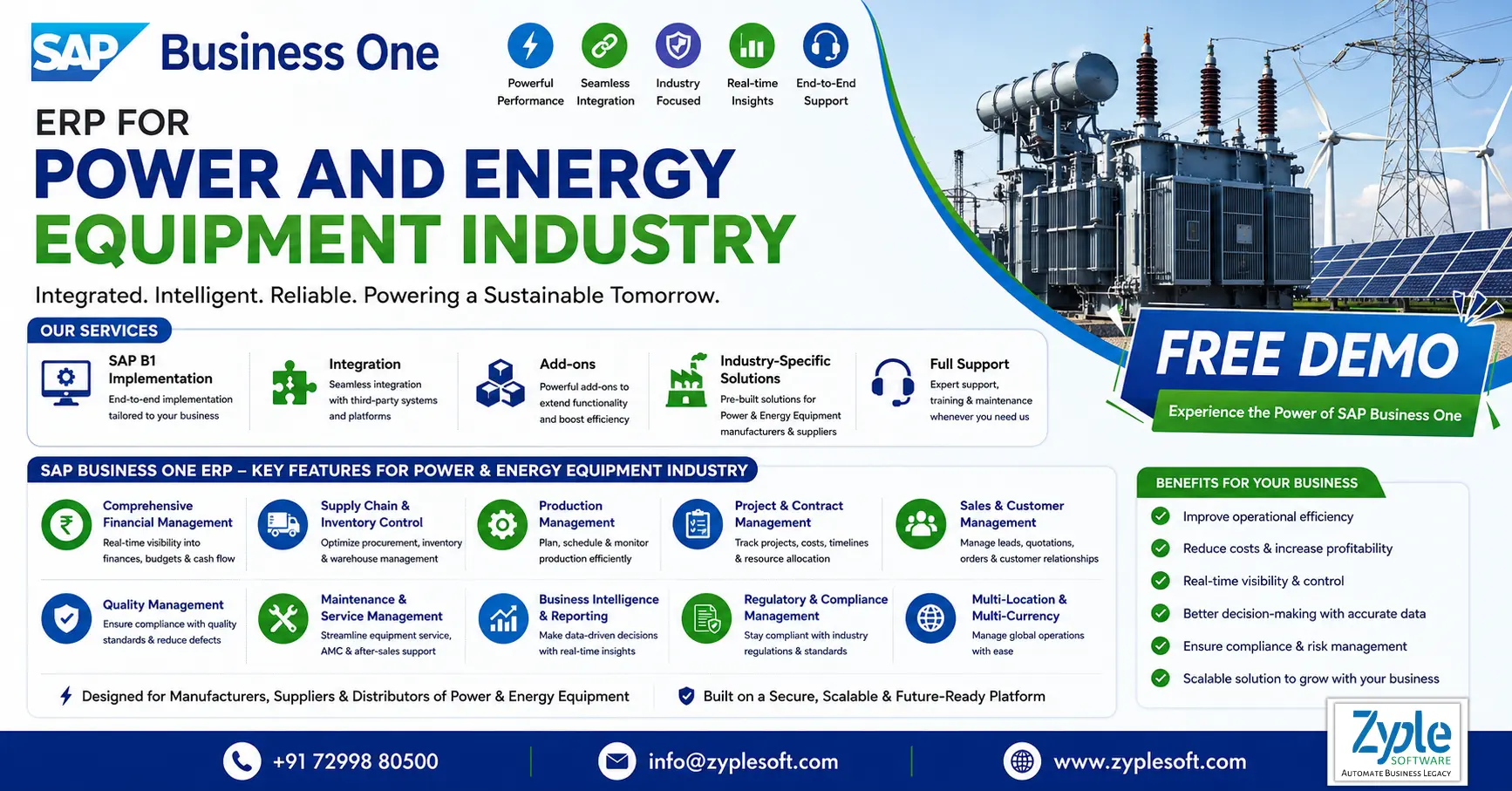
In today’s fast-paced world, the power and energy equipment industry faces a unique set of challenges, including fluctuating demand, regulatory complexities, and the need for advanced technology to facilitate operations. To stay competitive, companies require a powerful, scalable ERP software solution that can help them handle resources efficiently, improve decision-making, and increase their operational performance. SAP Business One ERP for power and energy equipment to optimize the resources and operations of the businesses.
Challenges Faced By The Power and Energy Equipment Industry
The power and energy equipment industry faces serious challenges driven by the skyrocketing electricity demand for AI and data centers, supply chain bottlenecks, aging infrastructure, and aggressive grid decarbonization. Equipment manufacturers are pressed to innovate rapidly while handling raw material constraints and geopolitical shifts.
1. The AI Load Surge
The explosive growth of hyperscale data centers and reindustrialization has triggered a historic rise in power demand, leading to long lead times for essential electrical equipment like transformers, switchgear, and turbines.
2. Material Constraints
Manufacturers depend on complex, global supply chains for essential minerals like lithium, copper, cobalt, and silicon, making them vulnerable to geopolitical friction, trade policies, and price volatility.
3. Testing and Certification
A shortage of standardized testing facilities and certification obstacles delay the launch of newly manufactured equipment.
4. Aging Infrastructure
Much of the world’s high-voltage grid was built decades ago and is ill-equipped to manage modern two-way power flows or the integration of intermittent renewables like wind and solar.
5. Equipment Upgrades
Grid operators involve huge investments in dynamic reactive power compensation, high-voltage direct current (HVDC) systems, and massive utility-scale battery storage to balance grids.
6. Environmental Pressures
Traditional switchgear equipment has long relied on sulfur hexafluoride (SF6), a potent greenhouse gas. Finding technical equipment that maintains high reliability without the carbon footprint is a key engineering challenge.
7. Stringent Net-Zero Mandates
Government policies and global net-zero commitments force equipment makers to continuously overhaul product lines to achieve higher energy efficiency and sustainability standards.
8. Cybersecurity Vulnerabilities
As grids become increasingly digitized, intelligent, and interconnected, manufacturers of energy equipment are forced to embed advanced cybersecurity features into operational technology (OT) to avoid infrastructure attacks.
9. Project Viability and Tariffs
The high capital expenditure needed for R&D and manufacturing capacity expansion clashes with pressures to maintain energy and equipment costs affordably.
10. Workforce Gaps
The industry faces an essential brain drain due to an aging workforce, coupled with a lack of specialized engineering and trade skills needed to build and maintain next-generation grid infrastructure.
Features of SAP Business One ERP for Power and Energy Equipment
1. Financial Management and Compliance
- It includes general ledger, journal entries, and AP/AR automation.
- It includes multi-currency and multi-branch financial management.
- It includes budgeting, cost accounting, and profitability tracking.
- Fixed asset management which is essential for heavy equipment and plants.
- It includes taxation (GST), audit trials, and regulatory compliance.
- It includes real-time financial reporting and dashboards.
- It helps energy companies control capital-intensive operations and regulatory reporting efficiently.
2. Procurement and Vendor Management
- It includes purchase requisitions, RFQs, and purchase orders.
- It includes vendor evaluation and performance tracking.
- It includes contract and rate agreement management.
- It includes automated approval workflows.
- It includes integration with inventory and finance.
- Essential for handling large-scale procurement of turbines, transformers, cables, solar panels, and more.
3. Inventory and Warehouse Management
- Real-time inventory tracking like raw materials, WIP, and finished goods.
- Batch or serial number tracking for equipment traceability.
- It includes multi-warehouse and bin location management.
- It includes stock valuation and reorder planning.
- It includes spare parts and component tracking.
- It ensures accurate stock visibility and avoids downtime in power projects.
4. Production Planning and Manufacturing
- It includes bill of materials (BOM) management.
- It includes production orders and scheduling.
- It includes material requirements planning (MRP).
- It includes shop floor control and resource utilization.
- It includes subcontracting and job work management.
- Suitable for manufacturing electrical panels, transformers, generators, and energy equipment.
5. Project and EPC Management
- It includes project planning and execution tracking.
- It includes budget vs. actual cost monitoring.
- Resource allocation like labor, machines, and materials.
- It includes milestone-based billing.
- It includes integration with procurement and finance.
- Essential for EPC (Engineering, Procurement, and Construction) energy products like solar plants and substations.
6. Sales and CRM (Customer Relationship Management)
- It includes lead and opportunity management.
- It includes quotations on order management.
- It includes customer contract and pricing management.
- It includes after-sales service tracking.
- It includes customer interaction history.
- It supports B2B sales of heavy electrical equipment and long sales cycle.
7. Service and Maintenance Management
- It includes equipment installation tracking.
- It includes AMC (Annual Maintenance Contract).
- It includes service calls and warranty management.
- It includes field service tracking.
- It includes spare parts consumption tracking.
- Important for after-sales service of power equipment and renewable installations.
8. Supply Chain and Distribution Management
- It includes end-to-end supply chain visibility.
- It includes logistics and dispatch planning.
- It includes demand forecasting.
- It includes supplier-to-customer traceability.
- It includes integration with distributors and dealers.
- It helps optimize energy equipment distribution networks and project deliveries.
9. Quality Control and Planning
- It includes incoming, in-process, and final quality checks.
- It includes compliance with industry standards like ISO and safety norms.
- It includes inspection plans and defect planning.
- It includes documentation and certification management.
- Essential for high-reliability equipment like transformers, switchgear, and solar systems.
10. Asset and Equipment Management
- It includes fixed asset lifecycle management.
- It includes depreciation tracking.
- It includes maintenance scheduling.
- It includes asset performance monitoring.
- It supports power plants, heavy machinery, and infrastructure assets.
11. Business Intelligence (BI) and Analytics
- It includes real-time dashboards and KPIs.
- It includes custom reports and analytics.
- It includes profitability analysis by project or product.
- It includes demand and cost forecasting.
- It includes Excel integration and data visualization.
- Allows data-driven decisions in volatile energy markets.
12. Mobility and Remote Access
- It includes mobile apps for sales and service teams.
- It includes web-based ERP access.
- It includes real-time updates from project sites.
- Ideal for field engineers, site managers, and remote energy projects.
13. Integration and Scalability
- It includes integration with IoT, SCADA, and external systems.
- It includes SAP B1 HANA in-memory platform support.
- It includes API-based integrations.
- It includes add-ons for industry-specific needs.
- Allows smart energy operations and digital transformation.
14. Multi-Location and Multi-Branch Management
- It includes centralized control of multiple plants or sites.
- It includes inter-branch transactions.
- It includes consolidated financial reporting.
- Suitable for companies operating across multiple power plants or regions.
15. Industry-Specific Capabilities
- It includes project costing for solar or renewable installations.
- It includes equipment lifecycle tracking.
- It includes regulatory and compliance reporting.
- It includes energy distribution and demand planning.
- End-to-end operations visibility from finance, procurement, and production to distribution.
- Delivers complete control over energy equipment lifecycle.
Benefits of SAP Business One ERP for Power and Energy Equipment
The ERP software, SAP Business One (SAP B1) system, facilitates the power and energy equipment industry by unifying engineering, procurement, production, and financials. It reduces operational costs, accelerates time-to-market, and optimizes complex supply chains while ensuring strict regulatory compliance.
1. Engineering-to-Order (ETO) Support
Handles custom specifications, CAD integration, and precise assembly processes required for heavy power equipment using SAP implementation.
2. Predictive Maintenance and Asset Tracking
Monitors equipment lifecycles and schedules preventive maintenance to prevent expensive downtimes.
3. Stringent Traceability
Evaluates component batches and serial numbers to uphold safety standards and quality control inspections.
4. Accurate Project Costing
Delivers real-time tracking of labor, material, and overhead costs to protect project profit margins using SAP solutions.
5. Financial and Regulatory Alignment
Automates financial reporting and documentation to easily comply with local and international compliance standards.
6. Supply Chain Resilience
Optimizes inventory levels, automates purchasing, and manages vendor relationships to avoid component shortages.
Conclusion of Power and Energy Equipment ERP
Zyple Software is a certified SAP Business One partner in India specializing in implementation, digital transformation, licensing, integration, add-on solutions, migration, and consulting for the power and energy equipment industry. By adopting SAP software, power and energy equipment manufacturers gain a centralized platform to manage engineering, production, quality, inventory, procurement, and finance with complete transparency and control.
If you’re scalable, schedule a demo of SAP Business One.
Do you seek the SAP Business One ERP solution for your business or industry?
Complete all the details in the designated contact form; our team will reach out to you.
1.How much does SAP Business One cost for power and energy equipment businesses?
The cost of SAP Business One depends on factors like number of users, deployment type (cloud or on-premise), and customization needs.
2.How long does it take to implement SAP Business One ERP?
The SAP implementation typically takes 2 to 6 months, depending on the complexity of your operations, data migration, and integration requirements. A proper assessment can deliver a more precise timeline.
3.Can SAP Business One be customized for power and energy equipment manufacturing?
Yes, SAP Business One is highly flexible and can be designed to support project-based manufacturing, equipment tracking, compliance management, and industry-specific workflows.
4.Is SAP Business One available on the cloud and on-premise?
Yes, SAP Business One provides both cloud and on-premise deployment options. Cloud deployment allows remote access, scalability, and reduced IT infrastructure costs.
5.How can I get a demo of SAP Business One for my business?
You can request a free demo from an authorized SAP B1 partner like Zyple Software to see how SAP Business One fits your business processes and helps improve efficiency and profitability.