SAP Business One ERP for Industrial Tools Manufacturing Industry
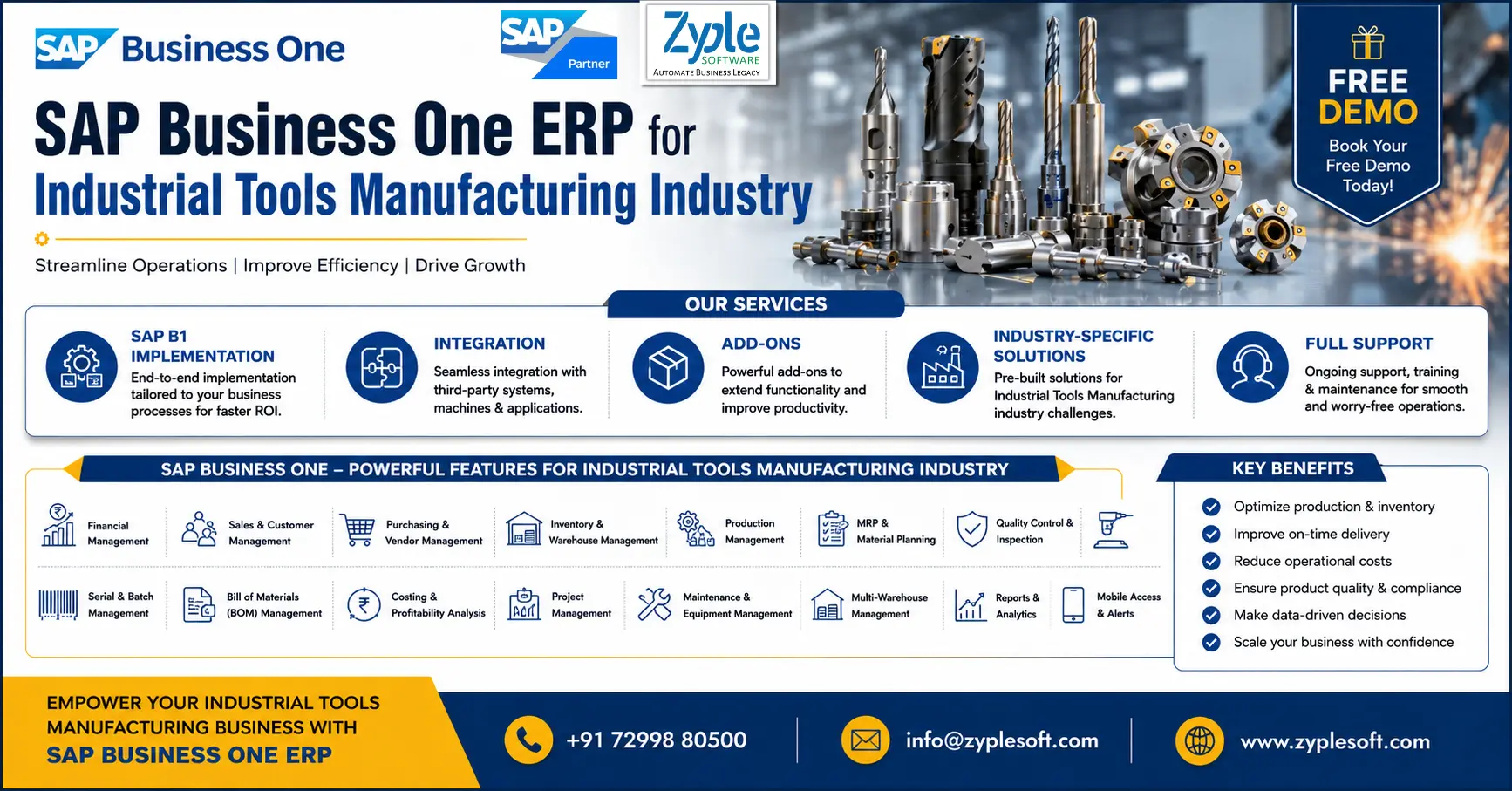
The industrial tools manufacturing industry faces huge pressure due to its large scope of work, which involves project management, heavy machinery loading, shipping, warehousing, and other responsibilities. The industrial tools manufacturing industry has logistics issues and needs a powerful ERP system that unifies the different company departments. SAP Business One ERP for industrial tools manufacturing unites processes and helps in boosting production and efficiency in the industrial tools manufacturing industry.
Challenges Faced By The Industrial Tools Manufacturing Industry
The industrial tools manufacturing industry faces significant challenges, including severe skilled labor shortages, volatile raw material costs, and complex supply chain disruptions. Also, the pressure to adopt expensive automated technologies and achieve strict global environmental standards forces companies to balance modernization with financial constraints.
1. Skilled Labor Shortages
A widening gap exists between the technical skills required to operate advanced CNC, robotic, and automated machinery and the available talent pool, severely affecting production efficiency.
2. Supply Chain Vulnerabilities
Depending on global sourcing for rare earth metals and specialty steel exposes manufacturers to geopolitical risks, fluctuating material costs, and shipping delays.
3. Digital Transformation and Integration
Upgrading legacy systems to include artificial intelligence (AI) and the Internet of Things (IoT) involves heavy capital investment and poses risks regarding data security and system interoperability.
4. Rising Environmental and Compliance Costs
Adapting to strict global sustainability mandates and emission standards requires manufacturers to redesign products and invest heavily in pollution control and energy-efficient facilities.
5. Intense Global Competition
The commoditization of standard tools and the influx of low-cost imports from international markets force domestic toolmakers to highly subsidize research and development (R&D) to stay competitive.
6. Inventory and Profitability Management
Balancing supply and demand to prevent overproduction or stockouts, while maintaining margins against high maintenance and operational costs, is a constant operational struggle without modern enterprise resource planning (ERP) software.
Features of SAP Business One ERP for Industrial Tools Manufacturing
1. End-to-End Production Planning and Control
- It includes multi-level bill of materials (BOM) management.
- It includes production order creation and tracking.
- It includes capacity planning and resource allocation.
- It includes shop floor control with real-time updates.
- It includes routing and operation sequencing.
- It includes production variance analysis.
2. Inventory and Warehouse Management
- It includes real-time inventory visibility across warehouses.
- Batch and serial number tracking are essential for tools and components.
- It includes bin location management.
- It includes automatic stock replenishment.
- Inventory valuation methods like FIFO, moving average, and standard cost.
- It includes cycle counting and stock audits.
3. Procurement and Supplier Management
- It includes purchase request and approval workflows.
- It includes supplier or vendor management.
- It includes automated purchase orders.
- It includes supplier performance tracking.
- It includes price comparison and sourcing optimization.
- It includes integration with MRP for material planning.
4. Sales and Customer Relationship Management (CRM)
- It includes lead and opportunity management.
- It includes a quotation for sales order automation.
- It includes customer order history tracking.
- It includes pricing and discount management.
- It includes after-sales service tracking.
- It includes integration with production and inventory.
5. Material Requirements Planning (MRP)
- It includes demand forecasting.
- It includes auto-generation of production and purchase recommendations.
- It includes material shortage alerts.
- It includes lead time management.
- It includes what-if scenario planning.
- It includes synchronization of supply and demand.
6. Quality Control and Compliance
- It includes defect tracking and root cause analysis.
- It includes compliance with ISO and industry standards.
- It includes quality certificates and documentation.
- It includes non-conformance management.
7. Financial Management and Cost Control
- Cost accounting factors like machine, labor, and overhead.
- It includes budgeting and financial forecasting.
- It includes multi-currency and tax compliance.
- It includes profitability analysis by product or customer.
- It includes real-time financial reporting.
8. Bill of Materials (BOM) and Engineering Data
- It includes multi-level BOM with version control.
- It includes engineering change management (ECM).
- It includes product lifecycle tracking.
- It includes component substitution handling.
- It includes cost roll-up for finished goods.
9. Service and Maintenance Management
- It includes equipment and service tracking for tools sold.
- It includes warranty and service contract management.
- It includes preventive maintenance scheduling.
- It includes field service management.
- It includes spare parts management.
10. Reporting, Analytics, and Business Intelligence
- It includes real-time dashboards and KPIs.
- It includes customizable reports.
- It includes production and sales analytics.
- It includes drill-down reporting capabilities.
- It includes integration with Crystal Reports.
11. Automation and Workflow Management
- It includes approval workflows for purchasing, finance, and sales.
- It includes automated alerts and notifications.
- It includes task scheduling and reminders.
- It includes reduced manual intervention.
12. Integration and Scalability
- It includes integration with CAD, PLM, and third-party systems.
- It includes API-based connectivity.
- It is scalable for growing manufacturing businesses.
- It includes cloud and on-premise deployment options.
13. Mobility and Remote Access
- It includes mobile access to ERP data.
- It includes sales and service team mobility.
- It includes real-time updates from anywhere.
- It includes role-based access control.
Importance of SAP Business One ERP for Industrial Tools Manufacturing
The ERP software, SAP Business One (SAP B1) system, enables the industrial tools manufacturing industry by centralizing production, inventory, financials, and supply chain management into a single system. It allows precise tracking of raw materials, optimizes bills of materials (BOMs), and automates procurement to minimize costs and prevent costly production delays.
1. Precise Bill of Materials (BOM) Management
Accurately defines multi-level BOMs enabling you to handle complex tool assemblies, sub-assemblies, and the exact raw materials required for production.
2. Material Requirements Planning (MRP)
This ensures you have the ideal metals, carbides, and components in stock without over-purchasing using SAP implementation.
3. Real-Time Inventory Control
Monitors stock levels of raw materials, work-in-progress (WIP), and finished tools across multiple warehouses in real-time.
4. Quality Control and Compliance
Integrates strict quality point checks throughout the manufacturing cycle, ensuring every tool achieves industry safety and performance standards.
5. Shop Floor and Routing Control
Delivers clear visibility into routing processes, machine utilization, and labor allocation to facilitate the manufacturing process from end to end using SAP solutions.
6. Integrated Financial Management
Integrates shop-floor operations directly to the general ledger, accounts payable, and accounts receivable. This delivers accurate, real-time product costing and profit margin analysis.
Benefits of SAP Business One for Industrial Tools Manufacturing
SAP Business One delivers industrial tool manufacturers with an integrated, end-to-end management platform. It optimizes complex production schedules, facilitates procurement of raw materials, tracks serialized tools for quality and warranty, and ultimately minimizes manufacturing costs and inventory waste.
1. Accurate Materials Requirement Planning (MRP)
Automatically calculates material needs based on sales forecasts, production lead times, and current stock to avoid costly production delays or over-purchasing.
2. Bill of Materials (BOM) Management
Standardizes the creation of complex BOMs, making it easier to handle multi-level assemblies, sub-assemblies, and alternative component substitutions.
3. Serial Number and Batch Traceability
The SAP software tracks individual tools or component batches from raw material procurement through to the finished product, which largely improves after-sales service and warranty management.
4. Real-Time Inventory Visibility
Gains complete control over warehouse transfers, work-in-progress (WIP) stock, and finished goods, significantly minimizing carrying costs.
5. Shop-Floor Efficiency
Connects design, engineering, and manufacturing data, optimizing machine utilization rates and workflow automation.
6. Quality Control Integration
Builds quality inspection checkpoints into the production cycle to minimize defects and ensure compliance with industry standards.
7. Financial and Cost Accounting
Direct integration between your production floor and finance departments enables accurate, real-time calculation of profit margins, production costs, and overheads.
Conclusion of Industrial Tools Manufacturing ERP
Zyple Software is an experienced SAP Business One partner in India specializing in implementation, digital transformation, licensing, integration, add-on solutions, migration, and consulting for the industrial tools manufacturing industry. SAP Business One ERP solves the real-world challenges faced by industrial tool manufacturing firms with a robust, scalable, and intelligent ERP system.
If you’re adaptable, schedule a demo of SAP Business One.
Do you seek the SAP Business One ERP software for your business or industry?
Complete all the details in the designated contact form; our team will get back to you.
1.How can I get a demo of SAP Business One for my industrial tools manufacturing business?
You can request a free, personalized demo from the best SAP Business One partner like Zyple Software to see how the system fits your production, inventory, and financial workflows.
2.What is the cost of SAP Business One for industrial tool manufacturers?
The cost depends on factors like number of users, deployment type (like cloud, on-premise, and hybrid), and customization requirements. Contact an SAP B1 partner like Zyple Software to get a tailored quote based on your business needs.
3.How long does it take to implement SAP Business One?
The SAP B1 implementation generally takes anywhere from a few weeks to a few months, depending on the complexity of your manufacturing processes and the level of customization required.
4.Can SAP Business One be customized for my specific manufacturing processes?
Yes, SAP Business One can be designed to match your industrial tools manufacturing workflows, including production planning, quality control, and inventory management.
5.Why should I choose SAP Business One for my manufacturing business?
SAP Business One provides end-to-end business management, real-time insights, scalability, and industry-specific capabilities, making it a suitable ERP solution for growing industrial tools manufacturers.