How To Control Quality in Manufacturing Industry?
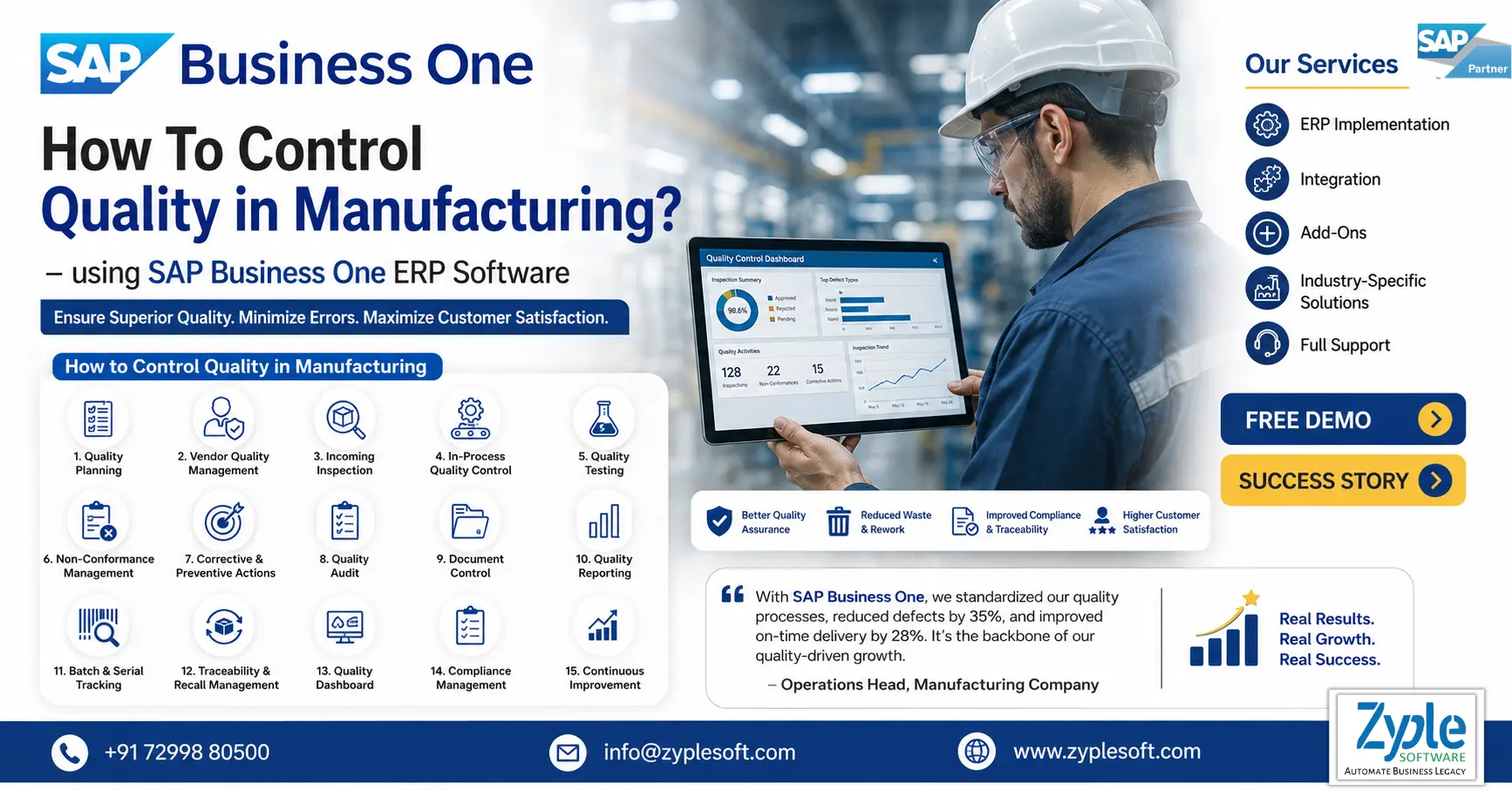
When you make something, you better guarantee there’s nothing faulty about the product. If your customer purchases your product and it doesn’t work, at best, you’ll lose, and at worst, you’ll be served with lawsuit. Here, quality control in manufacturing is crucial. Here, we’ll discuss how to control quality in manufacturing.
What is Quality Control?
Quality control is a process that helps deliver products as planned or helps ensure project deliverables achieve stakeholder requirements. It requires that the company support an environment where everyone, from management to employees, is performing their jobs as perfectly as possible.
What is Quality Control in Manufacturing?
Quality control in manufacturing refers to the processes and systems used to ensure that products achieve specific requirements and are consistent and reliable. This requires planning, designing, implementing, and maintaining a system that provides confidence in a product’s design and production.
Importance of Quality Control in Manufacturing Using SAP B1
Quality control (QC) in manufacturing using SAP Business One (SAP B1) is essential for ensuring product consistency, minimizing wastage, and automating compliance. It delivers real-time inspection, inventory traceability, and quality management of incoming materials, production stages, and finished goods, preventing defective products from reaching customers.
1. Integrated Quality Inspection Points
SAP B1 ERP delivers quality control add-ons that enable inspections at different stages, including goods receipt, purchase order, production receipt, and delivery.
2. Minimized Rework and Costs
By inspecting raw materials and components, companies can avoid defective materials from entering production, minimizing rework, waste, and overall operating expenses.
3. Improved Traceability and Compliance
The system delivers full traceability from procurement to final delivery, helping businesses meet strict industry standards, such as ISO, BIS, or CDSCO.
4. Improved Product Consistency
Automated inspection checklists ensure that every batch meets defined quality standards and is compliant, which boosts customer satisfaction and minimizes warranty claims.
5. Real-time Reporting and Analysis
Manufacturers gain instant visibility into quality metrics, allowing them to identify trends, analyze non-conformances, and take prompt corrective actions.
Benefits of Quality Control in Manufacturing Using SAP Business One
Manufacturing quality is a standard goal for most businesses in the market, but it is only sometimes a key priority. Depending on their output or brand, different companies have different expectations about their suitable cost of quality. Regardless of those differences, all organizations can accumulate significant benefits by implementing strong quality control practices. That’s because better quality control doesn’t only improve outcomes; it can do so more cost-effectively. It enables you to invest smarter, not more, in quality efforts while reaping all the benefits of solid quality processes.
1. Improved Safety
Ensuring products are made to specification results in safer end products. This is essential in the automotive, aerospace, and pharmaceutical industries, where safety is foremost. Effective quality control helps reduce the risk of malfunctions and accidents associated with faulty products.
2. Contributes To Overall Positive Branding
High-quality products improve a company’s reputation. Consistent delivery of reliable and effective products guarantees positive customer perceptions using SAP implementation.
3. Increased Customer Loyalty
By ensuring product quality, companies can develop a devout customer base. Loyal customers are also likely to recommend your products to others, further expanding the market reach.
4. Decreased Liability Risk
Effective quality control minimizes the risks of product failures that can lead to recalls and legal issues. This saves the company from possible financial liabilities and protects its image from the negative publicity associated with recalls.
5. Automated Inspection Workflows
SAP B1 can automatically trigger inspection tasks when goods are received from suppliers or during production, moving items to designated “QC warehouses” to avoid premature use.
6. Increased Traceability
The system allows batch-wise or lot traceability, essential for audits and tracking material quality from purchase to finished goods using SAP solutions.
7. Minimized Operational Costs
By detecting defective materials or products early, before, during, and after production, companies minimize rework and waste.
8. Optimal Supplier Management
The quality control data helps evaluate suppliers based on defect rates, delivery accuracy, and material consistency.
9. Regulatory Compliance
Centralized documentation and automated reports make it easier to achieve industry regulations.
10. Improved Product Consistency
Automated testing against predefined, consistent criteria leads to higher quality finished products and improved customer satisfaction.
Types of Quality Control Methods
1. Quality Control Methods and Techniques
There are different ways to implement good quality control. Every approach has its own set of tools and skills, and they are often used in combination to ensure the highest quality of products in manufacturing.
2. Total Quality Management (TQM)
TQM is an inclusive and structured approach to organizational management that seeks to improve the quality of products and services through continuous refinements in response to continuous feedback. Customer demands define TQM requirements, and the organization endeavors to achieve those with zero defects.
3. Statistical Quality Control (SQC)
SQC requires using statistical methods to monitor and control a process. This helps identify and handle variations in the manufacturing process that might lead to defects, thus ensuring product quality.
4. 100% Inspection Method
This method requires inspecting every single product part or assembly for defects. While resource-intensive, it can be essential in environments where defects can lead to significant safety or functionality issues (e.g., automotive, medical device, and heavy equipment manufacturers).
5. Six Sigma
This quality control method works at improving existing processes, products, or services by discovering and eliminating defects in order to facilitate manufacturing. The purpose is that the manufacturing process will have little to no variance. Six Sigma works by defining the problem, measuring the existing process, and analyzing the root cause of variations and defects to identify the issues. It increases processes by eliminating the root cause of these defects and controlling the process to stay on track.
6. X-Bar Chart
An X-bar chart is used in quality control to track the mean of successive samples of a constant size. The Y-axis evaluates the degree to which the deviation of the tested attribute is acceptable. This control chart is used for characteristics that can be measured on a consistent scale. That includes such things as weight, temperature, thickness, and more. However, it is rarely used alone and is often coupled with an R-chart, which is used to determine the stability and predictability of a process.
7. Lean Quality Control
Lean quality control is a production quality control approach that places customer value at the center of every decision, focusing relentlessly on eliminating waste, reducing waiting times, and streamlining every step of the production process.
Lean quality controlworks by systematically identifying and removing anything that does not add direct value for the customer, including overproduction, unnecessary inventory, long wait times between production steps, and costly rework cycles.
Conclusion of Quality Control in Manufacturing Using SAP Business One
Zyple Software is an authorized SAP B1 partner in India specializing in implementation, digital transformation, migration, licensing, add-on solutions, integration, and consulting for the manufacturing industry. The SAP B1 system places equal emphasis on finding faults and correcting them rapidly without delays. It facilitates compliance audits, supports regulatory traceability requirements, and guarantees consistent quality control for manufacturing operations of every scale.
Are you endeavoring to find the SAP Business One ERP system for your business or industry?
Fill in all the details in the decided contact form; our team will return to you.