Best SAP Business One Implementation Partner for Construction Companies (2026 Guide)
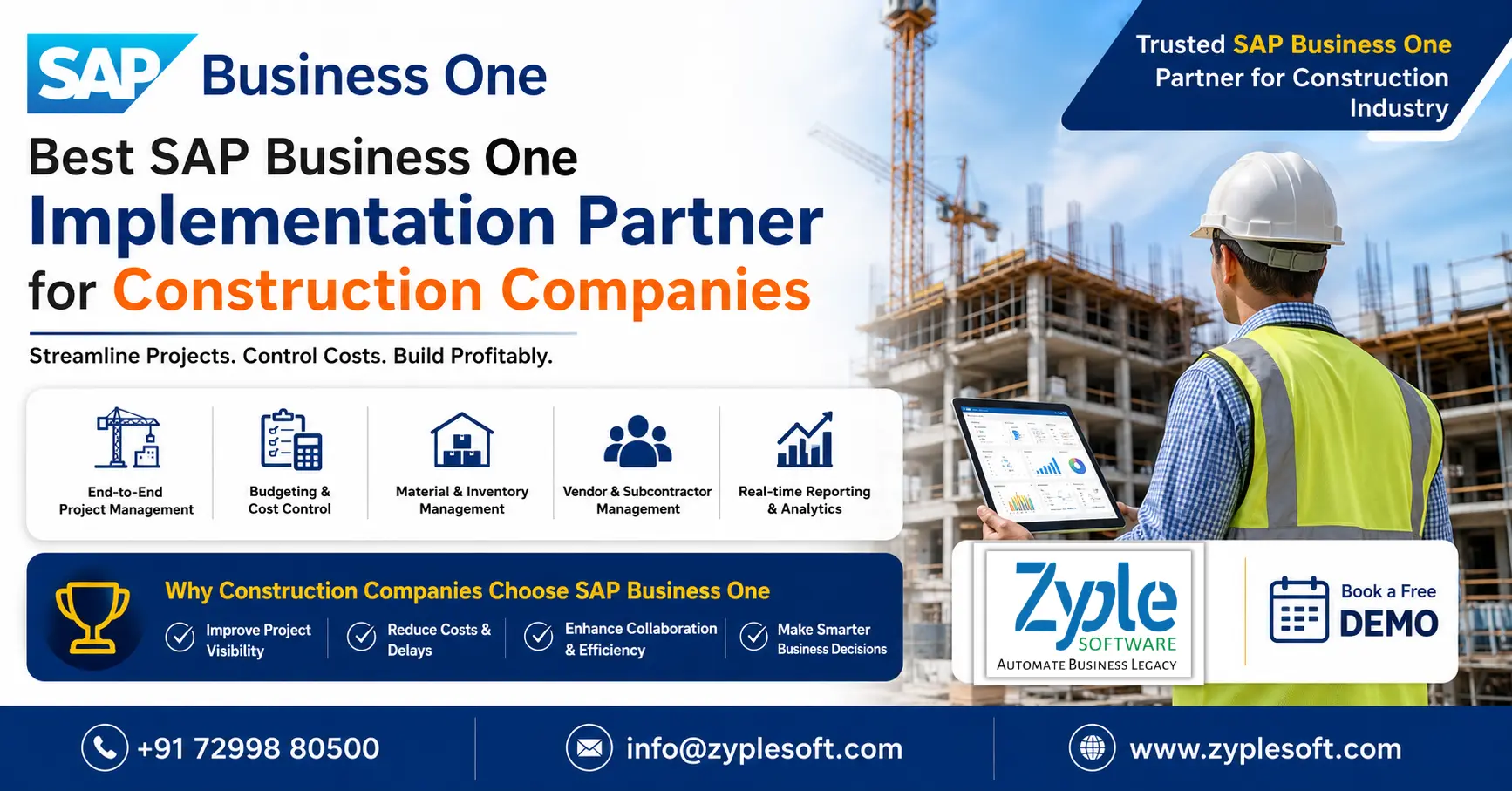
Construction companies operate in one of the most complex business environments. Managing multiple projects, subcontractors, procurement, inventory, equipment, contracts, and finances across different locations requires more than accounting software or spreadsheets.
This is why many growing construction businesses choose SAP Business One ERP.
However, purchasing SAP Business One is only the first step. The real success of your ERP project depends on choosing the right SAP Business One implementation partner.
In this guide, we’ll explain what makes an implementation partner suitable for the construction industry, the features your ERP should include, and why experienced industry-specific implementation is essential.
Why Construction Companies Need SAP Business One?
Construction businesses face challenges that generic ERP systems often fail to solve.
Common problems include:
- Delayed project costing
- Material shortages at project sites
- Budget overruns
- Manual purchase approvals
- Equipment utilization issues
- Poor visibility into project profitability
- Multiple disconnected software systems
- Difficulty tracking subcontractor expenses
- Cash flow management
SAP Business One centralizes these processes into one integrated ERP platform.
Key benefits include:
- Real-time financial reporting
- Project-wise profitability
- Procurement automation
- Inventory management
- Vendor management
- Site-wise material tracking
- Budget monitoring
- Equipment cost tracking
- Document management
- GST and statutory compliance
Why Choosing the Right SAP Business One Implementation Partner Matters?
- Understand construction workflows
- Configure ERP according to your business
- Reduce implementation risks
- Complete projects on time
- Train your employees
- Provide long-term support
- Deliver measurable ROI
- Budget overruns
- User resistance
- Delayed go-live
- Incorrect reports
- Low ERP adoption
- Expensive rework
What to Look for in a SAP Business One Construction Partner?
1. Construction Industry Experience
- Civil contractors
- Infrastructure companies
- Builders & developers
- Interior contractors
- Road construction
- Industrial projects
- EPC contractors
2. Project Costing Expertise
- Project budgeting
- Cost centers
- WBS mapping
- Material consumption
- Labor costing
- Equipment expenses
- Contractor billing
3. Procurement Automation
- Purchase Requests
- RFQs
- Vendor Comparison
- Purchase Orders
- Goods Receipt
- Vendor Payments
4. Inventory Across Multiple Sites
- Multiple warehouses
- Site transfers
- Batch tracking
- Material issue & return
- Stock valuation
- Reorder planning
5. Equipment & Asset Management
- Machinery maintenance
- Equipment allocation
- Fuel consumption
- Spare parts inventory
- AMC schedules
6. Construction-Specific Customization
- BOQ Management
- Contractor Billing
- Work Order Tracking
- Project Approvals
- Material Indents
- Daily Progress Reports
- Tender Management
- Budget Control
- Equipment Cost Tracking
7. Data Migration Expertise
- Customers
- Vendors
- Materials
- Projects
- Financial Masters
- Opening Balances
- Inventory
8. User Training
- Finance Team
- Procurement
- Stores
- Project Managers
- Site Engineers
- Directors
9. Post Go-Live Support
- Dedicated Support Team
- Remote Assistance
- On-site Visits
- Performance Optimization
- Version Upgrades
- User Training
Features Construction Companies Should Expect
Financial Management
- General Ledger
- Accounts Payable
- Accounts Receivable
- Cash Flow
- Banking
- Budgeting
Project Management
- Project Tracking
- Project Profitability
- Cost Centers
- Budget Monitoring
Procurement
- Purchase Requests
- Vendor Evaluation
- Purchase Orders
- Approval Workflow
Inventory
- Multi-site Inventory
- Warehouse Management
- Batch Tracking
- Material Consumption
Reporting
- Live Dashboards
- KPI Reports
- MIS Reports
- Project Reports
CRM
- Lead Management
- Customer Follow-up
- Opportunity Management
Why Construction Companies Choose Zyple Software?
- SAP Business One implementation
- Industry-specific ERP customization
- Construction-focused workflows
- Project costing solutions
- Procurement automation
- Inventory management
- Add-on development
- ERP integration services
- User training
- Dedicated post-go-live support
Questions to Ask Before Selecting a Partner
- How many construction companies have you implemented?
- Can you provide customer references?
- Do you offer construction-specific add-ons?
- Who will manage our implementation?
- What is your implementation methodology?
- How long is post-go-live support?
- Do you provide user training?
- Can you integrate third-party software?
- What is included in the project scope?
- What additional costs should we expect?
Implementation Best Practices
- Define clear project goals
- Clean your master data
- Standardize business processes
- Train users early
- Assign internal project owners
- Monitor KPIs after go-live
- Schedule regular ERP reviews
Final Conclusion
Frequently Asked Questions
Which is the best SAP Business One implementation partner for construction?
The best partner is one with proven construction industry experience, certified SAP consultants, successful implementations, customization capabilities, and strong post-go-live support.
How long does SAP Business One implementation take?
Most construction ERP implementations take approximately 3–9 months, depending on company size, process complexity, data migration, and customizations.
Can SAP Business One manage multiple construction projects?
Yes. SAP Business One supports project-wise budgeting, costing, procurement, inventory, profitability analysis, and financial reporting across multiple projects.
Is SAP Business One suitable for EPC contractors?
Yes. SAP Business One is widely used by EPC, infrastructure, civil engineering, and contracting companies because it integrates finance, procurement, inventory, and project management into one platform.
What should I check before selecting an ERP implementation partner?
Evaluate industry experience, consultant certifications, implementation methodology, customer references, customization expertise, support services, and total project scope – not just the initial price.
If you are interested in SAP Business One for Construction industry, fill your details im contact form, Zyple Software Team will contact you soon with best solution.