SAP Business One ERP for Bioenergy and Biomass Industries
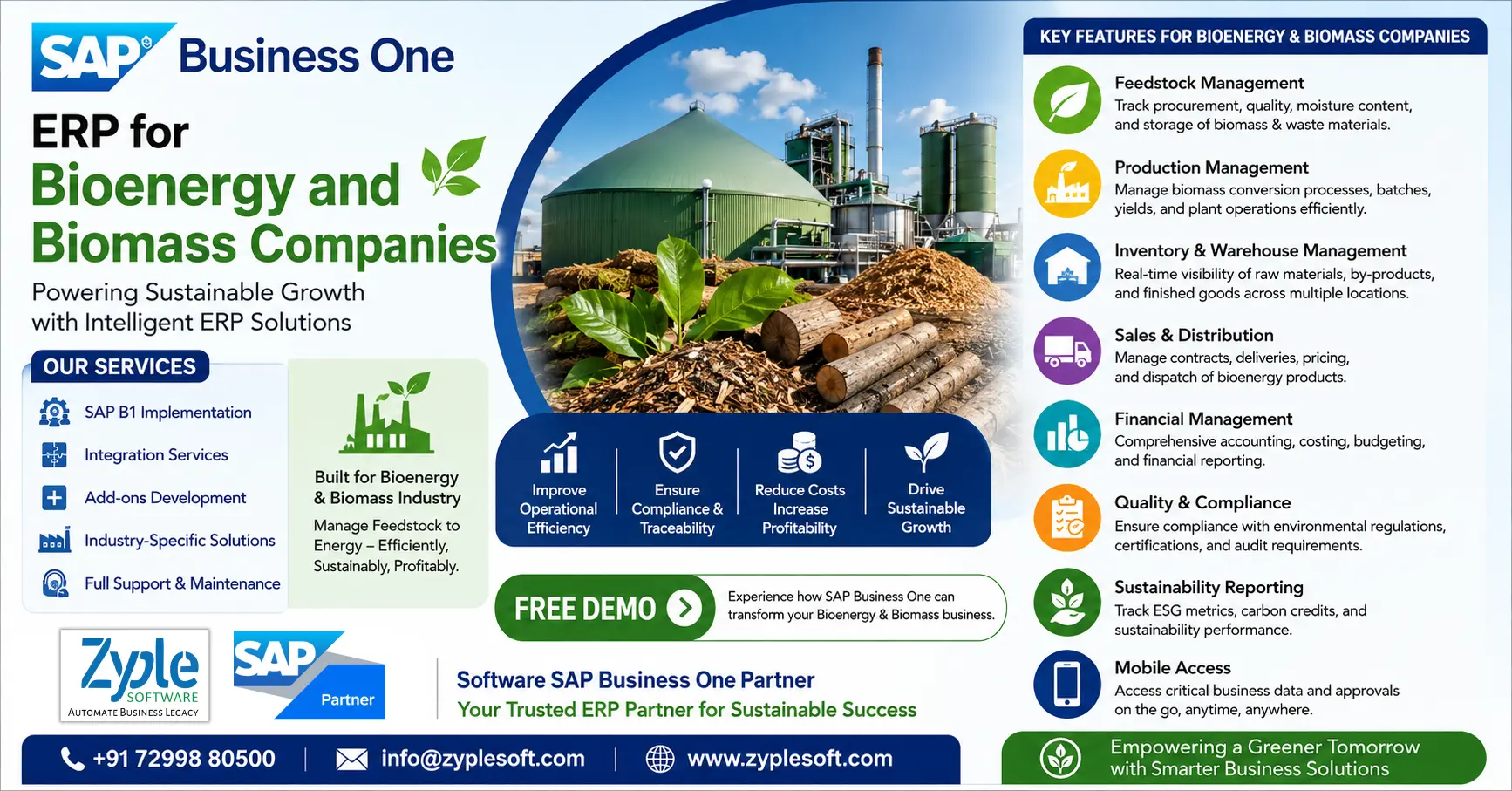
The bioenergy and biomass industry has been around for centuries and continues to play an essential role in the global economy. However, the industry faces significant challenges, such as rising costs, increased competition, and evolving consumer demands. SAP Business One ERP for bioenergy and biomass companies can facilitate operations, optimize resources, and enable better decision-making.
Challenges Faced By The Bioenergy and Biomass Companies
The bioenergy and biomass companies face significant challenges, mainly driven by inconsistent supply chains, volatile raw material costs, and technological scalability. Low energy density and high moisture content can make transporting and storing feedstock expensive, while strict environmental regulations and evolving subsidies affect long-term financial viability.
1. Supply Chain and Logistics
Sourcing raw materials (e.g., agricultural residues and forestry waste) is heavily seasonal, resulting in supply inconsistencies and fluctuating fuel prices. Because raw biomass has low energy density, transporting wet or large feedstock over long distances is energetically unfavorable and cost-prohibitive.
2. Technological Immaturity and Scale
Transforming tough biorenewable biomass into high-grade biofuels or bioproducts is difficult due to defiant structures like lignin, involving complex, expensive pretreatment. Scaling these operations to match the output of petroleum refineries remains highly challenging.
3. Policy and Regulatory Uncertainty
The industry depends heavily on subsidies and carbon pricing frameworks. Changes in government policies, such as alterations to the EU’s Renewable Energy Directive or local tariff policies, create investment risks and complicate long-term operational feasibility.
4. Land and Food Competition
Using steady energy crops (e.g., corn and sugarcane) for first-generation biofuels often sparks concerns over food vs. fuel debates and land-use changes that can diminish biodiversity.
5. Operational Risks
Processing dry mass is an inherently difficult operation that carries severe risks of fire and explosion, demanding expensive built-in suppression technology and strict plant maintenance.
Features of SAP Business One ERP for Bioenergy and Biomass Companies
1. Financial and Cost Management
- It includes general ledger and accounts payable and receivable automation.
- Biomass project tracking, like feedstock, logistics, and processing.
- It includes profitability analysis by plant, fuel type, or region.
- It includes fixed asset management for machinery, boilers, and turbines.
- It includes cash flow and investment monitoring.
- SAP B1 modules delivers complete financial control and reporting for better decision-making.
2. Raw Material (Biomass) Procurement Management
- It includes vendor management for farmers, suppliers, and aggregators.
- Procurement planning for biomass products like wood chips, agri-waste, and pellets.
- It includes contract management with seasonal pricing.
- Quality-based procurement like moisture percentage and calorific value.
- It includes multi-location sourcing and supplier comparison.
- It includes automated purchase orders and approvals.
- Facilitates the entire procure-to-pay cycle efficiently.
3. Inventory and Warehouse Management
- It includes real-time tracking of biomass stock across yards and warehouses.
- It includes batch and lot tracking for different biomass types.
- Storage condition monitoring for moisture-sensitive materials.
- It includes multi-warehouse and yard management.
- It includes inventory valuation and wastage tracking.
- It includes stock aging and shelf-life analysis.
- Inventory and warehouse processes are completely integrated with accounting and operations.
4. Production and Processing Management
- It includes production order management for processing units.
- It includes process tracking from raw biomass to finished energy product.
- It includes by-product and waste management tracking.
- It includes machine utilization and downtime tracking.
- It includes energy output vs. input efficiency monitoring.
- The production module allows structured manufacturing and process control.
5. Material Requirements Planning (MRP)
- It includes demand forecasting for biomass fuel.
- It includes automated raw material planning based on production schedules.
- Seasonal demand planning like winter fuel demand spikes.
- It includes procurement recommendations based on stock levels.
- Avoids stockouts or overstocking.
- MRP helps improve procurement and production planning.
6. Sales and Distribution Management
- It includes sales order and contractor management for energy buyers.
- It includes pricing management based on fuel type and calorific value.
- Customer segmentation like industrial, power plants, and utilities.
- It includes dispatch planning and delivery tracking.
- It includes invoice generation and receivables tracking.
- It includes export management for international biofuel supply.
- It includes the entire sales cycle from quotation to payment.
7. Logistics and Supply Chain Management
- It includes transportation planning for biomass collection and delivery.
- It includes route optimization for low-cost optimization.
- It includes freight and landed cost calculations.
- It includes integration with weighbridge systems.
- It includes real-time shipment tracking.
- It includes fleet and fuel consumption monitoring.
8. Quality and Compliance Management
- Quality testing for biomass like moisture, ash content, and calorific value.
- It includes environmental compliance tracking.
- Regulatory reporting like renewable energy norms and emissions.
- Certification management like ISO and sustainability certifications.
- It includes audit trails and documentation.
9. Asset and Plant Maintenance
- It includes maintenance scheduling for boilers, turbines, and conveyors.
- It includes preventive and breakdown maintenance tracking.
- It includes spare parts inventory tracking.
- It includes equipment lifecycle tracking.
- It includes downtime analysis and optimization.
10. Project and Plant Management
- It includes project costing for new bioenergy plants.
- It includes CAPEX and OPEX tracking.
- It includes resource allocation for plant setup.
- It includes timeline and milestone monitoring.
- It includes ROI tracking for renewable energy projects.
11. CRM and Customer Lifecycle Management
- Handles relationships with energy buyers and partners.
- Tracks leads, contracts, and negotiations.
- It includes service and support management.
- It includes customer demand forecasting.
- It includes after-sales service tracking.
- SAP software includes complete CRM capabilities integrated with sales and service.
12. Business Intelligence and Analytics
- It includes real-time dashboards for production, sales, and finance.
- KPI tracking like plant efficiency, yield, and cost per ton.
- It includes predictive analytics for demand and supply.
- It includes custom reports for management insights.
- Allows data-driven decision-making with real-time insights.
13. Sustainability and Energy Monitoring
- Tracks renewable energy production output.
- It includes carbon footprint and emission tracking.
- It includes waste utilization and circular economy metrics.
- It includes energy efficiency analysis.
- It includes government subsidy and incentive tracking.
14. Multi-Plant and Multi-Location Management
- It includes centralized control over multiple biomass plants.
- It includes inter-plant stock transfers.
- Integrated financial reporting.
- It includes regional performance comparison.
15. Mobile and Remote Access
- It includes a mobile app for field teams and plant managers.
- It includes real-time access to inventory, sales, and production data.
- It includes remote approvals and monitoring.
- SAP B1 ERP supports mobile and web-based access for flexibility.
16. Integration and Customization
- Integration with IoT devices like sensors and energy meters.
- It includes SCADA system integration for plant monitoring.
- It includes third-party logistics and weighbridge integration.
- It includes custom SAP B1 add-ons for bioenergy operations.
- It includes API-based integration with external platforms.
Benefits of SAP Business One ERP for Bioenergy and Biomass Enterprises
The ERP software, SAP Business One (SAP B1) system, facilitates bioenergy and biomass operations by unifying supply chain, production, finance, and compliance into a single platform. It drives profitability by improving feedstock procurement, ensuring batch traceability, allowing predictive maintenance on processing equipment, and automating sustainability and regulatory keeping.
1. End-to-End Feedstock Traceability
Handles complex supply chains by tracking raw material biomass (e.g., agricultural residue, forestry byproducts) from supplier origin through conversion into biofuels using batch and serial number tracking.
2. Automated Material Requirements Planning (MRP)
Optimizes production planning by evaluating incoming biomass quantities, inventory levels, and outstanding sales orders to automatically trigger procurement or conversion processes with the SAP implementation process.
3. Integrated Financials and Job Costing
Connects operational data directly to accounting systems to calculate accurate, real-time job costs, margins, and project profitability across multiple plants or facilities.
4. Predictive Maintenance and Asset Tracking
Integrates with IoT platforms to track heavy machinery like digesters, boilers, and turbines. This automates maintenance schedules and avoids costly downtime using SAP solutions.
5. Regulatory Compliance and ESG Reporting
Simplifies audits and proves adherence to strict environmental standards by utilizing built-in tools to measure, document, and report on sustainability KPIs and carbon emissions.
Conclusion of Bioenergy and Biomass ERP
As an experienced SAP Business One partner in India, Zyple Software is delivering services like SAP B1 implementation, licensing, integration, add-ons, and support to different industries, like construction, manufacturing, solar, jewellery, food and beverage, aerospace, retail, pharma, and textiles.
SAP Business One is an ERP customized for small and medium-sized businesses that connects finance, production, procurement, inventory, sales, CRM, and reporting into one platform. For bioenergy and biomass or any other companies, it can improve project costing, procurement, subcontractor billing, and inventory management.
If you’re interested, enroll a demo of SAP Business One.
Do you look for the SAP B1 ERP software for your business or industry?
Finish all the details in the arranged contact form; our team will get back to you.
FAQs
1.How can SAP Business One ERP improve efficiency in bioenergy and biomass operations?
SAP Business One facilitates procurement, production, inventory, and financial processes into a single system, minimizing manual work and improving operational efficiency. It helps bioenergy companies improve biomass usage, minimize waste, and increase overall productivity.
2.Is SAP Business One customizable for biomass and renewable energy businesses?
Yes, SAP Business One can be customized for meeting the specific needs of bioenergy companies, including biomass tracking, plant operations, compliance reporting, and energy production management, ensuring a perfect fit for your business.
3.What is the cost of implementing SAP Business One for a bioenergy company?
The cost depends on factors like number of users, deployment type (like cloud or on-premises), customization requirements, and implementation scope. A certified SAP Business One partner like Zyple Software can deliver a complete and accurate quotation based on your business needs.
4.How long does it take to install SAP Business One ERP?
SAP B1 implementation timelines generally range from a few weeks to a few months, depending on business complexity, number of modules, and customization requirements. A structured SAP implementation approach ensures minimal disruption to your operations.
5.How can I get a demo of SAP Business One for my bioenergy business?
You can request a free demo from an SAP Business One partner like Zyple Software to understand how the solution fits your bioenergy operations. The demo will showcase key features, industry-specific capabilities, and how it can handle your business challenges.
Read also: SAP Business One for Construction Industry