SAP Business One ERP for Consumer Electronics Industry
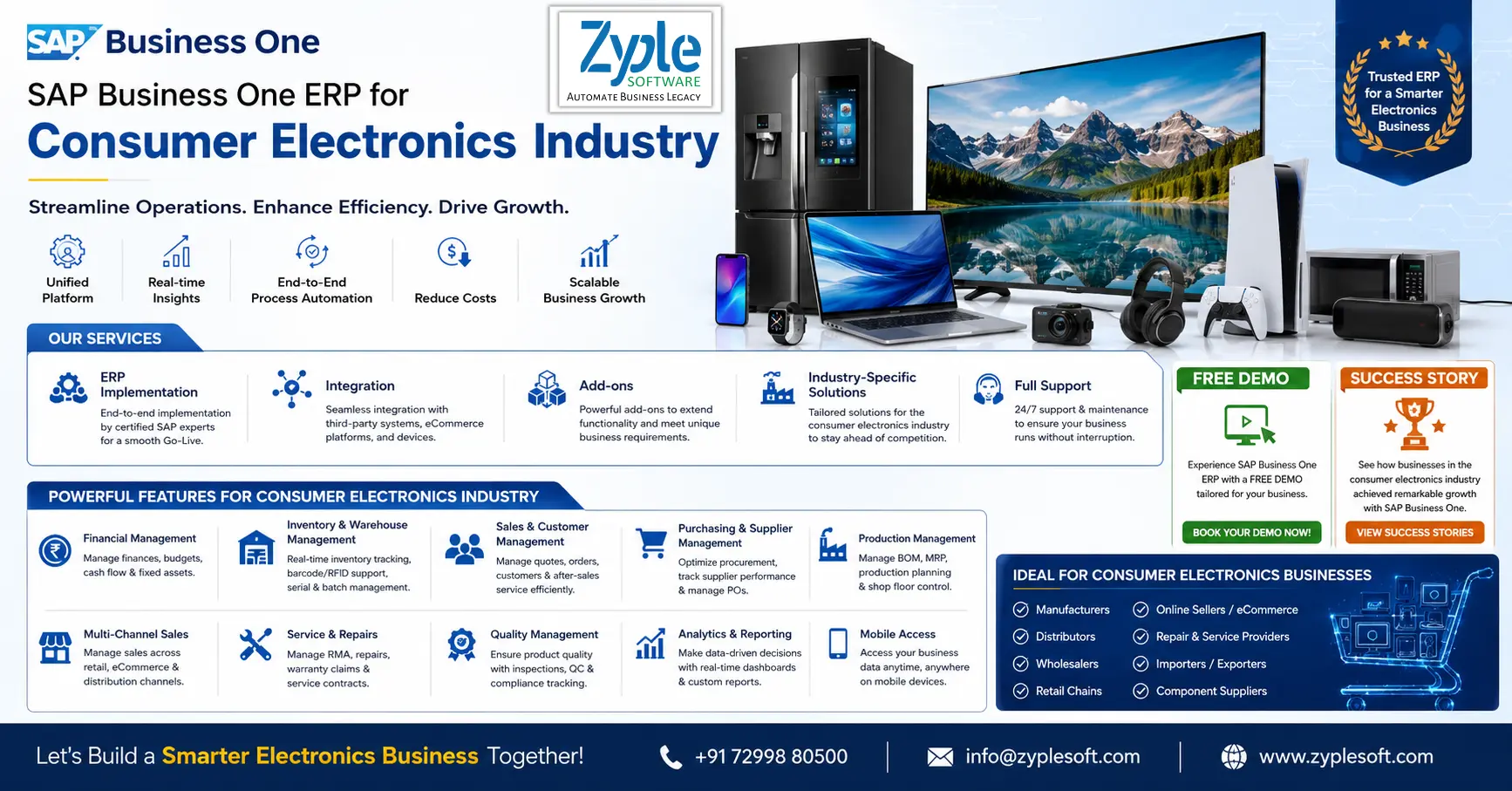
The consumer electronics industry, a foundation of modern innovation, succeeds on rapid technological advancements, dynamic market demands, and precision-driven operations. However, handling such a fast-paced industry comes with its own set of challenges, from inventory control and production scheduling to achieving strict compliance standards. SAP Business One ERP for consumer electronics industry helps small and medium-sized consumer electronics businesses to achieve the business needs of the sector.
Challenges Faced By the Consumer Electronics Industry
1. Complex Supply Chain Management
Consumer electronics manufacturing requires complex supply chains with multiple vendors, global sourcing, and time-sensitive deliveries.
2. Inventory Overload or Stockouts
Balancing inventory to achieve demand without overstocking or understocking remains a serious challenge.
3. Stringent Compliance Requirements
Complying with international standards, such as RoHS and WEEE, demands powerful documentation and tracking systems.
4. Fast-Paced Innovation Cycles
Consumer electronics products often have short life cycles, requiring quick scalability to market trends.
5. Cost Management
Rising costs of raw materials, labor, and logistics can significantly affect profitability.
Handling these challenges requires a solution that integrates operations, improves visibility, and ensures flexibility, all of which SAP Business One delivers seamlessly.
Features of SAP Business One ERP for Consumer Electronics Industry
1. Financial Management
- It includes general ledger, accounts payable, and accounts receivable.
- It includes budgeting, cost accounting, and cash flow tracking.
- It includes multi-currency and multi-branch financial integration.
- It includes real-time financial reporting and profitability analysis.
- It helps consumer electronics companies handle thin margins and high inventory costs.
2. Sales and Customer Relationship Management (CRM)
- It includes lead and opportunity tracking.
- It includes the entire sales cycle from quotation, order, and delivery to invoicing.
- It includes customer lifecycle and service history tracking.
- It includes after-sales service and support management.
- It includes marketing campaign management.
- Essential for handling distributors, retailers, and direct customers.
3. Purchasing and Supplier Management
- It includes vendor management and procurement planning.
- It includes purchase orders, GRPO, returns, and invoicing.
- It includes supplier price lists and evaluation.
- It includes import or export and multi-currency purchasing.
- Necessary due to global sourcing of consumer electronic components.
4. Inventory and Warehouse Management
- It includes real-time inventory tracking across warehouses.
- It includes batch and serial number tracking.
- It includes stock transfer and bin location management.
- It includes automated reordering and stock level optimization.
- Avoids stockouts of fast-moving consumer electronics and overstocking of obsolete items.
5. Business Intelligence and Analytics
- It includes real-time dashboards and KPIs.
- It includes sales forecasting and trend analysis.
- It includes inventory turnover and aging reports.
- It includes custom report generation with drill-down capabilities.
- Allows faster decisions in a rapidly evolving consumer electronics market.
6. Production and Assembly Management
- It includes bill of materials (BOM) for multi-level assemblies.
- It includes assembly, kitting, and disassembly processes.
- It includes production planning and scheduling.
- It includes shop floor control.
- Suitable for products like TVs, mobiles, appliances, and accessories.
7. Demand Planning and Forecasting
- It includes sales forecasting based on trends and seasonality.
- It includes procurement planning aligned with demand.
- Crucial due to short product lifecycles and seasonal demand spikes.
8. Serial Number and Traceability Management
- Tracks each product by serial number.
- It includes full traceability from procurement to sale.
- It includes recall and defect training.
- Essential for warranty claims and quality compliance.
9. Warranty and Service Management
- It includes warranty tracking and validation.
- It includes repair and replacement management.
- It includes service contract management.
- It includes AMC (Annual Maintenance Contract) handling.
- Necessary for after-sales service in consumer electronics.
10. Supply Chain and Logistics Management
- It includes end-to-end supply chain visibility.
- It includes distribution network dealers (dealers and retailers).
- It includes logistics and shipment tracking.
- It includes integration with third-party logistics.
- Helps handle complex multichannel distribution.
11. Quality Control and Compliance
- It includes inspection plans and quality checks.
- It includes defect tracking and corrective actions.
- It includes compliance with electronics standards.
- It ensures product reliability and regulatory adherence.
12. Multi-Channel Sales Integration
- It includes retail, e-commerce, and distributor integration.
- It includes POS (Point of Sale) integration.
- It includes real-time stock sync across channels.
- It supports omnichannel consumer electronics sales.
13. Product Lifecycle Management
- It includes new product introduction (NPI) tracking.
- It includes version and revision control.
- It includes phase-out management for obsolete products.
- Essential due to rapid innovation cycles in consumer electronics.
14. Mobility and Remote Access
- It includes mobile apps for sales and service teams.
- It includes real-time access to inventory and sales orders.
15. Cloud and Integration Capabilities
- It includes deployment on the cloud or on-premise.
- It includes integration with IoT devices, e-commerce platforms, and CRM tools.
- It includes API-based third-party integrations.
Importance of SAP Business One ERP for Consumer Electronics Industry
The ERP software, SAP Business One (SAP B1) system, is essential for the consumer electronics industry because it centralizes operations, facilitates complex supply chains, and automates multi-stage manufacturing. It enables fast-growing companies to minimize production waste, track complex electronic components, and ensure global regulatory compliance in real-time.
1. Precision Inventory and Traceability
Tracks electronic components, serial numbers, and batch lots to eliminate stockouts, avoid overstocking, and ensure rapid quality control.
2. Facilitated Production Planning and Material Requirements Planning (MRP)
Supports intelligent manufacturing schedules, improving material requirement planning (MRP) to align seamlessly with fluctuating consumer demand.
3. Regulatory Compliance
Automatically monitors materials to ensure adherence to strict industry mandates like RoHS (Restriction of Hazardous Substances) and WEEE (Waste Electrical and Electronic Equipment).
4. Integrated Financials
Unifies accounting, multi-currency transactions, and budgeting directly with operational data, providing businesses a crystal-clear picture of their profitability using SAP implementation.
5. Customer Relationship Management (CRM)
Captures customer interactions, tracks sales opportunities, and analyzes buying behavior to improve post-sales service and support.
Benefits of SAP Business One for Consumer Electronics Industry
1. Improved Operational Efficiency
Automating repetitive tasks and connecting key processes saves time and minimizes errors.
2. Improved Decision-Making
With centralized data and powerful analytics, leaders can make better decisions quickly using SAP solutions.
3. Regulatory Compliance Simplified
Tracks and documents compliance-related activities seamlessly to prevent penalties and delays.
4. Increased Agility
Quickly adjusts to market changes and new technological advancements.
5. Cost Savings
Improved resource planning and minimized waste translate to significant cost reductions.
6. Better Customer Satisfaction
Delivers on commitments with accurate order tracking and improved delivery timelines.
Conclusion of Consumer Electronics ERP
Zyple Software is a certified SAP Business One partner in India specializing in implementation, digital transformation, licensing, integration, add-on solutions, migration, and consulting for the consumer electronics industry. From facilitating operations to ensuring compliance and improving customer satisfaction, the features and benefits of SAP software help in empowering consumer electronics businesses.
If you’re assigned, book a demo of SAP Business One.
Do you necessitate the SAP Business One ERP system for your business or industry?
Complete all the details in the defined contact form; our team will return to you.