SAP Business One ERP for Paper Industry
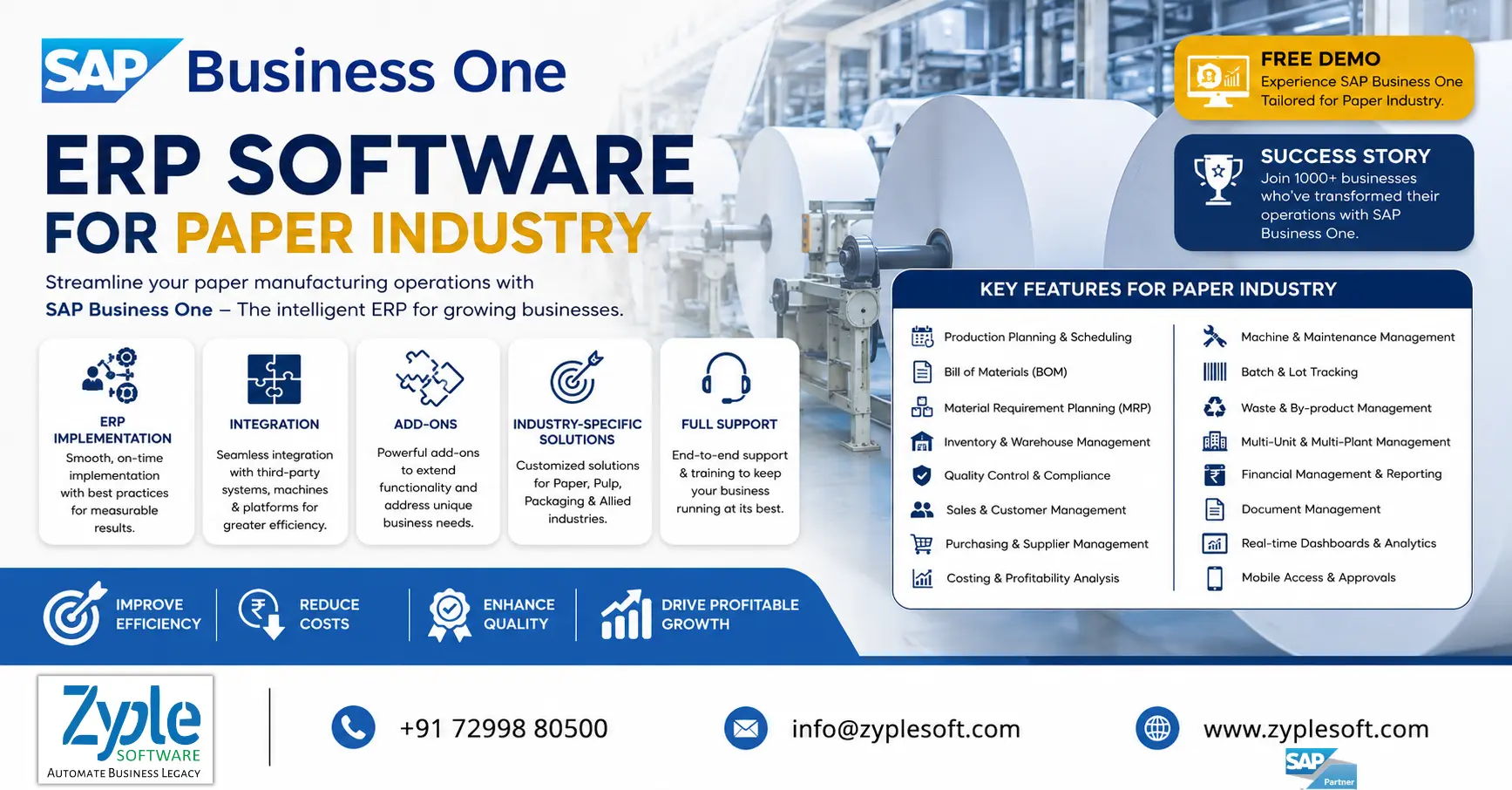
Paper manufacturers face a multitude of challenges, which include foreign imports, fluctuating paper prices, and plant capacity management. You would require an ERP software system that can handle these issues so that you can improve profitability. SAP Business One ERP for paper industry facilitates processes, optimizes inventory, and improves overall business performance of the paper industry.
Challenges Faced By The Paper Industry
The paper industry faces crucial challenges, including severe raw material scarcity, high energy or production costs, and intense pressure to minimize its environmental footprint. The rise of digital alternatives is minimizing demand for graphic papers, while outdated technology and waste management issues hinder operational efficiency.
1. Raw Material Scarcity and Cost
Shortages of bamboo, wood, and waste paper for recycling have increased costs, compounded by dependence on imported pulp.
2. Environmental Concerns and Sustainability
The paper industry is under pressure to minimize carbon emissions, reduce water consumption, and manage pollution (effluent disposal).
3. Energy and Utility Costs
High energy consumption for production, along with rising costs for coal and power, severely impacts profitability.
4. Technological Obsolescence
Many paper mills, specifically smaller ones, suffer from low technology adoption, hampering efficiency and modernization.
5. Declining Demand for Certain Products
Digital transformation has minimized the demand for newsprint and graphic papers, forcing companies to turn towards packaging, though this transition carries risk.
6. Competition and Imports
Increased competition for lower-priced, imported products creates a tough market for domestic competitors.
7. Regulatory Compliance
Strict environmental policies and compliance costs regarding forest protection and emission management pose operational hurdles.
Features of SAP Business One ERP for Paper Industry
1. Production Planning and Process Control
- Handles multi-stage paper production from pulp, sheet, and finishing to packaging.
- Creates and controls bills of materials (BOM) for different paper grades (kraft, duplex, coated, and more).
- Plans machine capacity (paper machines, cutters, and rewinders).
- Optimizes production schedules to minimize downtime and waste.
- Helps facilitate complex manufacturing cycles and improve efficiency.
2. Raw Material and Inventory Management
- Tracks raw materials like wood pulp, chemicals, and water usage.
- Monitors WIP (Work-in-Progress) and finished goods (reams and rolls).
- Batch or lot tracking for quality and traceability.
- Multi-warehouse and bin location management.
- It guarantees accurate stock levels and minimizes wastage.
3. Quality Control and Compliance
- Defines quality parameters (GSM, moisture, thickness, and brightness).
- Performs quality checks at every stage of production.
- Generates quality certificates and reports.
- Maintains compliance with industry standards.
- It ensures consistent paper quality and minimizes rejection rates.
4. Costing and Profitability Analysis
- Tracks cost per ton, per reel, and per batch.
- Monitors raw material, labor, and overhead costs.
- Online profitability analysis by product type or order.
- It helps control margins in a cost-sensitive industry.
5. Sales and Distribution Management
- Handles bulk orders for distributors, printers, and packaging companies.
- Manages pricing based on GSM, size, grade, and volume.
- Tracks dispatch, logistics, and delivery schedules.
- Customer order lifecycle from quotation, order, and delivery to invoice.
- It improves order fulfillment and customer satisfaction.
6. Procurement and Supplier Management
- It handles procurement of pulp, chemicals, and packaging materials.
- It includes vendor comparison and purchase planning.
- It includes automated purchase orders and approvals.
7. Waste and Scrap Management
- Tracks production waste, trim loss, and rejected paper.
- Analyzes scrap generation and reuse or recycling.
- Improves yield and minimizes environmental impact.
- Essential for paper industry sustainability.
8. Financial Management and GST Compliance
- It includes GST-ready invoicing and tax reporting (India-specific).
- It includes budgeting, cost centers, and cash flow tracking.
- Delivers complete financial control in one system.
9. Batch and Reel Traceability
- Tracks each paper reel or batch from raw material to delivery.
- Allows quick recall and quality audits.
- Crucial for export and large-scale supply chains.
10. Business Intelligence and Reporting
- Real-time dashboards for production output, inventory levels, and sales performance.
- It includes custom MIS reports and analytics.
- Allows faster, data-driven decisions.
11. Multi-Branch and Multi-Location Management
- Handles multiple mills, warehouses, and depots.
- It includes centralized control with location-wise reporting.
- Suitable for growing paper manufacturing businesses.
12. Integration and Scalability
- It includes integration with machines, barcode systems, and add-ons.
- Adaptable for SMEs to large operations.
- Available on SAP B1 HANA for real-time performance.
- It supports digital transformation and future growth.
Importance of SAP Business One ERP for Paper Industry
The enterprise resource planning (ERP) software, SAP Business One (SAP B1) system, is essential for the paper industry by delivering real-time visibility into inventory, optimizing production scheduling, minimizing raw material waste, and improving overall productivity. It allows small and medium-sized manufacturers to handle complex, fluctuating material costs, ensuring regulatory compliance and improved, faster order fulfillment.
1. Optimized Inventory Management
Tracks raw materials like wood pulp and chemicals, minimizing excess inventory and preventing stockouts.
2. Production Planning and Control
Handles complex workflows, including production orders and machine capacity, to ensure timely delivery using SAP implementation.
3. Cost Reduction and Waste Minimization
Identifies inefficiencies in production and minimizes wastage, which is essential for thin-margin operations.
4. Increased Agility and Compliance
Allows fast responses to fluctuating market prices and ensures adherence to environmental and industry regulations.
5. Complete Data Visibility
Delivers integrated insights into sales, finance, and manufacturing, supporting better decision-making.
6. User-Friendliness
Enables growing paper companies to add functionality as needed.
Benefits of SAP Business One for Paper Industry
SAP Business One (SAP B1) benefits the paper industry by delivering real-time inventory tracking for raw materials (wood pulp, chemicals) and finished goods, which can minimize waste. It optimizes production planning through automated scheduling, minimizes manual errors, ensures compliance with environmental regulations, and delivers cost-effective, scalable tools designed for small to medium-sized paper manufacturers.
1. Optimized Inventory and Resource Management
Real-time visibility into stock levels, such as wood pulp and chemicals, helps prevent stockouts, minimizes carrying costs of excess inventory, and handles raw material consumption.
2. Improved Production Efficiency
Automated production scheduling and work order management, including handling complex, multi-stage production processes, reduces downtime and optimizes machine usage using SAP solutions.
3. Cost Control and Waste Reduction
Complete tracking of raw material usage, production expenses, and inventory allows better cost control, often leading to lower operating costs and significantly less waste.
4. Regulatory Compliance
The SAP software helps paper manufacturers adhere to strict environmental standards and regulations by tracking materials and creating necessary compliance reports.
5. Improved Supply Chain and Order Management
Facilitated procurement and demand forecasting help accelerate order fulfillment.
6. Ease of Use for Growth
SAP B1 ERP grows with the business, enabling manufacturers to add users and functionalities as operations expand.
Conclusion of Paper ERP
Zyple Software is the Best SAP B1 partner in India specializing in implementation, digital transformation, migration, licensing, integration, add-on solutions, and consulting for the paper industry. SAP Business One is transforming the paper industry in India by handling key challenges and improving operational efficiency.
If you’re skilled, book a demo of SAP Business One.
Do you demand the SAP Business One ERP software for your business or industry?
Complete all the details in the provided contact form; our team will get back to you.