How SAP Business One Transitions Facility Management for SMEs
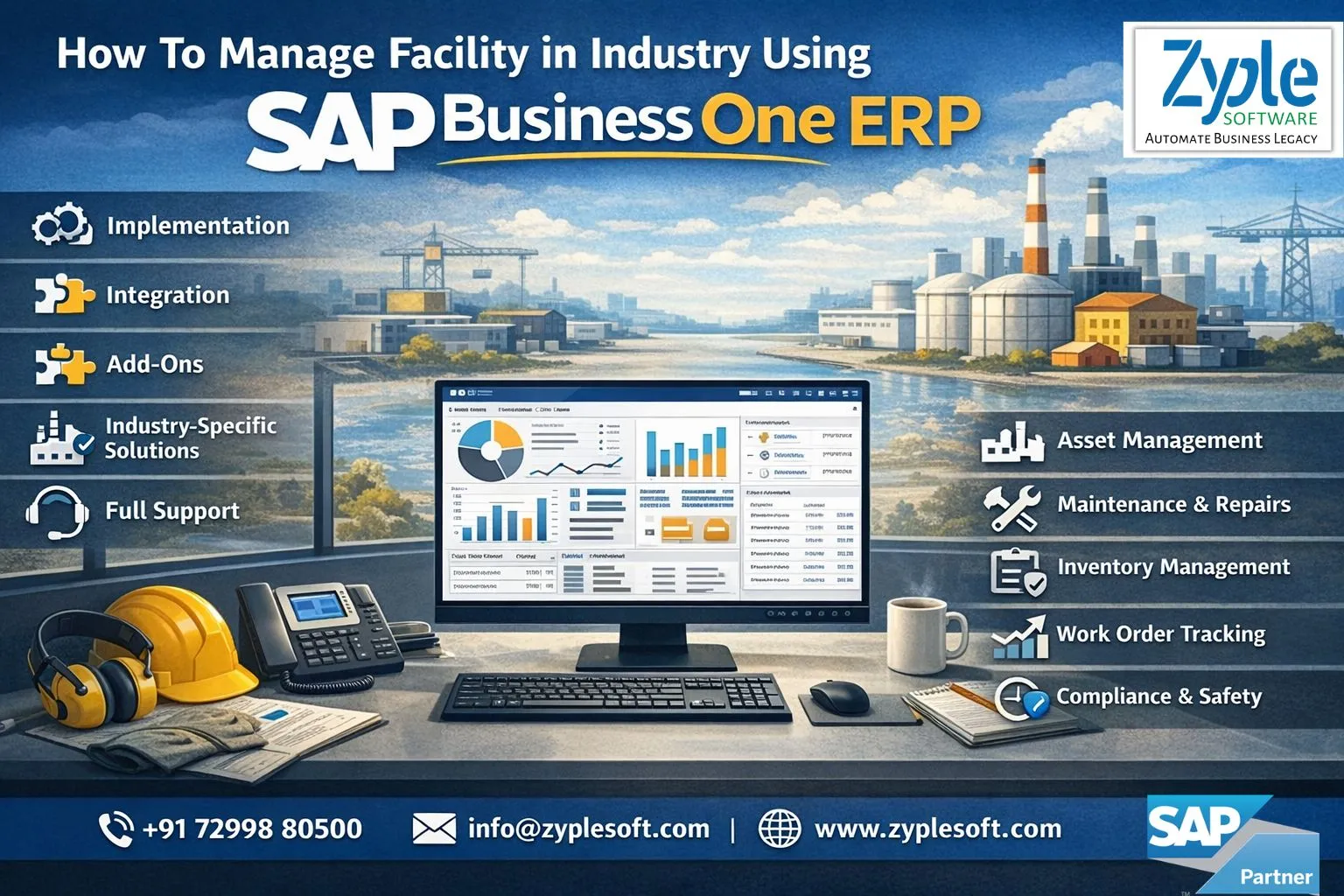
In today’s fast-paced business landscape, facility management has changed from a support role to an essential organization function. Effective facility management ensures seamless day-to-day operations, develops employee efficiency, and drives cost optimization. This is where SAP Business One comes. It is a powerful enterprise resource planning (ERP) solution customized specifically for small and medium-sized enterprises. With its designed features, SAP B1 transforms facility management practices, enabling organizations to overcome modern challenges and stay ahead. Here, we’ll discuss how to manage facility in industry using SAP Business One ERP.
What is Facility Management?
Facility management includes a wide range of disciplines and services aimed at ensuring the functionality, comfort, safety, and efficiency of a built environment. This includes:
- Maintenance of equipment and infrastructure.
- Space management.
- Asset tracking.
- Energy management.
- Vendor and contract management.
Facility managers often juggle multiple responsibilities, making it essential to have a unified system that integrates these activities for better control and efficiency.
Why Choose SAP Business One To Manage Facility in Industry
The enterprise resource planning (ERP) system, SAP Business One (SAP B1) software, is chosen for industrial facility management to centralize operations, automate maintenance scheduling, and deliver real-time asset tracking. It improves efficiency by forecasting equipment failures through predictive maintenance and optimizing resource usage (water, energy, materials), ultimately minimizing costs and downtime.
1. Asset Management and Maintenance
Allows automatic scheduling of maintenance tasks and work orders to minimize unexpected failures and extend equipment lifespan. Delivers tools for real-time tracking of facility assets. Uses data to forecast equipment failure, reducing downtime.
2. Operational Efficiency
Automates routine tasks to reduce manual effort, speed up operations, and minimize errors. Monitors energy, water, and material usage to optimize resources and reduce waste. Integrates data from procurement, inventory, finance, and production into a single system for end-to-end visibility.
3. Financial and Strategic Control
Centralizes operations to reduce costs while maintaining service quality. Provides real-time data and advanced analytics to help managers identify trends and predict issues. The modular design enables businesses to add functionalities as they grow, making it a future-proof investment.
Features of Managing Facility in Industry Using SAP Business One ERP
1. Asset and Equipment Management
- Tracks all facility assets such as machinery, tools, and infrastructure.
- Maintains inclusive asset master data (location, condition, warranty, and more).
- Schedules preventive maintenance to minimize downtime.
2. Maintenance Management
- Plans and handles preventive and corrective maintenance activities.
- Generates maintenance work orders automatically.
- Monitors maintenance history and costs for each asset.
3. Inventory and Spare Parts Control
- Handles spare parts inventory across warehouses.
- Tracks stock levels in real-time.
- Automates reordering of essential maintenance materials.
4. Work Order and Service Management
- Creates and assigns facility-related work orders.
- Tracks progress, labor hours, and completion status.
- Improves accountability and transparency.
5. Real-Time Monitoring and Reporting
- Access real-time dashboards for facility performance.
- Generates reports on maintenance costs, downtime, and asset utilization.
- Allows data-driven decision-making.
6. Vendor and Contract Management
- Handles external service providers and contractors.
- Tracks contracts, service agreements, and billing.
- Evaluates vendor performance.
7. Compliance and Safety Management
- Ensures adherence to safety regulations and standards.
- Maintains audit trials and compliance records.
- Schedules inspections and safety checks.
8. Integration With Core Business Functions
- Seamlessly connects with finance, procurement, and HR modules.
- Tracks facility-related expenses directly in accounting.
- Aligns facility management with overall business operations.
9. Multi-Location Facility Management
- Handles multiple plants, warehouses, or offices from a single system.
- Standardizes processes across locations.
- Monitors performance centrally.
10. Scheduling and Resource Planning
- Allocates manpower and resources efficiently.
- Prevents conflicts and delays in maintenance schedules.
- Optimizes workforce productivity.
11. Mobility and Remote Access
- Accessing facility data from mobile devices.
- Updates work orders and maintenance tasks on the go.
- Improves responsiveness of field times.
12. Cost Control and Budgeting
- Tracks facility-related operational costs.
- Compares actual vs. planned maintenance budgets.
- Identifies cost-saving opportunities.
Importance of Managing Facility in Industry Using SAP Business One ERP
Managing facilities with SAP Business One ERP improves industrial efficiency by automating maintenance schedules, optimizing resource allocation, and tracking real-time asset performance. This centralized approach reduces downtime through predictive maintenance while ensuring regulatory compliance and minimizing operational costs.
1. Predictive Maintenance and Asset Tracking
SAP B1 uses real-time data to forecast equipment failures, reducing unexpected downtime and ensuring seamless performance. It delivers tools for tracking assets and scheduling maintenance, which prevents unnecessary expenditures.
2. Automated Processes and Workflows
Routine tasks such as work orders and maintenance scheduling are automated, freeing up personnel for strategic initiatives and improving overall efficiency using SAP implementation.
3. Resource and Budget Optimization
The system enables accurate tracking of energy, water, and material usage, helping to minimize waste. By centralizing operations, businesses can reduce costs while maintaining service quality.
4. Improved Decision-Making and Analytics
Managers gain real-time visibility into operations, allowing them to identify trends, predict issues, and make data-driven decisions.
5. Regulatory Compliance
SAP software helps businesses adhere to industry-specific regulations, safety standards, and environmental requirements, minimizing the risk of fines and reputational damage.
Benefits of Managing Facility in the Industry Using SAP B1 ERP
1. Centralized Facility Management
SAP Business One connects all facility-related operations, such as maintenance, assets, utilities, and vendor management, into a single platform. This eliminates data storage and delivers a unified view of your infrastructure.
2. Improved Asset Utilization
Evaluates machinery, equipment, and infrastructure in real-time. With better visibility, industries can increase asset usage, minimize idle time, and extend asset lifecycle through timely maintenance.
3. Preventive Maintenance Planning
The system allows scheduling of preventive maintenance activities, helping avoid unexpected breakdowns. This minimizes downtime and improves overall operational efficiency.
4. Cost Control and Budgeting
SAP B1 delivers inclusive insights into maintenance costs, repair costs, and facility-related spending. This helps businesses control budgets, minimize unnecessary expenses, and improve financial planning.
5. Real-Time Monitoring and Reporting
With real-time dashboards and reports, facility managers can track performance metrics, maintenance status, and asset health, allowing faster and smarter decision-making.
6. Improved Vendor and Contract Management
Handles service providers, AMC contracts, and vendor performance efficiently. This ensures timely service delivery and better negotiation with suppliers.
7. Scalability For Growing Industries
As your business expands, SAP solutions can scale with your facility management needs, supporting multiple locations, plants, and complex operations.
Conclusion of Managing Facility in Industry Using SAP B1 ERP
Zyple Software is an authorized SAP Business One partner in India specializing in implementation, digital transformation, migration, licensing, integration, add-on solutions, and consulting for the facility management industry. Facility management is a complex and dynamic field that demands innovative solutions. SAP Business One stands out as a game-changer, empowering organizations to streamline operations, reduce costs, and make data-driven decisions.
If you’re curious, you can book a demo of SAP Business One.
Are you seeking the SAP Business One ERP solution for your business or industry?
Fill in all the details in the defined contact form; our team will return to you.