SAP Business One ERP for Concrete Industry
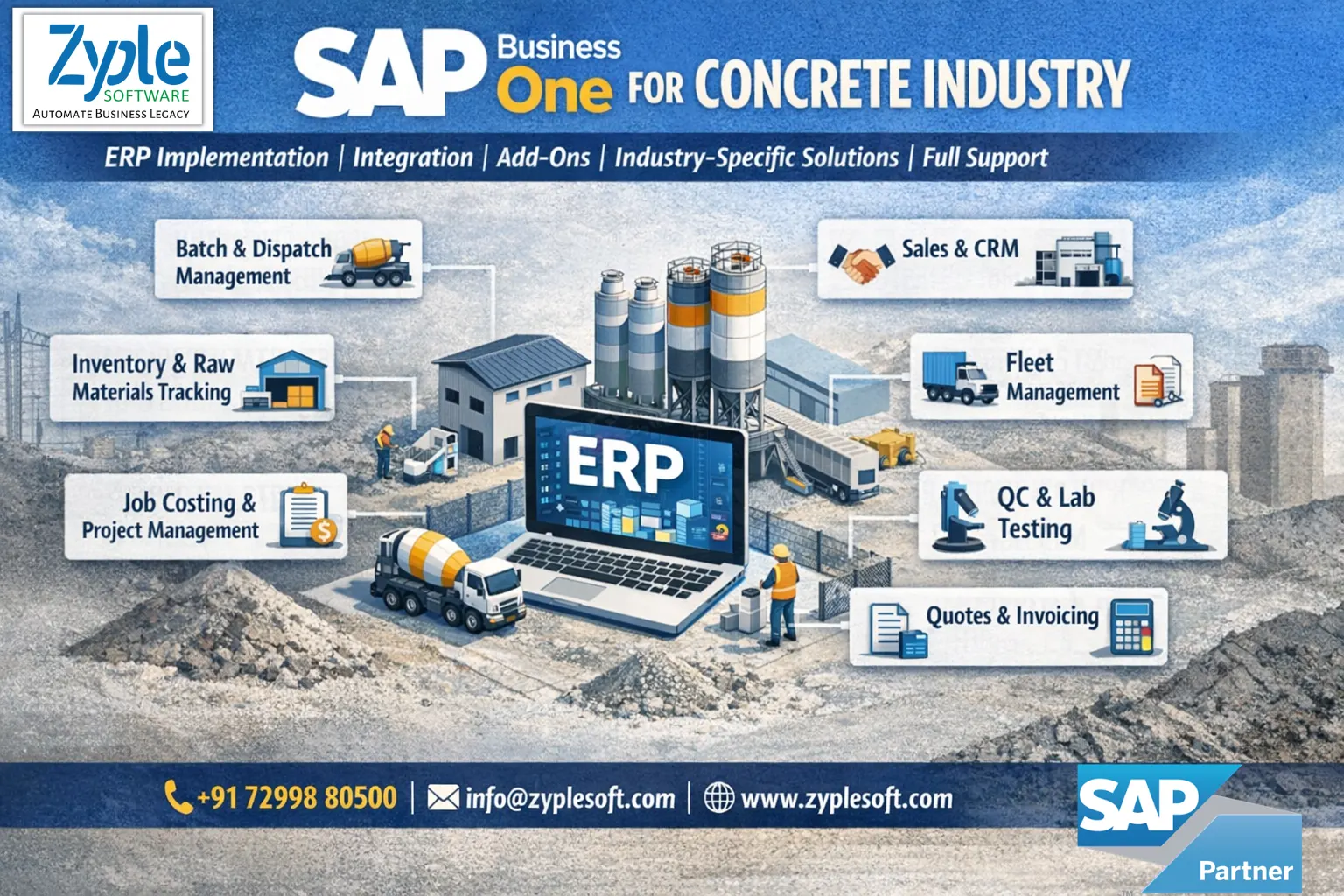
The concrete industry faces mounting pressure to boost efficiency, control costs, and achieve sustainable growth. In the competitive market, SAP solutions enable concrete manufacturers to optimize operations and stay ahead of the curve. With advanced tools for reducing waste, improving supply chain management, and increasing real-time decision-making, SAP Business One for concrete industry helps concrete companies unlock new levels of productivity.
Challenges of the Concrete Industry
The concrete industry is currently facing immense challenges, primarily focused on decarbonization, rising material costs, and severe labor shortages. Main issues include the urgent need to reduce CO2 emissions from concrete production, adapting to sustainable, low carbon mixtures, and managing the high energy costs in manufacturing.
1. Decarbonization and Sustainability
Pressure from investors and government to minimize the carbon footprint is prompting a shift towards lower clinker content, supplementary cementitious materials (SCMs), and portland-limestone cement (PLC).
2. Rising Costs and Materials
Huge costs of cement and materials, combined with supply chain disruptions and higher energy prices for production.
3. Labor Shortages
There is a lack of skilled labor and talent to fill aging workforce positions, which impacts project timelines and quality.
4. Durability and Quality Control
Ensuring long-term durability against melting cycles and chemical attacks while maintaining strict quality control standards.
5. Regulatory Compliance
Meeting tight and complex environmental regulations is difficult.
6. Water Usage
High water consumption, specifically in producing, cooling, and creating cement products.
Features of SAP Business One for Concrete Industry
1. Project and Site Management
- Handles multiple construction or concrete supply projects simultaneously.
- Tracks project-wise costs, budgets, and timelines.
- Monitors site-wise material consumption and profitability.
- Online visibility into project progress and delays.
2. Job Costing and Profitability Analysis
- It includes accurate costing per cubic meter, project, and batch.
- Tracks raw material, labor, transport, and overhead costs.
- Compares budget vs. actual cost to control margins.
- Helps minimize cost overruns in large infrastructure projects.
3. Raw Material and Inventory Management
- Handles cement, aggregates, sand, admixtures, and additives.
- Online stock visibility across plants and sites.
- It includes batch-wise and lot tracking for quality control.
- Prevents shortages and overstocking with MRP (Material Requirements Planning).
4. Production and Batch Management
- Plans and monitors RMC or concrete production cycles.
- It includes batch tracking for consistency and quality compliance.
- Monitors plant performance and output.
5. Fleet and Logistics Management
- Handles concrete mixer trucks and delivery schedules.
- Improves dispatch planning for multiple sites.
- Tracks delivery timelines and minimizes delays.
- Increases collaboration between plant and site.
6. Equipment and Asset Management
- Tracks machinery like batching plants, mixers, and plants.
- Monitors maintenance schedules and downtime.
- Improves equipment utilization and lifespan.
7. Vendor and Subcontractor Management
- Handles suppliers of raw materials and transport vendors.
- Tracks subcontractor work, contracts, and payments.
- Ensures compliance with agreements and timelines.
8. Financial Management and GST Compliance
- It includes integrated accounting, banking, and tax management.
- GST, invoicing, and reporting.
- Real-time financial view across projects and plants.
- Cash flow and profitability evaluation.
9. Procurement and Supply Chain
- It includes automated purchase planning based on demand.
- Supplier comparison and procurement optimization can be done.
- Minimizes material delays with better planning.
- Complete supply chain visibility.
10. Contract, BOQ, and Billing Management
- Handles BOQ (Bill of Quantities) and tendering.
- Running account billing and milestone-based invoicing.
- It includes contract tracking and documentation.
- Measurement book and site billing connection.
11. Real-Time Reports and Dashboards
- Real-time dashboards for production, sales, and finance.
- KPI tracking aspects like cost, delivery, utilization, and margins.
- Quick decision-making with analytics.
- Compares multiple projects side by side.
12. Mobility and Remote Access
- Accessing ERP from plant, site, or office.
- It includes mobile-enabled approvals and reporting.
- Suitable for multi-location concrete operations.
13. Quality Control and Compliance
- Tracks mix quality and batch consistency.
- Maintains compliance with construction standards.
- It includes document management for audits and approvals.
Importance of SAP Business One for Concrete Industry
The enterprise resource planning (ERP) software, SAP Business One (SAP B1) system, is essential for the concrete industry by integrating, facilitating, and automating core operations, like production, inventory, and finance, into one system. It improves profitability through real-time tracking, formula version control, and optimized material requirements planning (MRP), important for maintaining consistent quality and controlling costs in manufacturing.
1. Production and Formula Management
SAP B1 enables precise formula control, allowing manufacturers to manage the mix, ensure quality control, and maintain the necessary temperature and pressure standards for cement clinkers and concrete production.
2. Inventory Optimization
The system delivers real-time tracking of raw materials (aggregates, cement) and finished goods, preventing overstocking or stockouts, which improves cash flow management.
3. Material Requirements Planning (MRP)
MRP automates procurement planning based on production schedules, ensuring timely material availability to achieve demand using SAP implementation.
4. Real-Time Financial Insights
It delivers thorough financial tracking, including cost accounting for production, which helps in identifying cost drivers and improving profitability.
5. Traceability and Compliance
SAP B1 ensures full traceability of raw materials and batches, which is important for meeting industry regulations and conducting root-cause analysis in case of quality issues.
6. Sales and Distribution Management
It handles the entire process from customer quotation to invoicing, providing integration with third-party software like dispatch systems.
Benefits of SAP Business One ERP for Concrete Industry
SAP Business One (SAP B1) ERP for the concrete industry facilitates operations by optimizing inventory, automating production scheduling, and delivering real-time financial tracking to minimize waste and lower costs. It allows precise tracking of raw materials (cement, aggregates) and improves supply chain efficiency from procurement to delivery, ensuring compliance with industry standards.
1. Optimized Inventory and Batch Tracking
SAP software handles raw material stock levels (e.g., cement, sand, gravel) to minimize wastage and prevent shortages. Tracks batch numbers to maintain consistent, high-quality concrete, which is important for regulatory compliance and safety.
2. Facilitated Production Planning
Automates workflows and scheduling for batching plants, reducing downtime, and increasing productivity, enabling efficient use of machinery and labor.
3. Real-Time Financial and Cost Control
Delivers instant visibility into production costs, operational expenses, and profitability, allowing manufacturers to handle costs effectively using SAP solutions.
4. Scalability and Regulatory Compliance
Allows companies to grow by standardizing processes and automating documentation to meet environmental and safety regulations.
Conclusion of Concrete ERP
Zyple Software is an approved SAP B1 partner in India specializing in implementation, digital transformation, migration, licensing, integration, add-on solutions, and consulting.
The ERP company, Zyple Software, specializes in providing implementation and support services for the concrete industry. SAP Business One is helpful for the concrete industry and improves its overall efficiency.
If you’re immersed, you can book a demo of SAP Business One.
Are you soliciting the SAP Buisness One ERP solution for your business or industry?
Fill in all the details in the defined contact form; our team will get back to you.