Infrastructure Management ERP Software
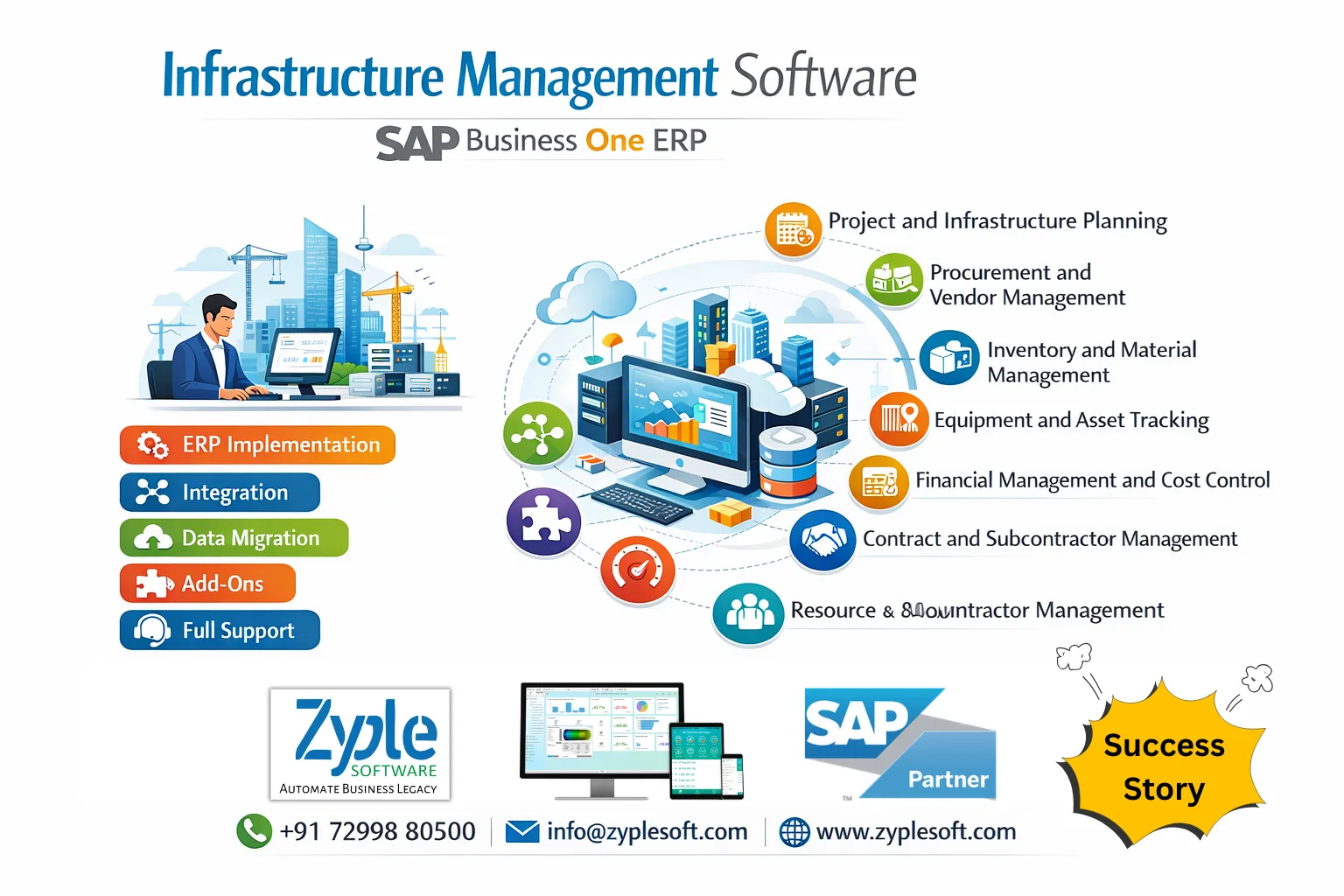
What is Infrastructure Management System?
It is a software system that delivers centralized control over IT components, such as servers, networks, storage, and data centers, to optimize performance, availability, and energy efficiency. Infrastructure management software improves asset tracking, monitoring, and automated provisioning, supporting physical, virtual, and cloud environments.
Which is the Best Software for Infrastructure Management?
SAP Business One is the best software for infrastructure management. It serves as an inclusive ERP for infrastructure management, specifically in construction, real estate, infrastructure, industrial, EPC, and facility management sectors. It handles project lifecycles, maintenance, and resources; supports asset and equipment master tracking, predictive maintenance, and project estimation; ensuring efficient resource allocation and cost savings.
Types of Infrastructure Management Software
1. IT Infrastructure Monitoring (ITIM) System
This type of software focuses on performance evaluation, fault detection, and network management.
2. Data Center Infrastructure Management (DCIM) System
This type of software monitors and handles physical data center infrastructure, including power and cooling.
3. Cloud Infrastructure Management System
This type of software handles public or hybrid cloud resources.
Key Components of an Infrastructure Management System
1. Network Management
This involves monitoring and handling the organization’s network infrastructure to ensure optimal performance and connectivity. It includes tasks like modifying network devices, handling bandwidth, and ensuring network security.
2. Server Management
Servers are the mainstay of an IT infrastructure. Server management includes installing, configuring, and maintaining servers to ensure they operate efficiently and safely. This also involves handling server resources, such as CPU, memory, and storage.
3. Storage Management
As data continues to grow exponentially, storage management becomes increasingly essential. This involves handling data storage systems, ensuring data availability, and optimizing storage resources to meet business demands.
4. Cloud Infrastructure Management
With the growing adoption of cloud computing, managing cloud resources is an essential aspect of infrastructure management. This includes handling cloud-based services, ensuring data security, and managing cloud costs.
5. Security Management
Protecting the IT infrastructure from cyber threats is the key priority. Security management involves implementing and handling security measures, such as firewalls, intrusion detection systems, and encryption protocols, to safeguard this infrastructure.
6. Automation and Monitoring
Automation tools and monitoring systems are important for proactively managing the infrastructure. These tools help in automating routine tasks, evaluating system performance, and detecting potential issues before they escalate.
Features of Infrastructure Management ERP Software
Here are the features of SAP B1 as infrastructure management ERP software:
1. Project and Infrastructure Planning
- Defines and handles infrastructure projects with budgets, timelines, and resources.
- It includes a work breakdown structure (WBS) for large-scale infrastructure projects.
- Tracks project progress, milestones, and dependencies in real-time.
2. Procurement and Vendor Management
- Improved procurement for raw materials, machinery, and services.
- It includes vendor comparison, selection, and performance tracking.
- Automates purchase requests, approvals, and purchase orders.
3. Inventory and Material Management
- Online tracking of construction materials and equipment.
- Multi-warehouse management for various project sites.
- Batch and serial number tracking for essential assets.
4. Equipment and Asset Tracking
- Tracks infrastructure assets like machinery, vehicles, and tools.
- Schedules preventive maintenance and service activities.
- Monitors the asset lifecycle from acquisition to disposal.
5. Financial Management and Cost Control
- Budget allocation and cost tracking for every project.
- Online financial reporting and profitability analysis.
- Connecting accounts payable, receivable, and general ledger.
6. Contract and Subcontractor Management
- Handles contracts, subcontracts, and billing schedules.
- Tracks subcontractor performance and payments.
- Monitors compliance with contractual terms.
- Allocates labor, equipment, and materials efficiently.
- Tracks workforce productivity and utilization.
- Handles timesheets and labor costs.
7. Compliance and Documentation
- Maintains regulatory compliance documents and approvals.
- It includes centralized document management for blueprints, permits, and contracts.
- Audit trails can be done for all transactions and changes.
8. Reporting and Analytics
- Real-time dashboards for project performance and KPIs.
- Online insights into cost overruns and delays.
- Creates MIS reports for decision-making.
9. Integration and Mobility
- Connection with third-party tools like CAD, IoT, and project management systems.
- It includes mobile access for on-site teams to update data in real-time.
- Cloud deployment can be done for remote accessibility.
Importance of Infrastructure Management Software
1. Business Continuity
A well-managed infrastructure ensures that essential IT systems are available and operational, reducing downtime and ensuring business continuity. This is especially crucial in industries where even a small disruption can lead to significant financial losses.
2. Cost Efficiency
SAP Business One ERP helps improve resource utilization, minimizing operational costs. By automating routine tasks and efficiently handling IT resources, organizations can reduce their infrastructure expenses.
3. Security and Compliance
With the increasing threat of cyberattacks, SAP B1 ERP is necessary to protect sensitive data and ensure compliance with regulatory requirements. Appropriate management helps in identifying vulnerabilities and implementing necessary security measures.
4. Scalability
As business grows, the IT infrastructure needs to adapt accordingly. The SAP Business One system ensures that systems are scalable and can manage increased workloads without compromising performance.
5. Performance Optimization
Regular monitoring and management of IT infrastructure ensure that systems perform at their best using SAP implementation.
Benefits of Infrastructure Management ERP Software
The SAP Business One solution improves IT operations by increasing system performance, optimizing security, and minimizing costs through automation. It boosts business continuity by minimizing downtime, delivers scalable resources for growth, and allows proactive monitoring of hardware and software, freeing up staff for strategic tasks.
1. Cost Efficiency and Resource Optimization
The SAP B1 system identifies underutilized resources, avoiding over-provisioning and reducing operational expenses.
2. Improved Security and Compliance
Automated monitoring and patch management help identify vulnerabilities, protect sensitive data, and implement compliance with industry standards.
3. Increased Reliability and Uptime
Real-time monitoring and proactive alerting detect issues before they cause downtime, ensuring high system accessibility using SAP solutions.
4. Operational Automation
Routine tasks, including server administration, software updates, and backups, are automated, improving efficiency and minimizing manual errors.
5. Ease of Use and Flexibility
SAP software enables IT teams to quickly adapt and scale resources to meet changing business demands.
6. Optimized Performance
By monitoring and improving IT components, SAP B1 software ensures fast, efficient, and consistent performance for users.
Conclusion of Infrastructure Management ERP
Zyple Software is an official SAP B1 partner in India specializing in implementation, consulting, migration, licensing, integration, add-on solutions, digital transformation, and support.
ERP Company, Zyple Software has expertise in SAP Business One implementation for different industries like construction, real estate, EPC, infrastructure, facility management, and industrial sectors. SAP Business One facilitates processes and drives growth seamlessly with infrastructure management.
If you’re committed, book an SAP Business One demo.
Are you requiring the SAP B1 ERP solution for your business or industry?
Read more: https://www.zyplesoft.com/infra-construction/
Fill in all the details in the dispensed contact form; our team will return to you.